Prototype vs MVP: Which One Should You Build First?
Fund a PoC, prototype or MVP based on your riskiest assumption. Decision table, evidence to collect, and current Code23 Discovery and MVP bands.
Build a proof of concept when the main unknown is technical feasibility. Build a prototype when the main unknown is interaction, flow or usability. Build an MVP when the main unknown is real customer behaviour, demand, willingness to pay or repeat use.
They are not a compulsory sequence. Choose the smallest artefact that can produce evidence for the riskiest unresolved assumption. If that assumption dies, stop. If it survives, fund the next piece of evidence. Do not fund ceremony.
If you do not yet know which risk matters most, start with product design for discovery and prototypes. If demand is the remaining risk and scope is ready, SaaS platforms is the working-product route. Once the cut is clear, the MVP build time guide covers the calendar.
PoC vs prototype vs MVP at a glance
| Artefact | Question it tests | Typical audience | What is real | Evidence it can produce | What it cannot prove |
|---|---|---|---|---|---|
| Proof of concept | Can this risky technical path work in the relevant environment? | Engineers, technical stakeholders | A narrow technical experiment. Often throwaway. | Feasibility on a named integration, data path, model, performance target or architecture choice | That people understand the product, will buy it, or will keep using it |
| Prototype | Can people understand and complete the important interaction? | Designers, product owners, representative users, stakeholders | A design exploration. May be a sketch, clickable flow or code prototype | Clarity of the flow, usability friction, shared understanding of the intended experience | That the system is secure, scalable, connected to production data, or ready to ship |
| MVP | Will real customers behave in a way that supports viability? | Paying or pilot customers in a real context | An actual product or service that delivers the outcome | Sign-up, use of the primary workflow, payment, return use, support load, operational reality | That every future feature will work, or that a demo alone was enough |
The Agile Alliance MVP glossary stresses validated learning about customers. An MVP is an actual product or service offered so behaviour can be observed. It may look more automated than it is. The common pitfall is treating “MVP” as the smallest feature list without enough viability to learn about demand.
GOV.UK guidance on making prototypes treats prototypes as a way to explore, share and test designs before production commitment. They range from sketches to code prototypes. Prototype code need not meet production security or performance standards, and it should not simply be copied into production.
When a proof of concept is the right first spend
Use a PoC when the riskiest unknown is technical. Examples of the kind of question it answers:
- Can a document-extraction model reach usable accuracy on the buyer’s actual document set?
- Can two systems exchange the required data without a brittle manual bridge?
- Can a performance or architecture constraint hold under a realistic load sample?
A PoC can be throwaway. Its job is a go, change or stop call on feasibility. AWS Prescriptive Guidance describes that pattern for generative-AI work as testing technical feasibility in the relevant environment before a wider commitment. That page is AI-specific. Treat it as a useful principle for risky technical spikes, not as a universal formal definition of every software PoC.
A successful PoC does not mean customers understand the product. It does not mean they will pay. If usability or demand is still the open risk, fund that test next. Do not stretch a technical spike into a fake product launch.
Evidence worth collecting: pass or fail against a written feasibility threshold, notes on environment constraints, residual risks, and a clear recommendation to proceed, reshape or stop.
Exit when: the technical path works well enough to plan the next evidence step, or the evidence rejects the assumption and you stop or change the approach.
"Code23 were the best company I could have found to start my new business website. Despite it being a relatively hard to explain idea, James and the team understood exactly what the site's function was and built a brilliant bespoke design to fit my needs..."
When a prototype is the right first spend
Use a prototype when the riskiest unknown is interaction, flow or usability. A useful example: can a customer understand and complete a complex quote flow without a salesperson walking them through every step?
Prototypes can be low or high fidelity. For fidelity choice, use the existing guide on low-fidelity vs high-fidelity prototypes. Keep this page on the funding decision, not the fidelity taxonomy.
GOV.UK’s alpha-phase guidance is clear on scope: test the riskiest assumptions with only enough prototype to learn. Not every journey must be prototyped. Alpha code is not production quality and may be thrown away.
A prototype may feel realistic. That does not make it secure, scalable, wired to production data, or an MVP. Do not ship prototype code because it looked convincing in a demo. Do not call a clickable demo an MVP if it cannot deliver the customer outcome.
Evidence worth collecting: task completion on the target journeys, where people hesitate or fail, agreement among the people involved on the intended experience, and a short list of changes required before any build.
Exit when: the important journeys are clear enough to scope a build, or the evidence shows the concept is confusing enough that you should reshape or stop before engineering spend.
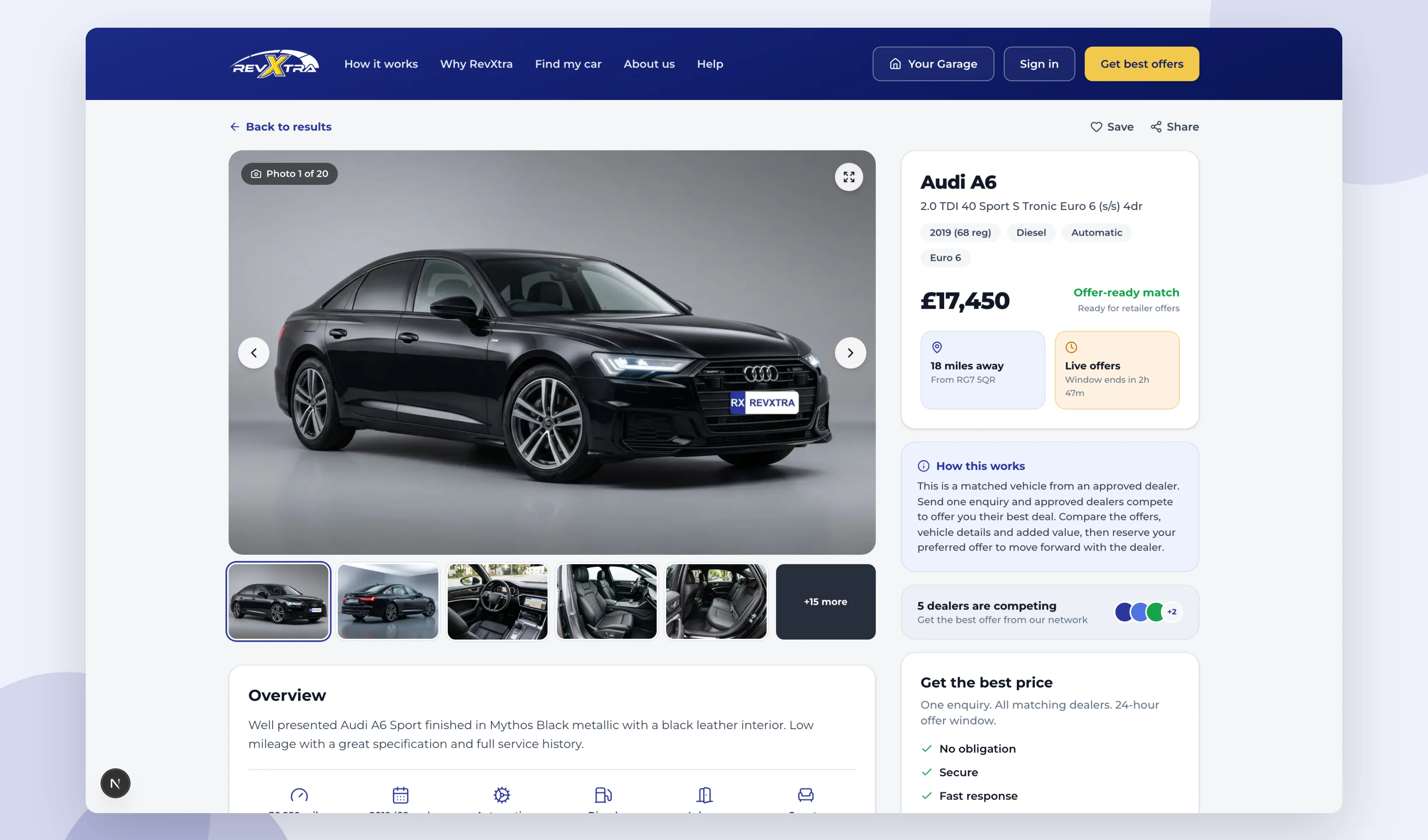
Already built a vibe-coded prototype? Bring it with you
Many founders now arrive with a working artefact built in Lovable, Bolt, Replit, v0 or a similar prompt-to-app tool. That is normal. A runnable flow often communicates priorities, language and the founder’s product mental model better than a deck or a feature list.
We like starting with something we can click through. It lets us challenge assumptions earlier, improve the product decisions and move towards a stronger first release. Bring the prototype. Do not apologise for it.
Classify it by what it actually does, not by how polished the screens look. It is still a prototype if it demonstrates interaction but cannot deliver the outcome to real users. It may already be an MVP if real users can complete the core job and produce meaningful behavioural evidence.
A convincing interface does not by itself prove secure authentication, correct permissions, safe data handling, maintainability, accessibility, performance, reliable integrations, operational cost or production readiness. Treat those as open questions until they are checked.
Handover is practical:
- Understand the intended customer outcome.
- Separate actual user evidence from assumptions.
- Audit the repository, dependencies, auth, data handling and secrets.
- Challenge the product and technical choices that matter for the first release.
- Decide explicitly what to retain, what to refactor and what to rebuild.
- Define and harden that first production release.
Generated code is not automatically bad, and we do not rebuild from scratch by default. Retain what is sound. Refactor what needs structure. Rebuild only where the risk or the gap justifies it.
Simon Willison draws a precise line between vibe coding (building with an LLM without reviewing the code) and responsible AI-assisted programming. Use that distinction when you decide how much of the artefact to trust in production. Our founder’s guide to vibe coding covers the tools, benefits and handover in detail, while vibe coding vs orchestrated AI engineering explains what changes when the prototype has to become a dependable product. If that is the stage you have reached, Vibe Coding Cleanup is the assessment and production-build route.
When an MVP is the right first spend
Use an MVP when the riskiest unknowns are real behaviour, demand, willingness to pay or repeat use. A useful example: will a real cohort sign up, complete the primary workflow, pay or return?
An MVP must be viable enough that the behaviour is meaningful. Manual work behind the scenes is allowed when customers still receive the outcome. A clickable prototype that cannot deliver that outcome is not an MVP, however polished the screens look.
The Agile Alliance framing matters here: the point is learning from customer behaviour, not completing a feature checklist. If you cannot observe meaningful behaviour, you do not yet have an MVP.
For timeline shape once scope is locked, see how long an MVP takes to build. That article shows 4, 8 and 12-week scope examples. The current public Custom SaaS MVP / Web App band is 6 to 10 weeks; the actual calendar is confirmed against agreed scope before Build.
Evidence worth collecting: activation into the primary workflow, completion of the job the product claims to do, payment or signed pilot commitment, return use over a defined window, support burden, and qualitative reasons for drop-off.
Exit when: the cohort behaviour supports a wider build or commercial next step, or the evidence rejects the demand assumption and you stop or reshape before more surface area is funded.
Combine artefacts when the risks stack. Skip them when they do not.
You can combine artefacts without turning them into a conveyor belt:
- A narrow technical spike inside a Discovery Sprint when feasibility is still open.
- A prototype before or alongside a tightly scoped MVP when the interaction is uncertain but you also need live behaviour soon.
- A manual service behind a real MVP interaction when the customer outcome matters more than early automation.
You can also skip an artefact. Skip a PoC when the technical path is already proven in the relevant environment. Skip a prototype when the interaction is already validated with the people who will use it. Skip an MVP when you still lack a credible answer on feasibility or usability and a smaller test would teach you faster.
Progress is an evidence decision. If the evidence rejects the assumption, stopping is progress. Continuing through PoC, prototype and MVP because “that is the process” is wasted spend.
Workshop mechanics belong in what happens in a product discovery workshop. Use that article for the room, agenda and outputs. Use this one for which artefact to fund.
Current Code23 bands for discovery and MVPs
Current public project bands from pricing:
- Discovery Sprint: £750 to £1,500, typically 1 to 2 weeks. Public scope: interactive prototype, system architecture, database schema, and a fixed-price build proposal, with 100% credited toward the build if you continue.
- Custom SaaS MVP / Web App: £18,000 to £40,000, typically 6 to 10 weeks. Public scope includes auth, role-based access (RBAC), Stripe billing, customer dashboards, API endpoints, automated tests and a 90-day warranty.
Final price and timeline depend on agreed scope and are confirmed before Build. A Discovery Sprint is a discovery and prototype entry point. It does not promise a full PoC, a full user-research programme, or a production-ready prototype in every engagement. The SaaS MVP band is for a working release with enough viability to learn from real use. Not every founder should buy that band first. If the riskiest assumption still needs a smaller test, start smaller.
Frequently asked questions
What is the difference between a prototype and an MVP?
A prototype tests whether people can understand and complete an interaction; it doesn’t have to work behind the scenes. An MVP is an actual product or service real customers use, so you can observe genuine behaviour: sign-up, payment, repeat use. If you can’t observe real customer behaviour, you don’t have an MVP yet, whatever the interface looks like.
Should I build a prototype before an MVP?
Only if the interaction is still the open risk. If usability is already proven with the people who’ll use it, skip straight to a tightly scoped MVP. We’ll often run a prototype alongside an early MVP when both the flow and real customer behaviour need testing at the same time.
Can a prototype become an MVP?
Rarely without changes. A prototype’s job is to look and feel real enough to test interaction; it isn’t built to handle live data, security or scale. We treat a working prototype as a strong starting point for scoping the MVP build, not as something we ship as-is.
How much does a prototype cost?
Our Discovery Sprint takes one to two weeks and produces an interactive prototype, technical direction and a fixed-price build proposal. If you go ahead, the full cost is credited against the build, so testing the idea first doesn’t cost you twice.
Sources
- Agile Alliance: Minimum Viable Product (MVP) glossary
- GOV.UK Service Manual: Making prototypes
- GOV.UK Service Manual: How the alpha phase works
- AWS Prescriptive Guidance: Architecting (generative-AI lifecycle; PoC feasibility principle only)
- Simon Willison: Not all AI-assisted programming is vibe coding (but vibe coding rocks)
Next step
If you don’t yet know which assumption is riskiest, start with product design and a Discovery Sprint. It takes one to two weeks, and it’s the entry point for framing the risk, shaping a prototype and deciding whether a build is justified, with the full cost credited against the build if you go ahead.
If the evidence and scope are ready for a working release, go straight to SaaS platforms and scope the MVP cut before Build. We’ve delivered 350+ projects since 2005, so we’ve built the artefact that matches the risk far more often than we’ve built the wrong one first.
Choose the right first step
Test the riskiest assumption before you fund the build.
A Discovery Sprint turns the idea into an interactive prototype, technical direction and a fixed-price build proposal. £750 to £1,500, credited towards the build if you continue.