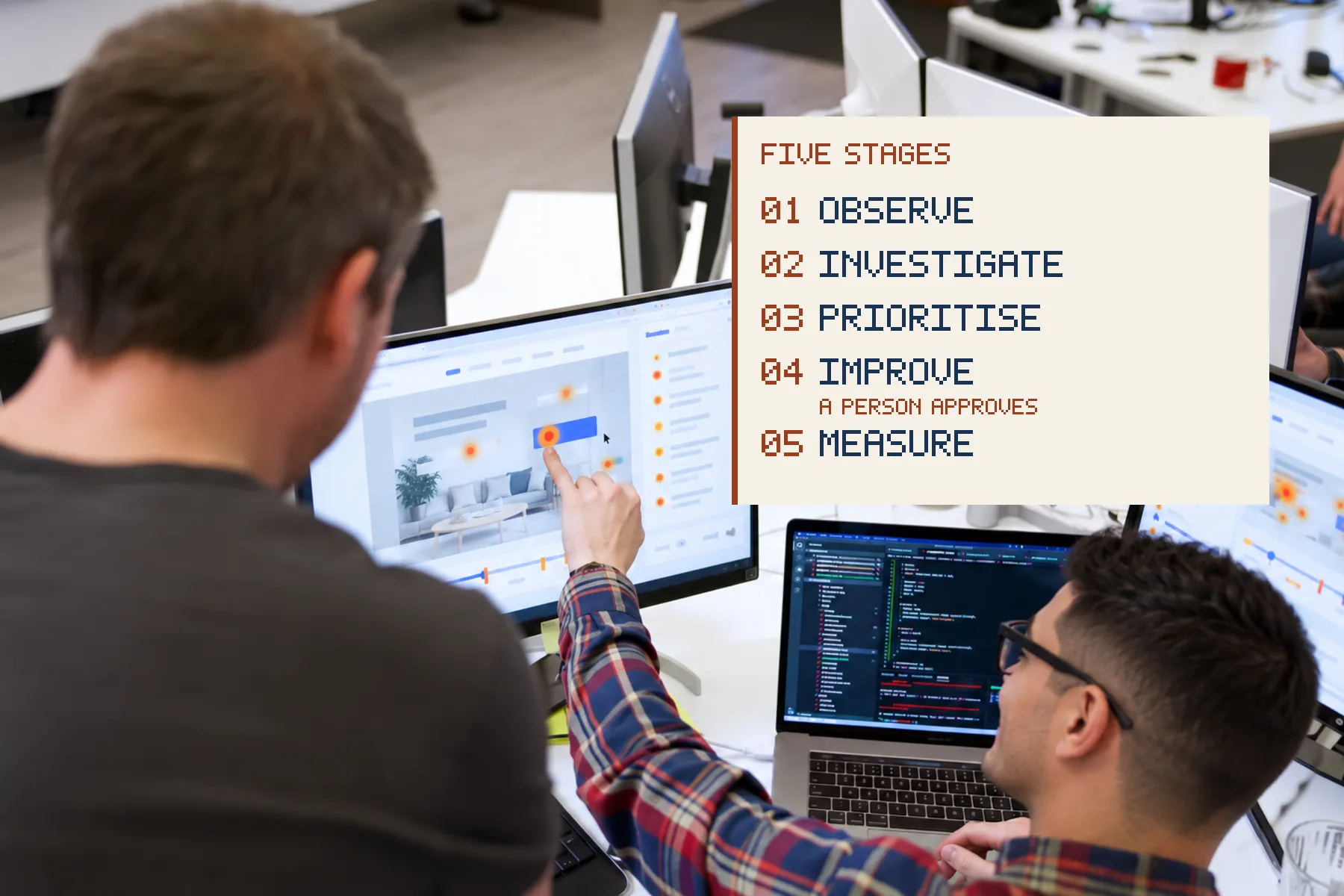
What Happens in a Product Discovery Workshop?
Inside a real product discovery workshop: what we run, who needs to be in the room, what you leave with, what it costs, and why it de-risks the whole build.
Kill the wrong product before you fund it: that is what a discovery workshop is for. You leave with a scoped cut, priorities, risks and a commercial direction - not a pile of sticky-note photos. In the UK, a focused one- or two-day discovery workshop typically costs around £2,000-£8,000; multi-day or multi-stakeholder discovery phases commonly land £8,000-£25,000; fuller discovery-and-prototype slices can reach £15,000-£40,000 in the wider consultancy market. Those are market ranges, not a Code23 quote. We run discovery as paid work that credits toward the build when you continue with us, because free “workshops” are usually sales demos in disguise.
What discovery is for (killing the wrong build before it’s paid for)
"...Every part of the process from the scoping and onboarding down to the design and implementation of our website was handled excellently. The quality of service delivered by the team is globally top standard and I couldn't be more satisfied with the final outcome."
What is a product discovery workshop?
A product discovery workshop is a facilitated, structured meeting (often one or two days) where the client team and the build partner define the problem, users, constraints and MVP cut before engineering spend ramps up.
It exists to stop three expensive habits:
- Building the org chart as a product
- Treating a pitch deck as a specification
- Discovering mandatory billing rules in week six of Build
Across 350+ projects since we started in 2005, the pattern is stable: teams that skip discovery pay for it in rework. Teams that treat discovery as a formality get a mural and the same fuzzy brief they arrived with. Related entry diagnostic when the site already exists: UX audit. Agency selection questions that belong before you book anyone: how to choose a web agency.
The agenda: what we actually run, hour by hour
How long does a discovery workshop take?
Most product discovery workshops run one full day or two shorter days; deeper programmes add follow-up interviews and a prototype pass over one to three weeks.
A typical Code23-shaped day (adjust for remote or split days):
| Block | Focus |
|---|---|
| 0.5 day prep | Access, analytics snapshot, stakeholder list, draft problem statement |
| Morning 1 | Goals, success metrics, non-goals, constraints (legal, brand, stack) |
| Morning 2 | Users and jobs-to-be-done; painful current workflow |
| Afternoon 1 | Journey mapping of the money path; failure modes |
| Afternoon 2 | MVP cut (in / out); risk list; integration inventory |
| Close | Estimate direction, open questions, owners and next decision date |
Who needs to be in the room: someone who can say yes on scope, someone who knows the customer, someone who owns the data or ops reality. Optional spectators kill pace. If finance must approve billing rules, they attend the money block or you schedule them the same week - silent vetoes later are how workshops fail.
What you leave with
What is the output of a discovery workshop?
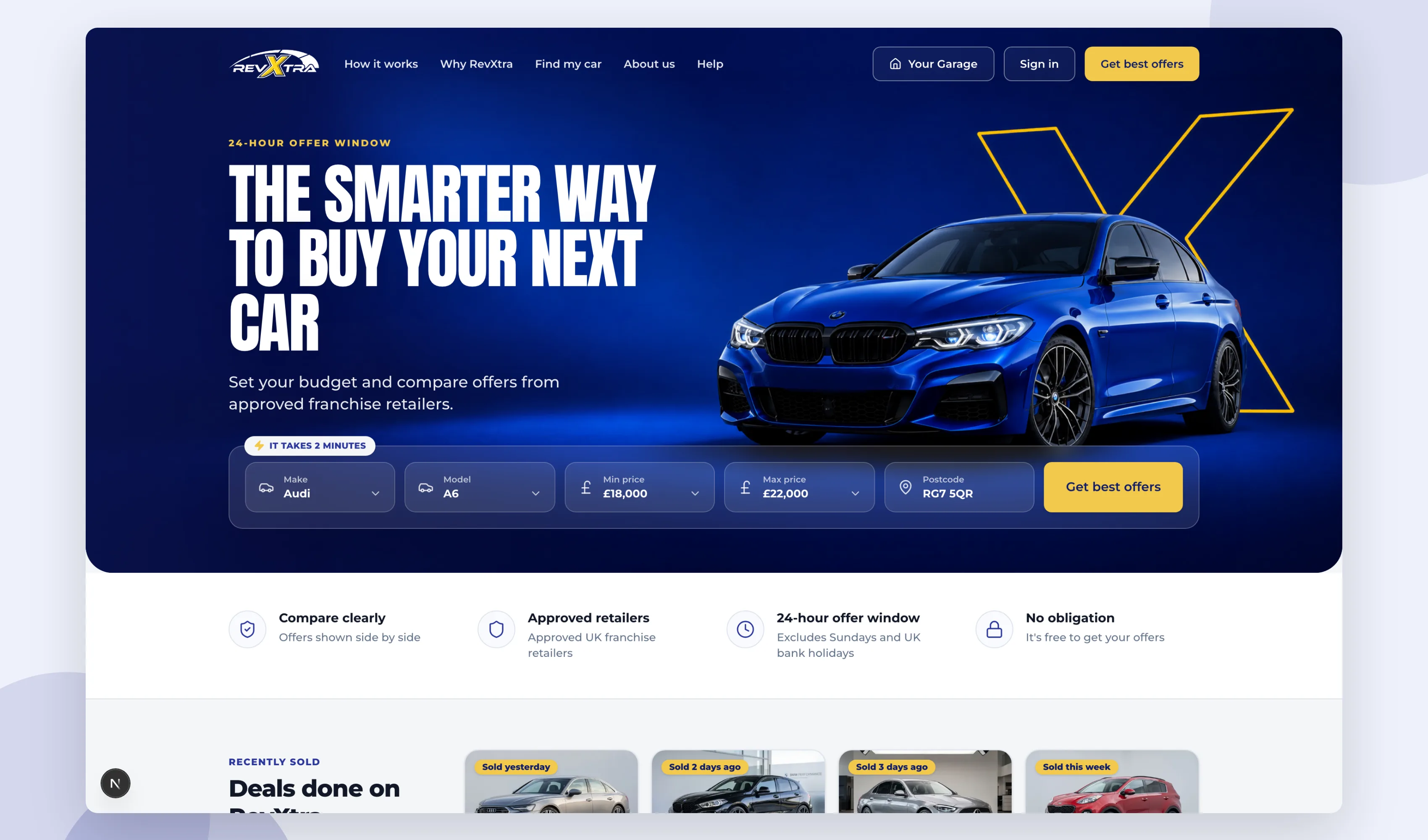
You should leave with a written problem statement, an MVP in/out list, prioritised risks, a rough architecture direction, a commercial estimate band, and named owners for open questions - optionally a clickable prototype direction when AI-assisted drafting is in the room.
Concrete artefacts we aim to hand over:
- Scope one-pager (primary workflow, personas that matter, explicit outs)
- Journey sketch of the happy path and the failure that will happen
- Integration and dependency list with access status
- Risk register (technical, commercial, content, political)
- Timeline sketch that matches the cut - see MVP build time
- Fixed-band estimate direction for Blueprint, or a clear “not ready to build” call
If the only output is enthusiasm, the workshop failed. Enthusiasm is cheap; a cut list is the product.
What it costs and how it credits against the build
How much does a discovery phase cost?
| Shape | Typical UK market range | Notes |
|---|---|---|
| One-day workshop | £2,000-£8,000 | Tight agenda, ready stakeholders |
| Two-day / multi-stakeholder | £5,000-£15,000 | More roles, conflict to resolve |
| Discovery + rapid prototype | £8,000-£25,000 | Artefacts you can put in front of users |
| Extended discovery programme | £15,000-£40,000 | Research, interviews, multiple prototypes |
Those are market ranges across UK product agencies and consultancies. Day-rate specialists in adjacent AI/product advisory often sit £550-£2,500/day depending on seniority - same orientation as serious consultancy work.
How we treat it commercially: discovery is billed; when you proceed into Blueprint and Build with us, that fee credits against the project so you are not paying twice for the same thinking. Extras outside agreed workshop scope sit on transparent fixed terms. We will not pretend a free half-day Zoom is discovery - that is a sales call, and it should be labelled as one.
A £5,000 workshop that prevents a £80,000 wrong build is cheap. A discovery that always concludes “you need the largest package” deserves a second opinion.
How AI has changed our discovery (rapid prototyping in the room)
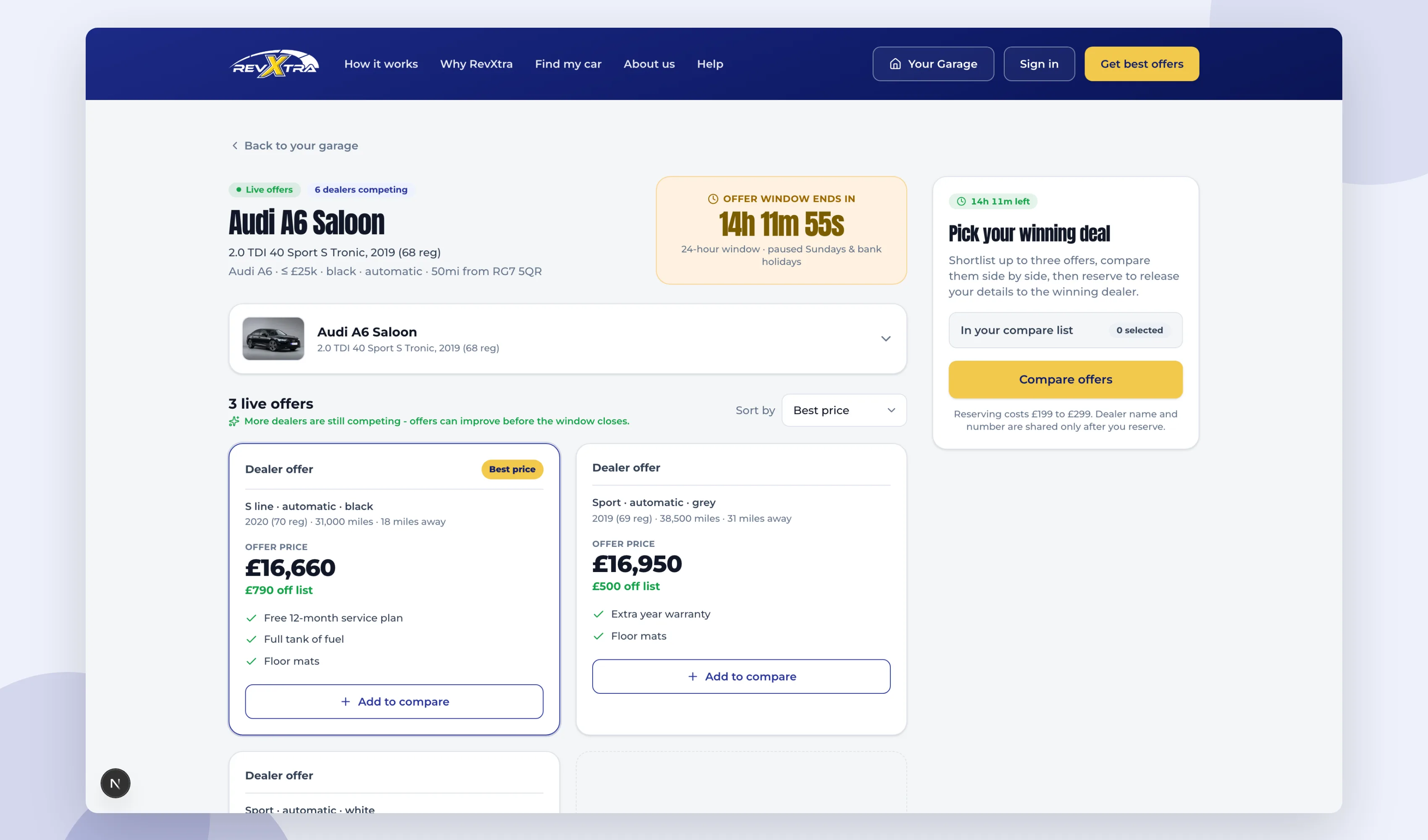
Seniors still facilitate. Agents accelerate artefact production inside the room: first-pass user flows, UI drafts against your constraints, alternative IA sketches, and rewrite options for onboarding copy. That is agentic mastery applied to week zero - humans decide which prototype survives; agents remove the overnight wait for a first visual.
What AI does not do in discovery:
- Resolve conflicting executives
- Invent your regulatory constraints
- Approve a commercial band
- Replace research with users when the problem is unfamiliar
Live prototyping matters because sticky notes cannot show a checkout edge case. Putting a rough interactive path on screen mid-afternoon changes the conversation from abstract features to “would you pay for this flow?” - which is the whole point of discovery.
Hub for design-led entry work: product design.
Frequently asked questions
What happens if you skip a product discovery workshop?
You end up finding your billing rules, integration limits or edge cases in week six of the build, when they cost far more to fix. Across 350+ projects since 2005, the pattern holds: teams that skip discovery pay for it in rework, change requests and slipped timelines. A day of structured discovery is cheaper than a sprint spent discovering the same thing by accident.
Who needs to be in a discovery workshop?
Someone who can say yes on scope, someone who knows the customer, and someone who owns the data or operational reality behind the product. Optional spectators slow the room down without adding a decision. If finance has to sign off billing rules, get them into the money block or booked the same week, not left to veto the outcome later.
Is a discovery workshop worth it for a small build?
Yes, scaled to fit. A tight one-day workshop for a small MVP typically sits at the lower end of the one-day range in the table above, and it still forces the same decisions: what’s in, what’s out and what could go wrong. Skipping it on a small build doesn’t remove the risk, it just moves the cost into the build itself.
Next step
If you’re about to brief a build, don’t start with a spec document or a list of features. Start with a discovery workshop that forces the real decisions: what’s in, what’s out, what’s risky and what it will cost.
We’ve run this process across 350+ projects since 2005, and we charge for it properly, because a free half-day call is a sales demo, not scoping. Book yours through product design and the fee comes off your build if you go ahead with us.
Design the product
Make the product easier to use before you build it.
We’ll turn the key journeys into a testable prototype, remove friction and give the build team a clear product direction.