How Long Does an MVP Take to Build?
Real MVP timelines from a UK agency: what ships in 4, 8 and 12 weeks, what stretches the schedule, and how agent-assisted delivery has changed the answer.
How long does an MVP take to build? At Code23, a focused UK MVP usually ships in one of three bands once the scope is locked: four weeks for a thin, one-workflow proof, eight weeks for a lean product you can sell or pilot, and twelve weeks when billing, extra roles or a second integration are really part of the cut. Those bands only hold when someone owns the decisions and nothing important is waiting on a third party. Agent-assisted delivery speeds up the build itself, the coding and repetitive UI inside a system, not the judgement calls about what “minimum” actually means. What follows is what each band ships, what stretches the calendar, and why the first week still decides the rest.
The short answer: MVP timelines by scope (4 / 8 / 12 weeks)
| Band | Typical calendar | What usually ships |
|---|---|---|
| 4 weeks | Thin proof | One primary workflow, basic auth, thin admin, enough instrumentation to learn |
| 8 weeks | Lean sellable MVP | Core journey polished enough to charge or pilot; one payment path or deliberate delayed billing; basic roles |
| 12 weeks | Heavier lean cut | Billing depth, richer admin, a second integration, or multi-role permissions that survive a real team |
These are scope shapes, not stopwatch promises. A “4-week MVP” with three personas, SSO and a CRM sync is a 12-week brief in costume.
Code23’s public 2026 bands are 6 to 10 weeks for a custom SaaS MVP or web app and 8 to 12 weeks for a custom multivendor marketplace; the exact calendar depends on scope, decisions and vendor access. Our agent-assisted delivery compresses the implementation itself inside a fixed price agreed before we start, which is how honest 4- and 8-week cuts happen for the right scope. Waiting on discovery decisions and vendor access still sits outside that compression - the method behind it is in our build-time dataset. For the wider cost picture, see SaaS development cost UK and app development cost UK, or start at SaaS platforms.
How much does an MVP cost to build?
MVP cost sits with scope: for UK SaaS pricing bands and how we quote once the scope is locked, see SaaS development cost UK.
Can you build an MVP in a month?
Yes, when the cut is truly one workflow, owners decide in days not weeks, and integrations are absent or already contracted - a calendar month is a scope choice, not a slogan. If “in a month” secretly means billing, three roles and a CRM sync, you are buying a false start.
What actually stretches an MVP schedule
Code is rarely the villain. Calendars blow up on:
Decisions. Unowned product calls (“do we need orgs on day one?”) idle seniors while agents wait. Mastery is forcing the cut in week zero, not polishing screens nobody prioritised.
Integrations. Sandbox access, credential delays and expired staging keys. One clean integration can burn a week of coordination even when the code is short.
Content and data. Seed catalogues, legal copy and sample documents arrive late. Agents cannot invent your pricing PDF.
Access and politics. Committee approvals and stakeholders who only reply on Fridays. None of that compresses the same way.
Scope creep dressed as clarity. “While you’re in there” turns 8 weeks into 16. Anything outside the agreed scope gets priced and scheduled before we touch it.
Treat these as risks to manage up front, not week-six surprises.
What belongs in an MVP (and the features that can wait)
"…James and the team understood exactly what the site's function was and built a brilliant bespoke design to fit my needs. Even going the extra length to recommend ideas and tweaks that I hadn't thought of to improve the way it runs…"
An MVP should include one primary workflow, auth for the people who use it, enough admin to operate day one, instrumentation to see behaviour, the security or compliance controls needed for material risks, and a deliberate payment or pilot path. Anything else has to earn its place.
In:
- The job-to-be-done path end to end (happy path plus the failure that will actually happen)
- Roles you truly need on day one (not the org chart fantasy)
- Thin admin: disable a user, edit a record, see obvious errors
- Analytics or event logs you will look at
- A way to take money or a written decision to delay billing for a pilot cohort
Out until later:
- Multi-tenant enterprise packaging
- Perfect design systems with every component variant
- Secondary personas “for the roadmap slide”
- Native apps when a solid web MVP teaches the same lesson cheaper
- Automation that has no owner for exceptions
If a feature does not enable the core workflow, control a material risk or teach you whether users will adopt, pay or return, it can usually wait. That discipline is what makes a 4- or 8-week band real.

How agent-assisted delivery changed our timelines
We direct coding agents under senior architecture, taste and release authority - the same pattern described in what is agentic AI and measured in AI-accelerated delivery. On compressible implementation work (CRUD, scaffolding, tests, repetitive UI inside a system) we frame AI-accelerated throughput versus our own pre-agent baseline, landing comparable implementation at roughly half a traditional bench cost. Testing and hardening, discovery judgement and third-party waits don’t get the same multiplier.
What that means for MVP calendars in practice:
- Boilerplate that used to burn senior days now drafts under review, so 4-week proofs stop being fantasies for thin scopes
- Design-to-code moves faster once tokens exist; inventing a visual system from nothing still takes human taste
- Rework drops when the brief is honest - agents amplify a clear cut and also amplify a muddy one
- Public timeline claims stay at category level; named week-by-week case tables need a scoped, approved project behind them
We’ve delivered 350+ projects since 2005 - agents changed throughput; they didn’t remove the need for someone to say no.
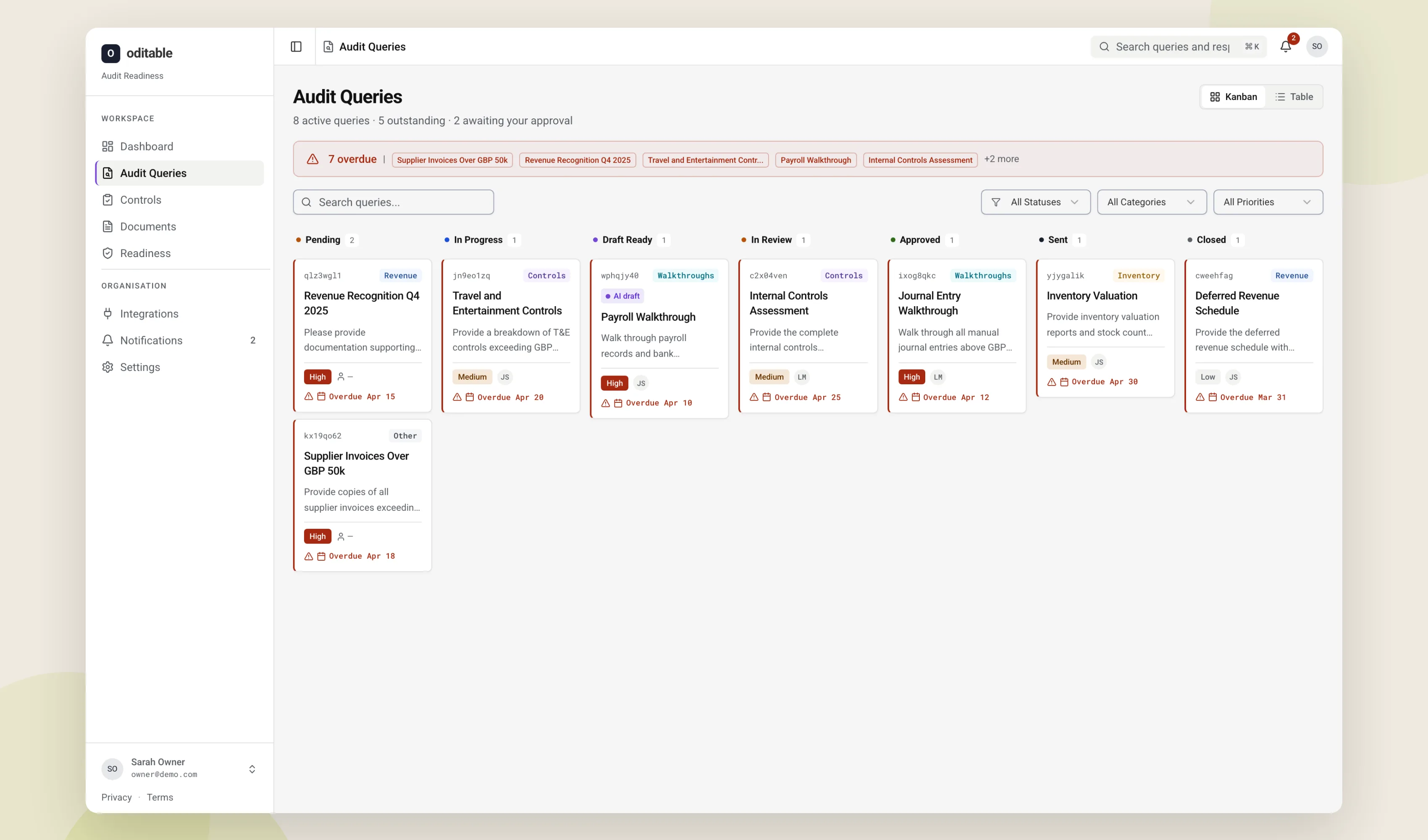
Week zero: why discovery up front shortens everything after
Week zero is where you kill the wrong build. A short product discovery workshop locks the primary workflow, the out-list, risks and a commercial band before anyone writes production code. Skipping it to “save time” is how you discover in week five that billing was non-negotiable all along.
What week zero should leave you with:
- A written MVP cut (in / out)
- Named owners and decision SLA
- Integration list with access status
- Acceptance checks you can demo against
- A timeline band that matches the cut, not the pitch deck
Discovery and planning aren’t padding. They’re the reason an 8-week promise survives contact with a real backlog.
Frequently asked questions
How much does a Discovery Sprint cost?
A Discovery Sprint runs £750 to £1,500, credited in full against the build if you go ahead. In return you get a scoped MVP cut, the riskiest assumption named, a technical direction and a fixed price for the actual build, so the four-, eight- or twelve-week band you’re quoted is real rather than a guess.
What’s the difference between an MVP and a prototype?
A prototype tests whether an interaction, flow or design works. An MVP tests whether real customers will use it, pay for it or come back. You can validate a prototype with mockups and no working code; an MVP must be usable enough for real users to complete the core outcome and generate evidence. Our prototype vs MVP guide covers which one to fund first.
Does building an MVP faster with AI agents mean lower quality?
Not necessarily. Senior review can protect architecture and quality, but the result still depends on scope, testing and release controls. We direct coding agents under senior review, so the boilerplate and repetitive UI move faster while a person still owns architecture, taste and what actually ships. Agents don’t compress discovery judgement or third-party waits, which is why scope discipline still decides your calendar more than the tooling does.
Can an MVP grow into the full product without a rebuild?
Yes, if the code and data model are built properly from day one. If the architecture and data model still fit the validated direction, the MVP can expand; major learning or scale requirements may still justify rework. That’s one reason to build your MVP with a team who can also take it through SaaS platforms afterwards, rather than starting again with someone new.
Next step
Don’t start by picking a framework or asking how long a website takes in general. Start by naming the one workflow that has to work, and the people who’ll actually try it.
Once that’s real, the four-, eight- or twelve-week bands in this guide stop being a guess and start being a quote. We’ve delivered 350+ projects since 2005, so we know which features earn a place in week one and which ones can wait for SaaS platforms to take it further.
Get cost certainty
Get a fixed price before the build starts.
We’ll discuss what you need, then get back to you with a clear price and timescale within 48 hours.