How Much Does SaaS Development Cost in the UK?
Real UK SaaS build costs: MVP price ranges, the features that drive them, monthly running costs after launch, and how AI-accelerated delivery changes the maths.
Budget £25,000-£60,000 for a lean UK SaaS MVP, £60,000-£150,000 for most production v1 products with billing and roles, and £150,000-£400,000+ when multi-tenancy, deep integrations or compliance dominate. Those are market ranges across UK product agencies and software shops - not a Code23 quote. Once we have scoped the work, we set a fixed price and price any changes before we do them. Agentic delivery can hold comparable implementation at roughly half a traditional bench cost. Below is what moves the number, what “MVP” should mean, what you pay every month after launch, and how AI-assisted build changes the maths.
The short answer: what a SaaS MVP costs in the UK
How much does it cost to build a SaaS product?
| Shape | Typical UK market range | What you are usually buying |
|---|---|---|
| Lean MVP | £25,000-£60,000 | Core workflow, basic auth, thin admin, one primary integration or payment path |
| Production v1 | £60,000-£150,000 | Billing, roles, audit-ish admin, evaluation/monitoring where AI features exist, a proper Harden phase |
| Platform / multi-product | £150,000-£400,000+ | Multi-tenancy depth, many integrations, complex permissions, compliance overhead |
| Internal tool / single-tenant portal | Often £20,000-£80,000 | Fewer growth features; still needs auth, roles and reliability |
What is a SaaS company?
A SaaS company delivers software as a subscription service - customers log in, use the product in the browser or apps, and pay recurring fees rather than buying perpetual licences and self-hosting by default. The company owns uptime, updates and (usually) the data plane. That commercial shape is why build cost is only the entry fee; hosting, support and iteration are the membership.
What is a SaaS development company?
A SaaS development company (often searched with that capitalisation) is a product engineering partner that designs and builds subscription software for someone else - MVPs, v1 platforms, multi-tenant systems and the admin/billing work that makes them sellable. Some also advise on packaging and roadmap; the core purchase is working software with owners. Related shapes: app development cost UK for mobile-heavy clients, client portal cost for portal-shaped scopes, and our service hub at SaaS platforms.
Clutch-style directory averages for custom software skew high because enterprise programmes sit in the long tail. Most UK SME SaaS launches we see discussed still cluster in the MVP-to-v1 bands above when scope is honest.
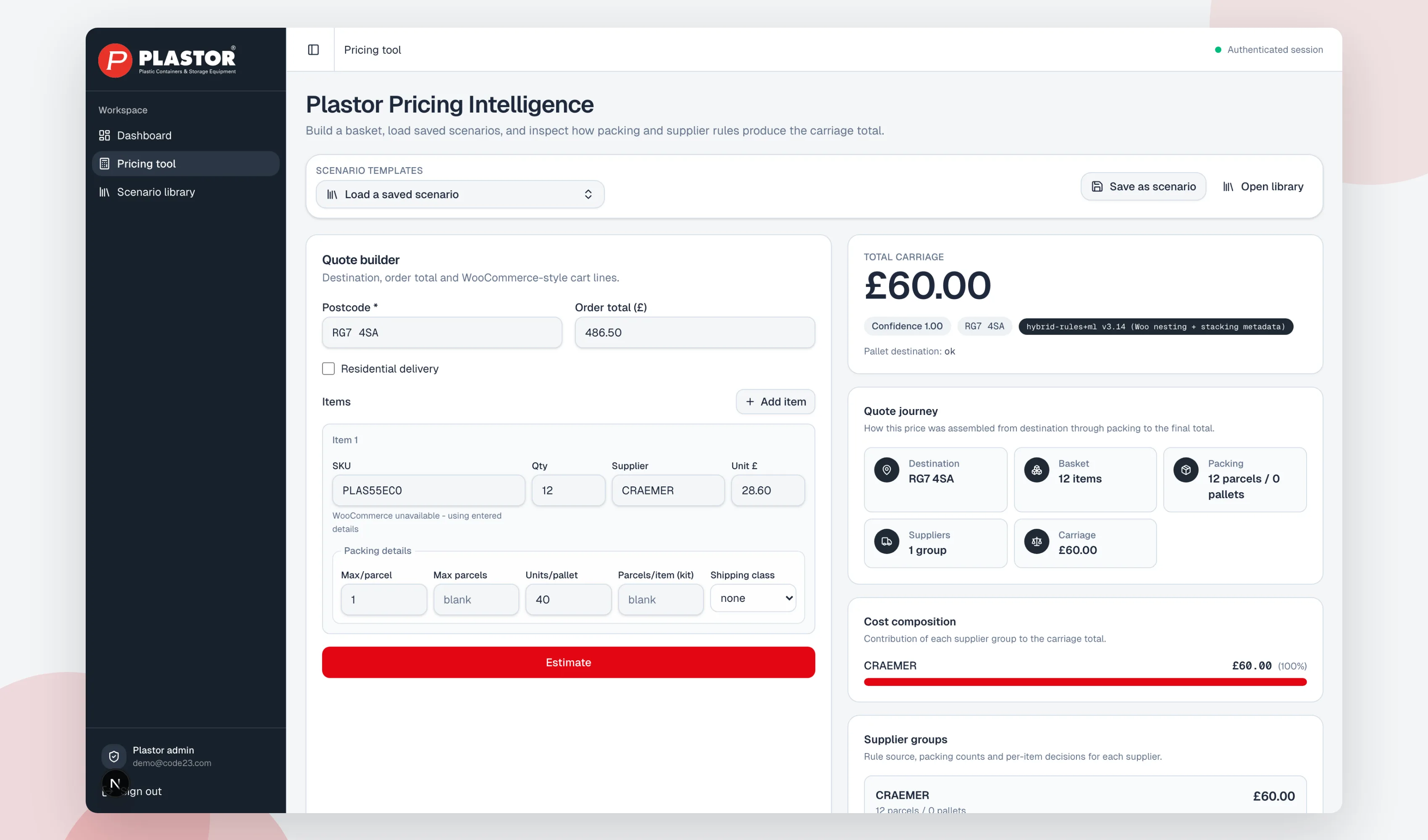
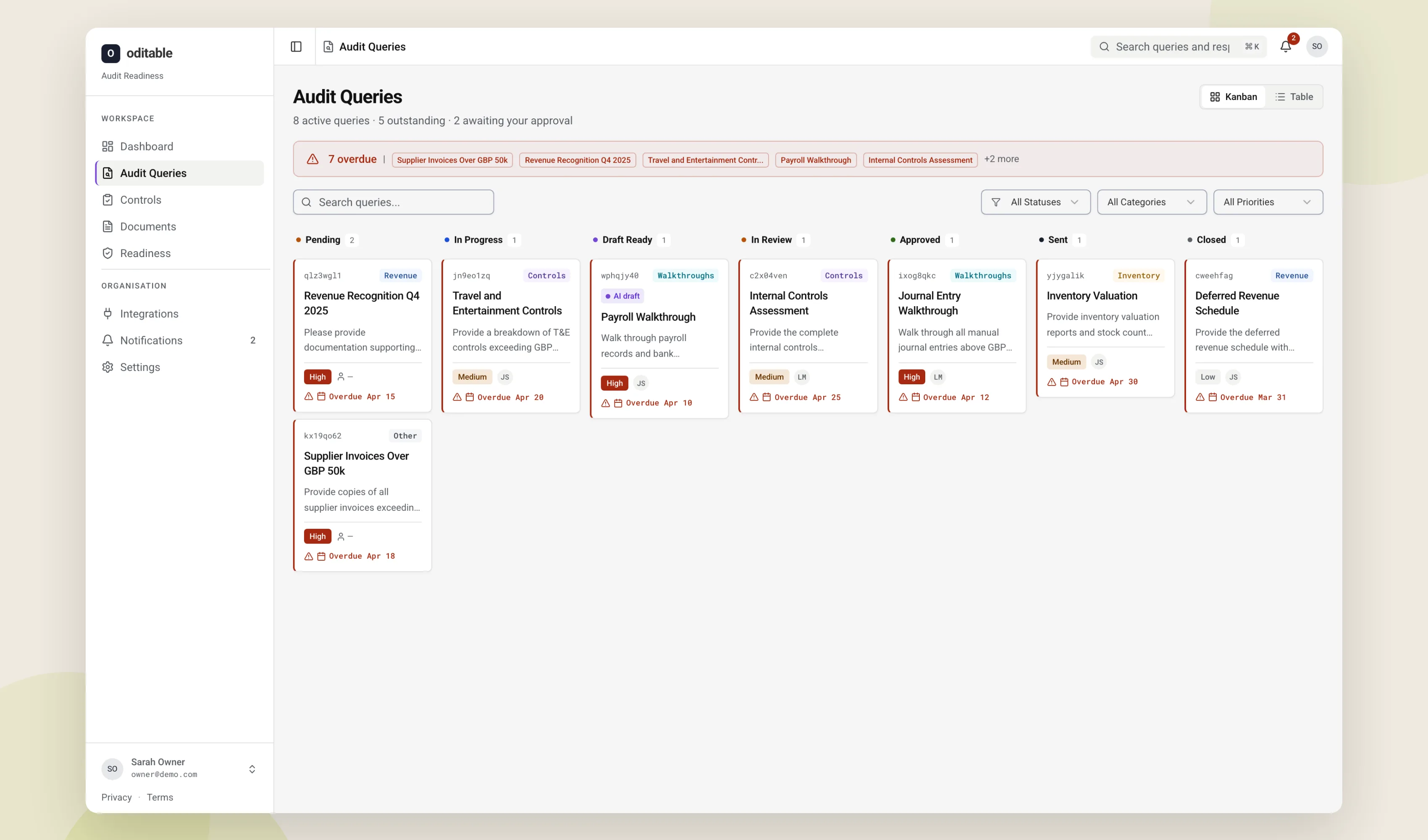
Our own SaaS and platform work: a fixed price agreed before build starts, any changes priced before we do them, agentic delivery at roughly half traditional cost for comparable implementation and AI-accelerated throughput on compressible Build phases - method in build-time data. Proof surfaces in the portfolio include marketplace platforms (SaaS infrastructure underneath two-sided products), scoped tools such as bespoke commercial estimating and valuation tools, and AI-assisted products like a UK document-comparison platform we shipped - diligence-grade RAG over private materials using the Claude API.
UK agency vs offshore vs freelancer economics
UK product agencies cost more per hour and usually include discovery, design, Harden and a warranty conversation. Useful when you need a partner who will still answer when billing fails at month-end.
Offshore teams can reduce the build line. They increase coordination cost, timezone friction and the chance that “done” means something different on each side. Fine when you have a strong internal product owner; risky when you do not.
Freelancers win narrow internal tools with a clear brief. They struggle when you need design, multi-tenant architecture, billing edge cases and continuous engineering and support from one accountable surface.
Blended teams exist. Price the communication overhead explicitly. Pricing every change before we do it is our honesty mechanism when scope creeps - whatever team shape you hire, demand an equivalent.
Operator note from marketplace and SaaS builds with two-sided complexity: cheap build quotes that omit admin, dispute tooling and billing ops are not bargains. They are deferred invoices with interest paid in churn.
The cost drivers: auth, billing, multi-tenancy, integrations, admin
Five things move a SaaS quote more than the colour of the dashboard charts.
Auth and roles. Magic link for one user type is cheap. Organisations, invites, role matrices, SSO and audit trails are product work. Every extra role multiplies screens, permissions and test cases.
Billing. Stripe Checkout for a single plan is a week. Seat-based billing, trials, prorations, failed-payment dunning, invoices, tax and plan changes are a workstream. If revenue recognition or finance export matters on day one, say so in Map.
Multi-tenancy. Isolating customer data correctly is the difference between a product and an incident. Row-level tenancy, separate schemas or separate instances each have cost and ops trade-offs. “We’ll add tenancy later” is how MVPs become rewrites.
Integrations. CRM, ERP, accounting, email, storage, identity providers. Each trustworthy integration needs failure modes, retries and admin visibility - not only a happy-path demo.
Admin and observability. If your team cannot disable a tenant, refund a subscription, or see job failures without a developer, you shipped a liability. Admin is not polish; it is operating cost avoided.
| Driver | Lean MVP | Production v1 | Platform |
|---|---|---|---|
| Auth | Single role | Orgs + roles | SSO, fine-grained, audit |
| Billing | One plan or manual invoicing | Plans, trials, dunning | Complex packaging, usage |
| Tenancy | Simple isolation | Hardened multi-tenant | Regional / enterprise options |
| Integrations | 0-1 | 2-4 | Many + sync jobs |
| Admin | Pause, edit, basic reports | Billing ops, audit, jobs | Workflow queues, enterprise tools |
Secondary drivers: design system depth, accessibility bar, mobile clients, offline, and any AI features (RAG, assistants, scoring) that need evaluation harnesses. AI features follow the same commercial honesty as RAG projects - corpus and evaluation cost money.
MVP vs v1 vs platform: scoping the first build properly
MVP means the smallest product that teaches you whether users will pay. One primary workflow. One buyer persona. Instrumentation. A path to collect payment or a deliberate decision to delay billing for a pilot cohort. It does not mean “half-finished UI with no admin”.
v1 means you are ready for wider sales: billing that does not embarrass you, permissions that survive a second team invite, Harden for security basics, and support tooling.
Platform means multiple products or deep enterprise requirements sharing identity, billing and tenancy. Do not call an MVP a platform in the pitch deck; finance will believe you and wonder where the money went.
How long does it take to build a SaaS MVP?
Lean MVPs with ready owners often land in roughly 8-16 weeks of focused calendar time in UK agency settings; production v1 programmes commonly run several months; platform builds measure in longer programmes. Politics, content, and third-party access stretch calendars more than model fashion. Detailed timing patterns sit in MVP build time. Agent-assisted delivery compresses implementation phases; it does not delete discovery debates or app-store-style waiting when mobile is in scope.
Scoping traps we push back on:
- Building three personas “while we’re here”
- Custom billing edge cases before a single paid customer
- Mobile apps before the web workflow works
- AI features without an evaluation set
- Ignoring admin until week ten
Marketplace-shaped SaaS (two-sided subscription platforms) inherits liquidity problems as well as software cost - see marketplace build cost when that is your actual model.
What a serious quote should include
Before you compare two SaaS quotes, demand line clarity on:
- Discovery / Blueprint output you keep if you walk away
- Auth model and tenancy approach
- Billing scope (plans, trials, dunning, tax, invoices)
- Admin surfaces for support staff
- Environments (staging, prod) and release process
- Test and Harden expectations
- Warranty length and what “defect within spec” means
- Extras rate and how change requests are raised
- Hosting assumptions for the first 90 days
- Handover - repo ownership, docs, credentials
A lower number that silently excludes billing, admin or Harden is not cheaper. It is incomplete. We publish a 90-day warranty on new build work for defects within spec; continuous engineering and support after that is a separate conversation, not an infinite free support promise.
"We've recently completed Phase 1 of a bespoke business valuation tool with James at Code23, and I've been extremely impressed… The admin dashboard, in particular, gives us full control over the scoring and valuation logic, which was a key requirement."
Running costs after launch
Build invoices are the entry fee. SaaS running costs are the membership.
Typical monthly lines:
- Hosting and data - application hosts, databases, object storage, environments
- Third-party SaaS you depend on - email, error tracking, analytics, auth vendors, CMS
- Model/API usage if you shipped AI features
- Support and maintenance - patches, monitoring, small fixes, on-call judgement
- Compliance and security - reviews, pen-test cadence where required
Code23’s public care path for sites and products sits on Support & Growth at £495 / £1,850 / £3,450 a month, with extras priced before we do them. New build work carries a 90-day warranty for defects within spec; after that, maintenance is how the product stays healthy. Those are our published figures - your stack may need more or less depending on uptime needs and release frequency.
Founders who only fund the build discover the membership in month two, usually on a failed webhook or a billing edge case at month-end. Budget run from day one even if early months are light.
Rough mental model: if MRR cannot eventually cover hosting + support + a sensible iteration budget, you do not have a SaaS business yet - you have a project. Price packaging and willingness-to-pay before you celebrate GMV-style vanity metrics that do not apply to subscription software.
Example monthly stack (illustrative)
A small UK SaaS in early paid users might see something like:
| Line | Ballpark monthly | Notes |
|---|---|---|
| Hosting + database | £50-£400+ | Climbs with traffic, environments, HA needs |
| Email / auth / monitoring vendors | £20-£200+ | Quiet until volume or incidents spike |
| Error tracking / analytics | £0-£150+ | Free tiers die as you grow |
| AI API usage (if any) | Variable | Cap and alert or finance will hate you |
| Agency support tier (optional) | £495 / £1,850 / £3,450 | Our public bands when you want us on the desk |
| Internal product time | Often the largest | Roadmap does not ship itself |
Your numbers will differ. The mistake is budgeting £0 for everything except the build invoice.
How AI-accelerated delivery changes SaaS build economics
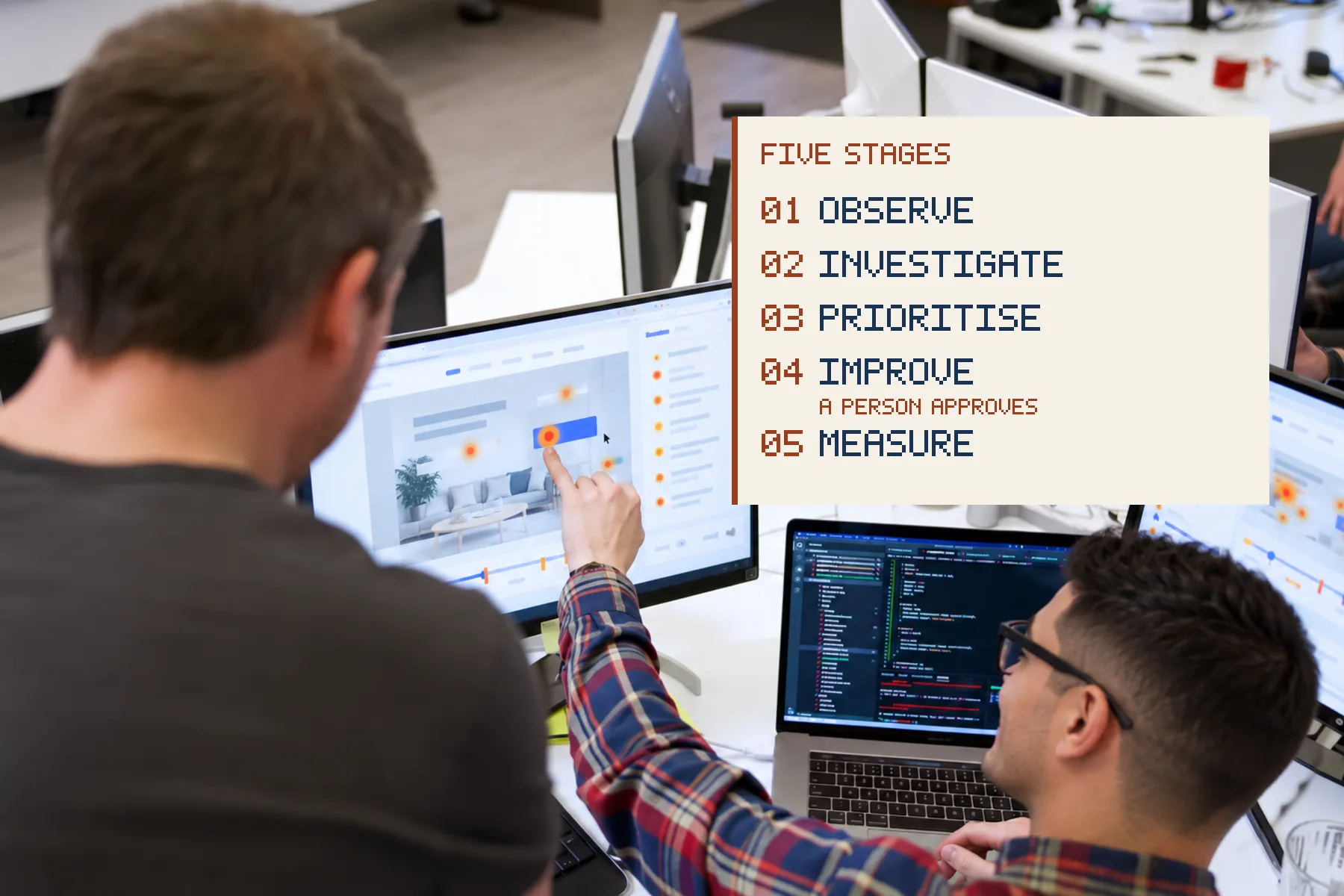
Agentic delivery - seniors directing coding agents inside a written remit - changes the implementation cost curve. We publish the method claim as AI-accelerated delivery on compressible Build and roughly half the cost versus a traditional agency bench for comparable Blueprint scope. Discovery politics, content freezes, compliance review and third-party waits still take calendar time. Full method and caveats: AI-accelerated delivery build-time data. Qualitative trail: AI agent build log.
What that means for a SaaS buyer:
- More of the budget can sit in Harden, billing edge cases and admin - where SaaS quality actually lives
- Greenfield CRUD and test scaffolding compress hard
- You should still demand human release authority and a review trail
- AI inside the product (assistants, RAG, scoring) is a feature workstream with its own evaluation cost - not free because the agency uses agents to code
Est. 2005 and 50+ marketplace builds over 15+ years - including subscription platforms with two-sided complexity - are the trust context that matters here; they do not replace a Blueprint for your tenancy model. That is why we price admin and payments as first-class rather than optional polish.
Budget mistakes we see every quarter
- Funding only the build. No support, no iteration budget, no owner after launch.
- Calling a platform an MVP. Three products, SSO and usage billing before one workflow converts.
- Copying a US Series-A feature list. UK SME packaging usually needs less surface and more reliability.
- Treating AI features as free because “the agency uses AI to code”. Product AI needs evaluation; delivery AI needs review gates - different line items.
- Comparing quotes without a shared scope sheet. One includes Harden and billing; the other is a UI prototype.
- Ignoring migration and import. Empty tenants do not retain; messy CSV imports become a programme.
- Skipping analytics. You cannot price packaging if you cannot see activation.
Fix those and the market ranges at the top of this article become usable planning tools instead of internet folklore.
Fund the primary workflow and the packaging you can explain in one sentence; leave the Series-A feature list for later. Fixed-price builds live under SaaS platforms.
Frequently asked questions
How much does it cost to develop a SaaS?
It depends on which of the five cost drivers your product actually needs: auth and roles, billing, multi-tenancy, integrations and admin. A single-role tool with basic billing costs far less than a multi-tenant platform with SSO and complex packaging. Scope against the table above by shape, not against a headline number someone else quoted for a different product.
How much should I charge for my SaaS?
That’s a packaging question, not a build-cost one. Price against the value a customer gets and what they’d otherwise pay a person to do, not against your development invoice. Get billing, trials and plan changes built properly from day one, because repricing later means retrofitting logic customers are already relying on.
How much should I charge for software development?
Day-rate comparisons mislead because seniority, location and team shape vary so much. We price fixed-scope work instead: agree what’s being built, quote a fixed price for it, and price any change before we make it. That protects you from a slow clock and protects us from scope creep neither side agreed to.
Is SaaS development cost quoted per month?
Not the build. That’s quoted as a fixed price for the scoped work, paid in agreed stages as milestones are met. What actually runs monthly is what happens after launch: hosting, third-party services and support, which sits apart from the build invoice. Budget for both from day one, not just the number that gets you live.
Next step
A cheap SaaS quote that skips billing, admin or Harden isn’t a bargain. It’s a smaller job wearing the same label.
We’ve delivered 350+ projects since 2005, including SaaS and AI-native platforms with multi-tenancy, billing and admin built in from day one, not bolted on afterwards. Scope the real workflow first, and the ranges above become a plan rather than a guess.
Get cost certainty
Get a fixed price before the build starts.
We’ll discuss what you need, then get back to you with a clear price and timescale within 48 hours.