Will AI Replace UX Designers?
An AI-native agency that still employs designers answers it straight: what AI already does in UX work, what it can't, and how the designer's job is changing.
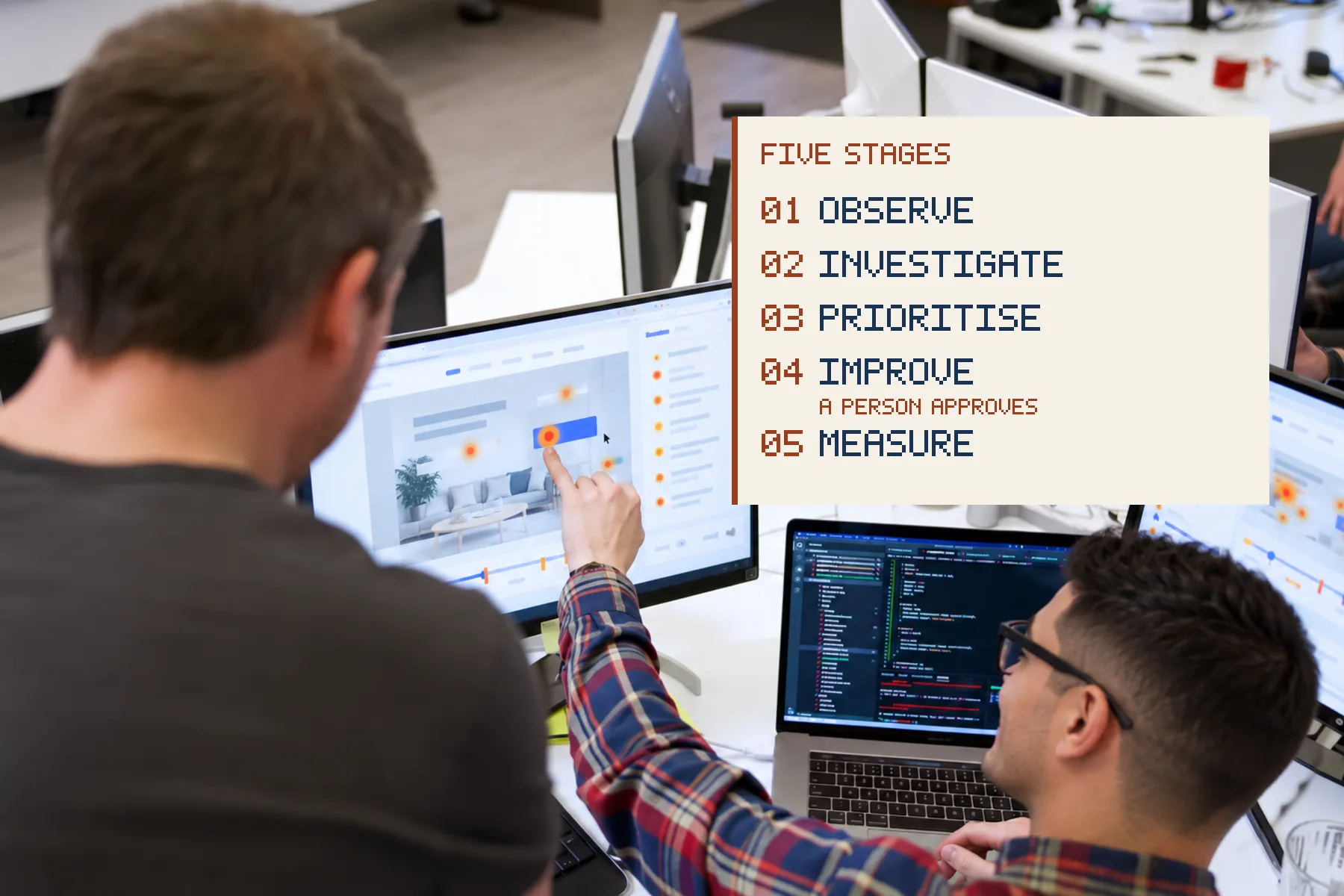
No. AI will not replace UX designers, and we say that as an AI-native agency that still employs them. What AI already does in our workflow is compress exploration, drafting and production polish; what it cannot do is own research judgement, taste under business constraint, or accountability when a flow fails real users. The job is changing - fewer hours spent pushing pixels from a blank file, more hours spent deciding what should exist.
The short answer: what AI already does in our design workflow
Inside product design at Code23, agents already:
- Draft variant layouts from a brief and design tokens
- Expand component sets once a direction is chosen
- Suggest copy alternatives for UI microcopy
- Flag obvious accessibility gaps in markup drafts
- Speed handoff notes and redlines into engineering-ready specs
Senior designers still set the problem frame, choose the direction, and sign the release. That is agentic mastery: designers wield agents as leverage, not as a replacement nameplate on the org chart. The same pattern shows up in our engineering build logs - see the AI agent build log and the definitional piece on what agentic AI is.
We have 60+ five-star Google reviews and have been shipping products into messy reality since 2005. None of that was earned by generating a pretty screen and walking away.
What “already does” looks like on a real brief, in our experience:
Exploration. Give an agent a locked token set, a content outline and three constraints (mobile-first checkout, no carousel, WCAG AA contrast). You get multiple layout directions in minutes instead of a day of silent Figma archaeology. The designer’s job shifts to culling - killing the slick nonsense fast - not to inventing every rectangle by hand.
Production expansion. Once a primary direction wins, agents fan out states: empty, loading, error, success, long-content overflow, small-screen collapse. That expansion used to burn junior hours. It still needs a senior pass; it does not need a senior typing every variant from zero.
Microcopy and accessibility drafts. Agents propose button labels, error text and alt-text candidates. Designers and writers keep voice, legal risk and clarity. Models are fluent; they are not accountable for a misleading CTA that inflates bounce on a paid campaign.
Handoff. Spec notes, spacing tokens and component props move into engineering-ready form faster when agents draft the boring inventory. Review stays human because a wrong prop name in a design system ships confusion just as quickly when delivery is AI-accelerated.
Est 2005 taught us the same lesson every tooling wave taught: speed without taste produces polished waste. Agents raise the floor on production pace. They do not choose which floor you should build.
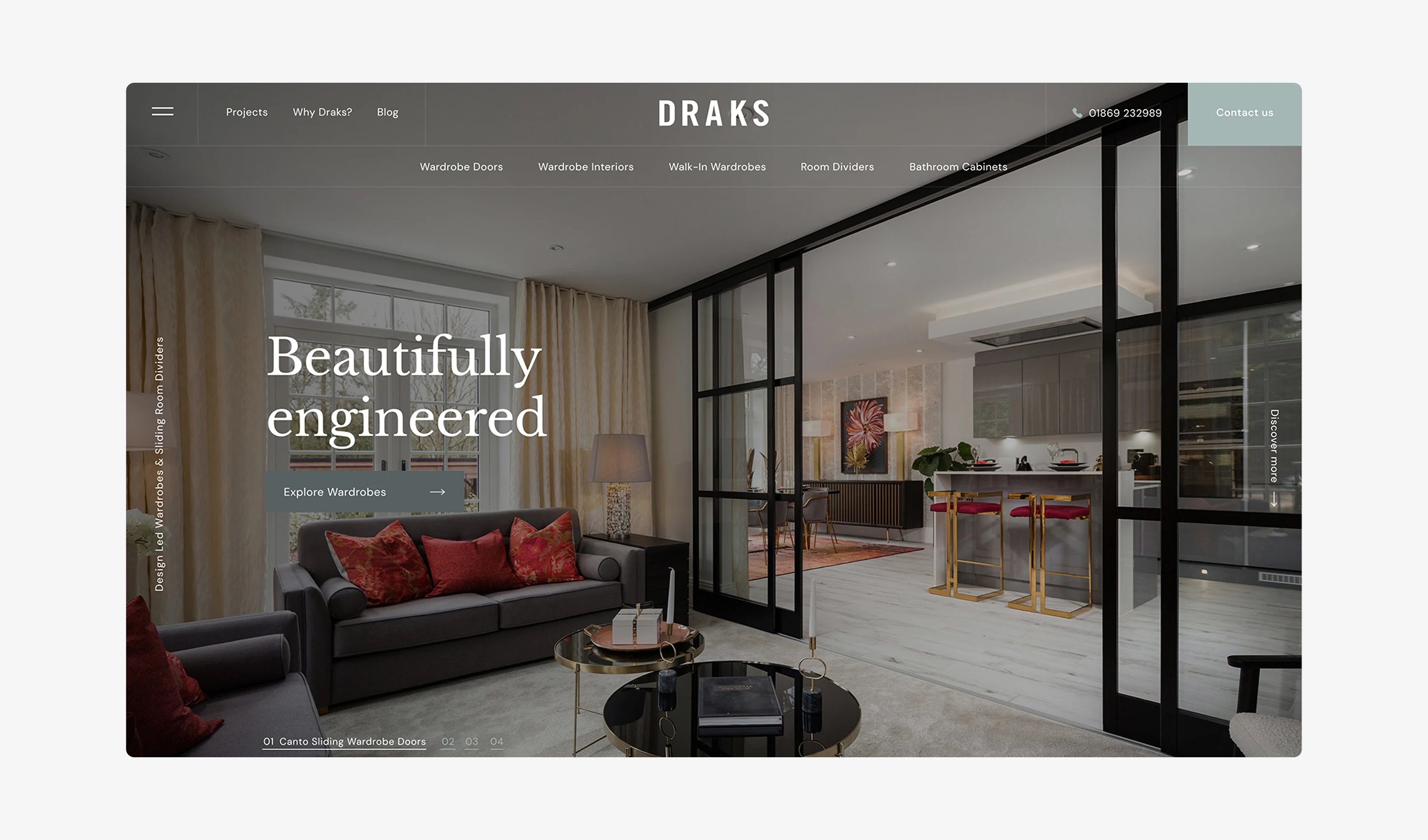
"Joe and the team at code23 have done a fantastic job helping us design and build our new website. I feel they really captured the quality of the Draks brand. Would highly recommend."
What AI genuinely cannot do in UX
Four things stay human even when the tooling gets louder.
Research that hurts. Talking to angry users, sitting in call centres, watching someone fail a form for the third time. Models can summarise transcripts; they cannot decide which contradiction in the research matters this quarter. They also cannot notice the pause before a user lies to please the interviewer. That pause is often the finding.
Judgement under constraint. Budget, legacy database, sales politics, brand risk, legal copy. Design is choosing what to sacrifice. Generators optimise for plausible completeness; products need deliberate incompleteness. Shipping a thinner first release that sales can explain beats a beautiful flow that engineering cannot support on the real schema.
Taste. Not decoration - coherence. Knowing when a pattern is fashionable but wrong for this audience. Taste is trained on consequences, not on prompt volume. After 350+ projects you recognise when a “best practice” pattern will confuse a trade buyer who only uses the site twice a year.
Accountability. When checkout conversion drops after a redesign, a human answers. “The model suggested it” is not a warranty. Our builds carry a 90-day warranty because someone accountable shipped them.
Add three quieter gaps that show up in client work:
Stakeholder translation. Turning a founder’s half-formed fear into a testable problem statement. Agents draft problem statements; they do not sit in the room when two directors disagree about who the primary user is.
Ethics and harm. Dark patterns are easy to generate because they convert in the training data. Refusing them is a human call - especially when a stakeholder asks for the manipulative version “just to test”.
Longitudinal product sense. Remembering why a flow was simplified last year, what support tickets followed, and which metric actually moved. That memory lives in the team and the issue tracker, not in a fresh chat context window.
We use agents inside those limits on purpose. Summarise the interviews, yes. Decide the roadmap from the summary alone, no. Draft the variant, yes. Sign the release, no.
How the UX designer’s job is changing, from our own team
The blank-canvas hero myth is dying. Good. The work shifting toward our designers looks more like:
- Problem definition and workshop facilitation (product discovery workshop)
- System thinking - tokens, components, states, empty/error/loading
- Prototyping with production constraints in mind (we design next to engineers, not in a separate castle)
- Evaluation - critique, usability tests, analytics reads
- Directing agents: tight briefs, ruthless editing, rejection of slick nonsense
Junior production tasks compress. Senior product sense becomes more valuable, not less. Teams that only hired for Figma speed will feel pain. Teams that hired for judgement will ship faster with the same headcount.
Day-to-day changes we already run:
Briefs got stricter. Vague “make it modern” prompts produce expensive sludge. Designers write tighter constraints - audience, job-to-be-done, non-goals, technical limits - because agents punish ambiguity with confident wrong answers.
Critique got heavier. More options per hour means critique is the scarce skill. We train for kill criteria: does this reduce steps, clarify hierarchy, survive the real data shape? Pretty is not a criterion.
Collaboration with engineering tightened. When agents help implement, designers review in the working stack earlier. Pixel-polishing in isolation wastes the speed gain. The designer who can read a pull request and spot a missing empty state is more useful than the one who only exports screenshots.
Research time is protected, not cut. The temptation is to skip interviews because generation is cheap. We do the opposite: spend saved production hours on contact with users and on measuring what shipped. Otherwise you iterate fiction faster.
Career paths tilt. Production-only roles shrink. Facilitation, systems, evaluation and agent direction grow. That is uncomfortable for portfolios built entirely on visual spectacle. It is healthy for products that have to work on a phone in a warehouse.
Since 2005 we have watched tools promise to erase designers - templates, builders, offshore volume shops. The pattern repeats: production compresses, demand for judgement rises. Agentic tooling is a sharper version of the same curve, not a break with it.
What this means if you’re buying design work
Cheaper? Often the production slice, yes - agentic pipelines cut idle hours the same way they do in engineering (half-cost framing versus a traditional studio bench for comparable production design). Faster? Exploration cycles shrink when variants appear in minutes. Different? You should demand evidence of research and decision logs, not only moodboards.
What you should not buy:
- “AI designed your entire product” with no named designer
- Unlimited screenshots as a substitute for a journey
- A UI kit with no IA
- A generative restyle of a broken funnel with no measurement plan
- Unlimited revision rounds with no decision owner on your side
What you should buy:
- A discovery or UX audit that names the leak
- A designer who can explain trade-offs in plain English
- A path into production code, not a PDF orphan
- Explicit release authority and a warranty culture - we use 90 days on builds we ship for a reason
- Proof that agents sit under senior direction, not instead of it
If your question is budget replacement, ask what risk you want a model to own. Most buyers, when pressed, still want a human on the hook.
Procurement tells that help:
Ask who directs the agents. If the answer is “the AI does the design”, walk. If the answer is a named senior with a portfolio of shipped products, keep talking.
Ask what gets measured after launch. Screens without analytics and support feedback are decoration. Design worth paying for includes a path to learn whether the journey worked.
Ask how change requests work. Production speed makes “one more variant” addictive. Commercial discipline, pricing every change before we do it, keeps exploration from eating the launch date.
Compare like with like. A cheap generative mockup pack is not the same purchase as agent-assisted design inside a fixed Blueprint with a Harden pass. Half-cost only means something when the scope and accountability match.
We still employ designers because clients buy outcomes under constraint, not infinite JPEGs. The unfair advantage is seniors who can wield agents without surrendering taste or warranty.
How we run design in an agentic delivery pipeline
Humans lead. Agents execute. Problem framing and flows stay human-led; agents multiply options inside locked tokens and principles; designers cull hard; engineering review happens in the real stack; empty states and accessibility get a Harden pass before release; measurement drives the next experiment. One accountability line matters: release authority stays with senior people. We do not pad every paragraph with “a human checked this” disclaimers - our delivery model is the control, not a nervous refrain.
Agents help cluster research notes and draft journey hypotheses, but designers and stakeholders still decide the success metric and the non-goals. Volume of variants goes up; the designer’s kill rate must go up with it. Component rules and accessibility notes get drafted fast, then edited for edge cases the model misses. Support tiers from £495/month upward exist when you want that measurement loop on a retainer instead of ad-hoc panic.
Design sits inside the same commercial discipline as our builds: a fixed price agreed before work starts, any changes priced before we do them, 90-day warranty - see product design.
Is UI/UX replaced by AI?
No. UI/UX is not replaced by AI. AI replaces chunks of production labour inside UI/UX; research, judgement, taste and accountability remain human-led. Agencies that claim full replacement are selling demos. Agencies that hide AI entirely leave useful tooling unused.
Are UX designers safe from AI?
Designers who only push pixels are not safe. Designers who can frame problems, run research, make trade-offs and direct tools are in a stronger position than they were five years ago. Safety tracks skill shape, not job title nostalgia.
Is UX design worth it in 2026?
Yes, if you treat it as product risk reduction - fewer failed launches, clearer journeys, measurable conversion work - not as decorative garnish. In 2026 the bargain is better: more exploration per pound when agents compress production, with seniors still steering.
What 5 jobs will AI not replace?
No list is permanent, but roles heavy on accountability, physical presence, contested judgement, deep trust and original research resist replacement. In our world that includes senior UX that owns outcomes, not only artefact production. Treat viral “5 jobs” lists as conversation starters, not labour-market gospel.
What jobs will be gone by 2030 due to AI?
Some production-only design and generic template assembly roles will shrink or vanish as tooling absorbs them. Exact casualty lists for 2030 are speculation; the practical move is to shift humans toward problem framing and evaluation while agents take repetitive production. We plan teams that way now rather than betting the company on a prophecy chart.
How is AI actually changing the day-to-day UX design process?
Briefs get tighter because agents punish vague ones with confident wrong answers. Variant generation happens in minutes instead of days, so critique becomes the scarce skill, not production speed. Designers spend more time in the working codebase reviewing what got built and less time exporting screenshots. If your process still looks like 2022, that’s the gap to close first.
Should I hire a UX designer who uses AI tools?
Yes, but ask what they still do by hand. A designer directing agents inside locked tokens and a clear brief moves faster without losing judgement. One who can’t explain a trade-off without the tool is a production risk, not a bargain. At Code23 our senior designers direct the agents; they don’t hand them the release.
What skills should UX designers build to stay valuable as AI improves?
Problem framing, research synthesis, critique and stakeholder translation - the parts a model can’t own. Writing a tight brief matters more than drawing a screen from scratch. Reading a pull request and spotting a missing empty state is now more valuable than exporting a moodboard. Production speed is table stakes; judgement is the differentiator.
Next step
If you’re weighing up whether to bring AI into your design process, the answer isn’t a blanket yes or no. It’s which parts of the work you hand to agents and which parts still need a senior designer’s judgement, backed by someone who’ll answer for the outcome.
We’ve been running design and development since 2005, with 60+ five-star Google reviews and 350+ projects behind us. Our product design team uses agents to move faster through exploration and production, then puts a named senior in charge of the release.
Start with a UX review or a straight conversation about your product, and we’ll tell you exactly where AI earns its place in your process and where it doesn’t.
Design the product
Make the product easier to use before you build it.
We’ll turn the key journeys into a testable prototype, remove friction and give the build team a clear product direction.