eCommerce Vs Online Marketplace Websites
Ecommerce site or online marketplace? Compare the real differences in cost, technology, payments and growth, from an agency with eCommerce experience since 2005 and 50+ marketplace builds over 15+ years.
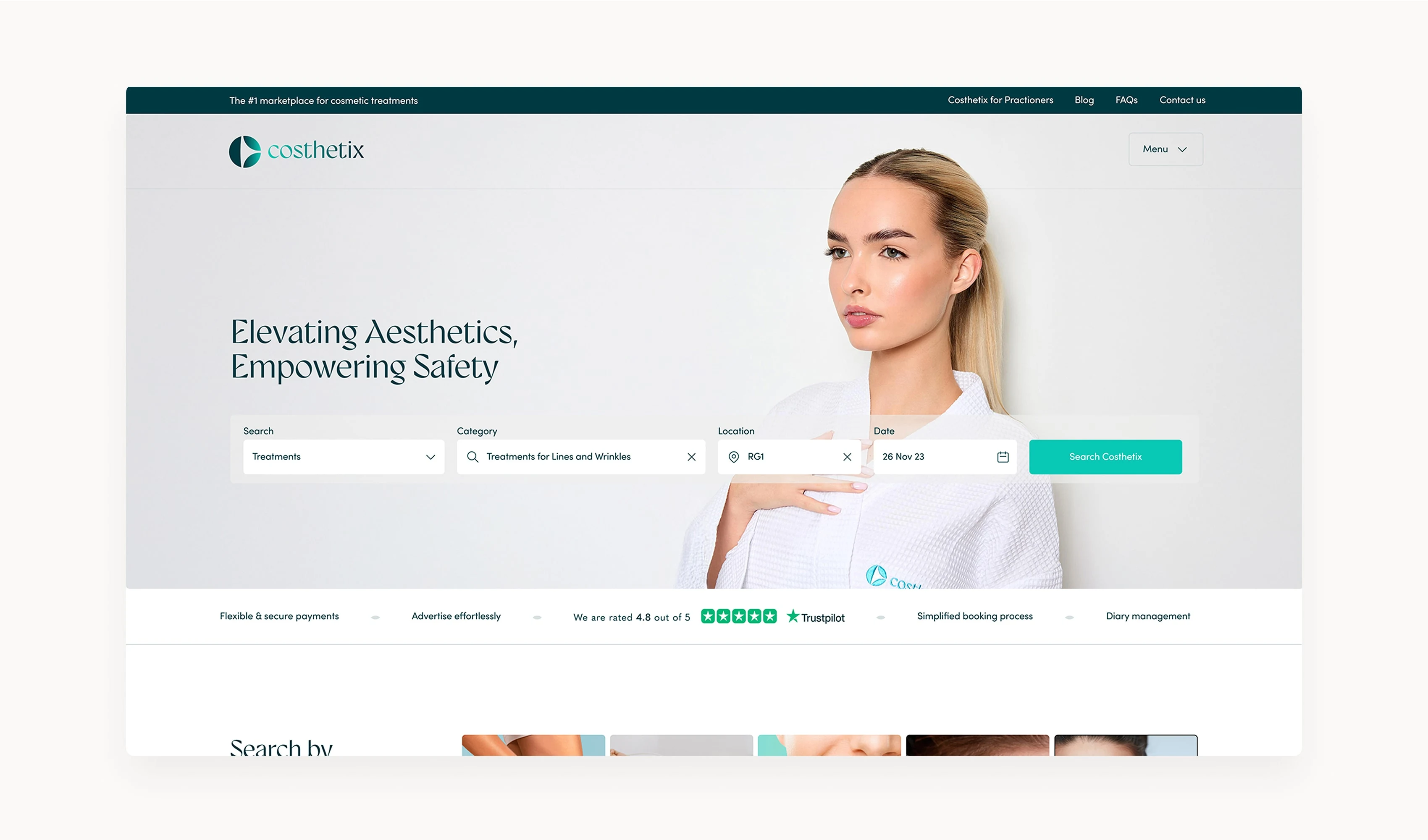
What’s the difference between an ecommerce website and an online marketplace? An ecommerce website is one business selling under its own name: that business sets the pricing and owns the customer relationship, whether it holds the stock itself or ships it through a dropshipping or fulfilment partner. An online marketplace is a platform where multiple independent sellers list and sell to buyers, usually earning the platform a commission on each sale; a marketplace may or may not hold stock itself, depending on its operating model. Code23 has delivered eCommerce work since 2005, including single-brand stores like EnjoyCBD and Williamson Tea. We’ve also built 50+ marketplaces over 15+ years, including Costhetix and Sponsorfy. The right choice comes down to whether you’re selling your own products or bringing multiple sellers together under one roof.
Neither model is better on its own. An ecommerce site is usually quicker and cheaper to launch if you already have products to sell. A marketplace often requires additional seller, payment, trust and operational workflows, although cost and timing depend on the requirements, but it can scale by adding sellers rather than by you holding more stock yourself. This guide walks through both, the practical differences that matter, and how to work out which one fits your business.
Contents
- eCommerce websites
- Online multi-vendor marketplace websites
- What are the differences between a single vendor eCommerce website and a multivendor marketplace?
- We’re your eCommerce and Online Marketplace solution

What is an eCommerce website?
An eCommerce website allows a sole vendor (e.g. Next) to sell their wares. It’s the online shop for that particular brand, built on a platform such as WooCommerce or Magento. (Talking of which, here is our guide to which eCommerce platform is best for your business.) The owner of the eCommerce site is the seller the customer buys from and is responsible for sourcing and promoting the products, whether they hold and ship the stock themselves or use a dropshipping or fulfilment partner to store and distribute it.

What is an online multi-vendor marketplace?
A multi-vendor marketplace allows numerous vendors to sell their wares alongside each other. The owner of the site usually connects vendors with buyers, and it’s typically down to each seller to handle their own inventory, though some marketplaces provide fulfilment services on the vendors’ behalf. The most famous example, of course, is Amazon but you may have also used the likes of Gumtree, eBay, and NotOnTheHighStreet.
What are the differences between a single vendor eCommerce website and a multivendor marketplace?
Although both options share a common theme of allowing products and services to be sold online, there are a number of key differences between the two. Let’s take a look.
"James and his team are very talented, energetic and ambitious ... No smoke nor mirrors, but straightforward and honest. We are delighted to have found them and very grateful for their help in making our new business flourish."
Inventory
The products listed on an eCommerce site are the responsibility of the site’s owner. A retailer’s catalogue may be constrained by working capital, supplier arrangements, storage or fulfilment capacity; dropshipping, digital products and fulfilment partners change those constraints. For example, it may be that stock needs to be sold (potentially by reducing prices) before it can be replenished.
A multivendor marketplace faces different constraints. More vendors can mean a bigger inventory, with storage and distribution usually handled by the vendors themselves, which reduces the marketplace owner’s stock risk. But a marketplace has its own limits: it needs enough buyers and sellers to reach liquidity, the trust and vetting to get people transacting safely, and the ongoing work of onboarding and supporting vendors.
Costs
If you’ve got one main product (or product line) that you expect to be your best seller (known as a hero product), an eCommerce site may fit best. WooCommerce may be a suitable route for this hands-on option, depending on your catalogue, integration, hosting and support requirements; it can be as simple or complicated as you need.
If your long-term plan is to scale by adding sellers rather than stock, a marketplace strategy may fit better. There may be a bigger initial cost to get it designed and developed; once it's in place, the structure may support additional sellers and listings, though it does not guarantee recovery of the build cost.
One thing to consider early on with a multivendor marketplace is to test there is a demand for what you’re offering using what is known as a minimum viable product (MVP). You can discover the benefits of building an MVP here.
Scaleability
Both options have the capacity to grow as and when you need. If business is booming on your eCommerce site, it can scale as your business grows. Growth constraints depend on the operating model and may include supply, fulfilment, working capital, technology and customer acquisition.
Scaling a marketplace by adding new vendors avoids the cost of replenishing and distributing stock yourself, since that responsibility usually sits with your vendors. It brings its own complexity too, though: vetting and onboarding new sellers, keeping quality consistent, and supporting more people trading on the platform.
Before you do anything with a build though, you need to get your research, brand, marketing, and business model in place.
Payment systems
Whether you’re considering an eCommerce site or multivendor marketplace, making it easy for your customers is key. Missing a shopper’s preferred payment option at checkout can contribute to cart abandonment, so it’s worth measuring for your own checkout rather than assuming which option matters most.
Payment on an eCommerce site is usually simpler to set up, because the transaction is between you and the buyer, often through a standard payment plug-in. A multivendor marketplace needs more: onboarding and verifying each seller, splitting payment between the seller and your commission, handling settlements and payouts, and managing refunds and disputes, usually through a payment provider built for marketplaces. This will depend on the revenue structure you agree with your vendors.
For further tips on ensuring your customers complete their purchases online, here’s our guide on how to avoid the most common reasons for shopping cart abandonment.

Revenue streams
Revenue and cost allocation depend on who contracts with the buyer, the payment flow, fulfilment, tax responsibilities and the marketplace’s fee model.
Comparing the two fairly means looking at contribution margin after payment fees, fulfilment, tax, support and operating costs, rather than assuming an eCommerce site earns more or a marketplace earns less per sale. A marketplace can also earn revenue from listing fees or premium placements, and its potential comes from the volume it can carry across many vendors.
Site navigation and user interface
Offering shoppers an enjoyable experience is one factor that can influence whether they complete a purchase. That’s why both eCommerce and multivendor sites should focus on the user experience (UX) and provide an interface that is intuitively easy-to-navigate.
A single-seller shop often has fewer user roles, but its catalogue and buying journey can still be complex. A marketplace has more journeys to design for: buyers browsing and buying, sellers managing their listings, and often an operator or admin journey and any fulfilment or support handoffs behind the scenes.
Where accounts or dashboards are needed, design buyer search and vendor management around the actual catalogue, transaction and operating model.
Want to know more ways of keeping your customers happy online? Here are our 11 best practices for eCommerce UX.
Technology
The good news is whether you want an eCommerce or multivendor marketplace, the technology exists to get your business off the ground.
eCommerce sites are relatively easier to get from concept to launch. WooCommerce can be close to plug-and-play for a simple shop, while Magento has different enterprise features and typically requires substantial configuration, hosting and ongoing operation even before you customise it. For a deeper dive into the best eCommerce platform for your business, check out our guide to WooCommerce Vs Magento.
The technology behind a marketplace is more involved, but there’s more than one valid route to it. SaaS marketplace platforms, plugins, low-code tools and fully custom builds can all work, depending on your requirements, budget and how much you need the platform to do differently from everyone else. Whichever route you take, test it across the devices your buyers and sellers use.
We put together a more in-depth guide comparing SaaS, plugin, low-code and custom marketplace build routes.

Time to launch
Whatever your needs, there’s an option. If your business goal is to sell your own products, an eCommerce site is often a simpler route when one merchant is selling, and an established commerce platform may reduce implementation work for a straightforward shop.
A multivendor marketplace often needs additional seller, payment and operational workflows, which may extend the launch plan. There is also the added time factor of finding vendors to use your site to sell their products.
Marketing
To get your digital business off the ground, both eCommerce sites and multivendor marketplaces need marketing so people know your brand exists, where to find you, and what you offer.
For an eCommerce site, the focus is purely on the buyers and driving traffic to your site with marketing that positions your brand as the solution to their problem.
A marketplace has a slightly more complex marketing goal, as the target audience is both buyers and sellers. One positive from this wider audience is that you could also benefit from the additional marketing efforts of your individual sellers, and from a potentially larger group of buyers who may leave reviews that help spread the word about your marketplace.
Either way, SEO (search engine optimisation) can improve how search engines understand and discover your site, though, as Google’s own SEO guidance makes clear, it doesn’t guarantee crawling, indexing, rankings or traffic.

For more information on how to market and grow your multi-vendor marketplace check out our guide.
We’re your eCommerce and Online Marketplace solution
We’ve delivered eCommerce websites since 2005. We’ve also built 50+ marketplaces over 15+ years. As specialists in both, we’d love to help take your online business from concept to launch.
Frequently asked questions
What’s the simplest way to tell an ecommerce site from a marketplace?
Ask who is selling to the buyer. On an ecommerce site, one business is the seller for every product, whether it holds the stock itself or ships it through a partner. On a marketplace, multiple independent sellers transact with the buyer and the platform usually takes a commission rather than being the seller itself. If you can’t answer that question for your own business yet, that’s usually the first thing to work out, not the technology.
Is Amazon a marketplace or an ecommerce site?
Both. Amazon sells its own stock as a retailer, and it also runs a marketplace where independent sellers list products alongside Amazon’s retail offer; fulfilment may be handled by the seller or through Amazon’s own fulfilment services. Very few businesses start out needing both. Many businesses begin with one model and add another only where evidence supports it.
Is Facebook Marketplace an example of ecommerce?
It’s a form of ecommerce, but not the multi-vendor model this guide covers. In the UK, Facebook Marketplace mainly facilitates discovery and contact between buyers and sellers; Meta’s current UK help page says selling with delivery isn’t available in this location, so payment and collection are arranged between the parties.
What are the different types of ecommerce?
Common relationship models include B2C (business to consumer), B2B (business to business), C2C (consumer to consumer, often via a marketplace) and C2B (consumer to business). D2C (direct to consumer) is a form of B2C that cuts out traditional retailers, while subscription is a revenue model rather than a buyer/seller relationship category. A multi-vendor marketplace usually sits across several of these relationship models at once, most often B2C or C2C, depending on who’s allowed to sell.
Next step
Choosing between an ecommerce site and a marketplace comes down to one question: is your business the seller for every product, or are you bringing multiple independent sellers together to transact with buyers? Stock ownership, fulfilment and commission are separate choices you make once you know which model you’re building. Cost, technology, payments and how you scale all follow from that answer.
If you’re still weighing it up, our free Marketplace Growth Review is a 30-minute call that can help you work out which model fits your business and what it would take to build it properly, whichever one turns out to be yours. We’ve built 50+ marketplaces over 15+ years. We’ve also delivered 350+ projects since 2005, including single-brand ecommerce stores.
Build the marketplace
Start with the workflows that make the model work.
We’ll map buyers, sellers, payments and operations before the build, backed by experience from more than 50 marketplace projects.


