The Benefits of Building a Minimum Viable Product (MVP)
The real benefits of building an MVP before your full product: faster user feedback, lower build risk, and real evidence of whether people want what you're planning to build.
The biggest benefit of building an MVP is simple: you test whether people want what you’re building before you’ve spent the time and budget finding out the hard way. It’s the same idea as tasting the cake mix before the bake is finished, just applied to software. For us, a Minimum Viable Product is the smallest working version of your idea that real users can actually try, not a mockup or a pitch deck. At Code23 we build MVPs as real, working software, because feedback on something people can click through and use is worth more than feedback on a set of screens. Get that thin, working version in front of real users first, and you’ll have real evidence for what to build next, instead of guessing.
Contents
- What is a Minimum Viable Product?
- The origins of MVP in lean startup management
- Examples of brands that started as MVPs
- Planning your Minimum Viable Product
- Need an MVP ASAP?
- Frequently asked questions
- Sources
- Next step

Tasting as you go is how you find out whether the recipe needs tweaks, and get feedback from friends and family on the cake mix or creamy filling before you decide whether it’s good enough for the ‘Star Baker’ crown (as we said, we like to dream).
The same ‘taste test’ principles apply when you’re bringing a new product (or software solution) to market, and plenty of new products fail to find a market. A Minimum Viable Product (MVP) lets you test demand with real users before you commit to building the full product.
What is a Minimum Viable Product?
Quite simply, a minimum viable product is an early version of a product with just enough features to allow it to be released to market. It’s by no means the finished product, but a usable version that lets early customers try out, test, and validate the product idea.
Although the ‘M’ stands for minimum, releasing an MVP can bring big benefits.
- It helps you get early user feedback
- It helps validate your product concept
- It helps test market demand
Together, that helps you spot issues and improve future versions of your product before you’ve spent the full development budget.
An MVP isn’t just a more polished prototype: a prototype helps you test how something might look and work, while an MVP puts something real in front of users to test whether they want it. Check out high-fidelity vs low-fidelity prototypes for more details about the different kinds of prototype.
"Code23 were the best company I could have found to start my new business website. Despite it being a relatively hard to explain idea, James and the team understood exactly what the site's function was and built a brilliant bespoke design to fit my needs… deliver something that I am proud to have as the main online front for my business"
The origins of MVP in lean startup management
The term was coined by Frank Robinson in 2001 and popularised by Steve Blank and Eric Ries, author of ‘The Lean Startup’.1 He described them as “that version of a new product which allows a team to collect the maximum amount of validated learning about customers with the least effort”.2
Your MVP doesn’t have to be all-singing, all-dancing with lots of features. In one of his talks, Ries suggests taking the smallest set of features you can think of, then cutting it in half, and then cutting it in half two more times.3
Early user feedback on your MVP’s features (and what features are missing) can help inform what the next version of your product should look like. Ries calls this the Build-Measure-Learn feedback loop.4

Examples of brands that started as MVPs
Some of the biggest brands in the world started with small, stripped-back first versions that worked like MVPs. Let’s take a look…
Airbnb
Airbnb now has more than 5.5 million hosts, according to its own figures from May 2026.6 But when co-founders Brian Chesky and Joe Gebbia first tested their idea in October 2007, as AirBed & Breakfast, their MVP didn’t have multiple properties at multiple price points in multiple locations. It simply offered three air mattresses in their San Francisco apartment to people coming to a design conference in the city, to see if there was a market for staying in someone’s home when visiting a new area. It worked. Three guests paid $80 each.5
Twitter (now X)
Twitter (now X) started in 2006 as a side project at podcasting company Odeo. Its first prototype was an internal service for Odeo employees, letting them share short status updates by SMS, and it was released to the public in July 2006.7 Starting with a small internal group meant the team had real people using a stripped-back version before anyone else saw it.
Spotify
Spotify reported 777 million monthly active users in its Q2 2026 results.8 Its first version was a rough technical prototype, built to answer one question: could music start playing the instant you pressed Play? “Obsessing over small details can sometimes make all the difference,” said Spotify co-founder Daniel Ek. “That’s what I believe is the biggest misunderstanding about the minimum viable product concept. That is the V in the MVP.”9 The team tested it on themselves, family and friends first. It could do little more than find and play a few hard-coded songs, but people loved it, and it helped convince music labels and investors.9

Planning your Minimum Viable Product
CB Insights’ 2026 analysis of VC-backed startups that shut down since 2023 found running out of capital was the most-cited reason (70%), but it calls that the final cause rather than the root problem. Poor product-market fit, cited by 43%, was the biggest underlying reason.10 So, here are some key things to consider when bringing your minimum viable product to market.
Identify the business needs
Ask yourself: Why should this product exist? What gap in the market does it fill? What customer pain points does it solve? Answering these questions can help shape your product roadmap, long-term goals, and your MVP. It can also help you define what success looks like for your brand, so you have key metrics to aim for and measure.
Find the opportunities
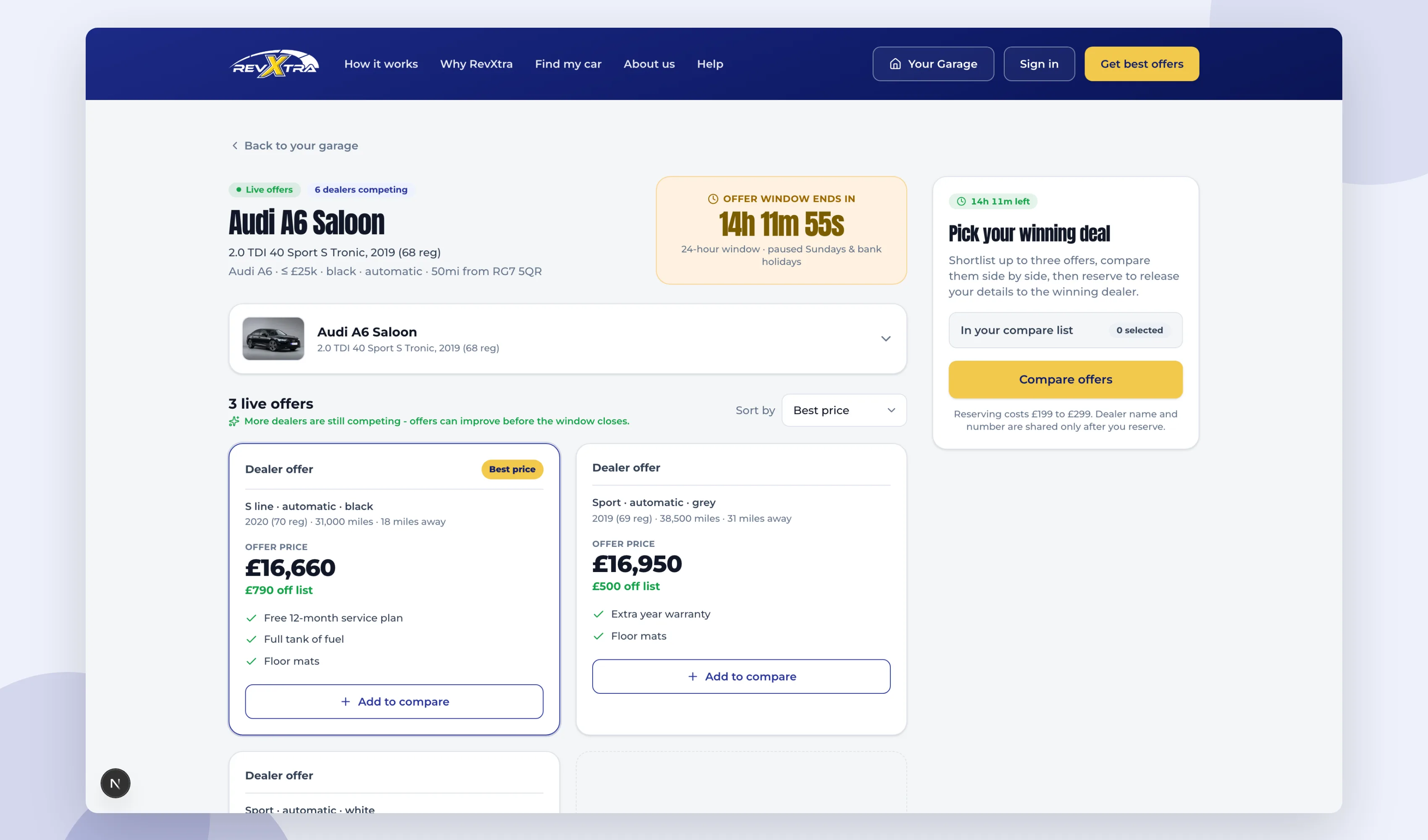
Once you’ve identified your market niche and customer problems, the next question is how you’re going to solve them. A good way to do this is to identify your users and plot their user journey. That helps you map the actions a user needs to complete to get from point A (problem) to point B (solution). Then, note the pain points and benefits (value to the user) of completing each action on your list.
Choose which features to build first

The next step in the process is to use the information you’ve gathered so far to prioritise the actions so you know which to include in your MVP. That’s not to say you won’t eventually include them all, it just helps you decide what to focus on first. The other actions and features can be added in future versions of your product. Prioritising features this way gives your MVP a better chance of landing well with early users.
Need an MVP ASAP?
Sure, there’s a cost involved in rolling out a Minimum Viable Product, but it can be a smaller bet than spending years on research and development to build a product you think customers will want, only to find they don’t.
When an MVP or custom software brief isn't clear enough to price yet, we start with product discovery: a Discovery Sprint that pins down what the project needs before the build starts, credited against the build.
Frequently asked questions
Why build an MVP instead of the full product first?
Because it’s a lower-cost way to gather demand evidence from real use. An MVP gets a real, working slice of your idea in front of real users, so you gather evidence about demand before you’ve committed years and a large budget to features nobody asked for. It also helps show which features actually matter to build next.
What should I look for in a minimum viable product agency?
Look for a team that has taken MVPs into a full product before, not just built a demo and moved on. Ask how they’d scope what’s core versus what waits, whether the price is fixed or open-ended, and whether they can take the build further once you’ve proven demand. Where the brief isn’t clear enough to price yet, we start with a Discovery Sprint, credited against the build, so the scope is agreed before the build starts.
How much does it cost to build an MVP?
It depends on what actually counts as core to your idea, and that’s often less than founders first expect. We agree a fixed price up front rather than charging a day rate. If the brief isn’t clear enough to price yet, a Discovery Sprint comes first and is credited against the build. It’s a smaller commitment than spending months building features before you know whether people want them.
Is building an MVP different for a marketplace?
Yes. A marketplace MVP usually needs to let a real buyer and seller complete one core transaction end to end, not just reach a payment button. For most marketplaces that means listings, checkout or booking and payment (or a close equivalent) working together, not a payment button bolted onto a demo. Our guide on building an MVP marketplace covers what to include first.
Sources
- https://en.wikipedia.org/wiki/Minimum_viable_product
- https://airfocus.com/glossary/what-is-a-minimum-viable-product/
- https://blog.holub.com/p/an-mvp-is-a-test-not-a-product
- https://theleanstartup.com/principles
- https://www.penguin.co.uk/discover/articles/the-air-bnb-story
- https://news.airbnb.com/about-us/
- https://www.history.com/this-day-in-history/july-15/twitter-launches
- https://newsroom.spotify.com/2026-08-04/spotify-q2-2026-earnings/
- https://blog.crisp.se/2016/01/25/henrikkniberg/making-sense-of-mvp
- https://www.cbinsights.com/research/report/startup-failure-reasons-top/
Next step
An MVP isn’t about doing less just to do less. It’s about gathering evidence about whether people want what you’re building before you’ve spent the budget to learn that the hard way.
If you’re still working out what’s actually core to your idea, a Discovery Sprint helps you pin it down before any code gets written, and it’s credited against the build. We’ve delivered 350+ projects since 2005, and we’ll help you judge which features belong in the first release and which can wait.
Plan the next release
Build the next version around the result it needs to produce.
We’ll define the scope, design the journeys and build the systems behind them with one senior UK team.