AI Training for Businesses: Free vs Role-Based Training
Free AI courses build literacy. Use role-based training when staff must apply AI safely to real tools, data, decisions and approval boundaries.
Free foundation courses are a good starting point for general AI literacy. A business needs role-based or workflow-specific training when staff must apply AI to real tools, real data, real decisions and clear approval boundaries. Literacy tells people what the tools can do. Working methods tell them what is allowed, how to check the output and who signs off when it matters.
That gap explains why many UK teams finish a short course and still work ad hoc: different prompts, different tools, different risk tolerance, no shared way to review results. Government and industry free courses are expanding for a reason. A GOV.UK announcement on 28 January 2026 said every UK adult is eligible for free, newly benchmarked courses through the AI Skills Hub, with a programme target of 10 million workers by 2030. The same release points to research reporting that 21% of UK workers felt confident using AI at work and that one in six UK businesses used AI as of mid-2025. Those figures come from the linked government research, not from Code23.
If you are deciding what your team needs next, start with the work they do, the data they touch and the risk of a wrong answer. Free courses often cover the first mile. They rarely prove that your sales, ops or support process is ready for day-to-day use.
Free foundation vs paid vs role-based vs workflow training
Use this comparison to decide what fits, not as a ranking of providers.
| Training type | Good for | What it cannot prove | When to move on |
|---|---|---|---|
| Free foundation courses | Shared vocabulary; simple drafting and admin uses; first responsible-use habits | That your tools, data rules and approvals are ready for live work | Staff can use simple AI tasks but still invent their own methods |
| General paid courses | Deeper tool practice; structured modules; certificates some buyers want | Fit to your CRM, documents, customers or risk profile | Completing modules does not change how work leaves the building |
| Role-based training | Sales, support, marketing, finance or leadership patterns with shared examples | That every edge case in your business is covered | People know the role pattern but still struggle on your real systems |
| Workflow-specific training | One named process end to end: inputs, tools, checks, escalation, owner | That training alone will connect systems or remove manual handoffs | The process needs reliable system links, monitoring or custom software |
Skills England’s AI foundation skills for work benchmark (28 January 2026) is aimed at confident and responsible use of simple AI tools at work. Named areas include understanding risks and consequences, creating prompts and adapting generative-AI settings, interpreting data trends in simple AI dashboards, and automating routine tasks with AI tools. That is foundation literacy. It is not a substitute for training on your customer data, your approval chain or your live stack.
How to decide what level of training you need
Score the work, not the hype. Ask five questions for each team or process:
- Work. Is the job personal productivity (drafting, summarising, admin), or a shared customer-facing or finance-facing process?
- Data sensitivity. Does the work involve personal data, confidential commercial information, or only public and low-risk text?
- Risk. What happens if the output is wrong, incomplete or sent without review?
- Repeatability. Do you need the same method every week, or is occasional individual use enough?
- Ownership. Who owns the working method, the tool choice and the escalation path when AI is unsure?
Practical read:
- Low sensitivity, low risk, individual use → free foundation courses, plus a short internal note on approved tools.
- Shared role, medium risk, need for consistency → role-based training with examples from your work.
- Named workflow, higher risk, or personal data in the loop → workflow-specific training that includes checks, human approval and data boundaries.
- Systems must pass data between tools, or the process must run without relying on memory → that is usually automation or software work, not a course.
The ICO’s guidance on AI and data protection (reviewed 21 January 2026) is the baseline for organisations thinking about personal data and AI. Separately, its note on security and data minimisation in AI says organisations should ensure staff have appropriate skills and knowledge to address AI security risks; that security should cover software components, data flows, organisational workflows and business processes; and that you should process only the personal data necessary for the purpose and review risk-management practices. Training supports that picture. Completing a course does not create compliance on its own, and this article is not legal advice.
What this looks like for common roles
These are illustrative patterns, not performance claims.
Sales. Useful training covers approved research and draft outreach, CRM note quality, what never goes into a public model, and who approves non-standard pricing language. Free courses help with prompting. Role-based practice is what stops five reps inventing five risk profiles.
Operations. Useful training covers status updates, meeting notes, checklist drafting and exception summaries inside the tools you already use. If the pain is re-keying between systems every day, training will not delete that work. That is an automation question.
Customer service. Useful training covers draft replies, tone, escalation triggers and what must be checked before send. High-risk refunds, legal commitments or unsupervised public replies should stay outside unsupervised AI use.
Marketing. Useful training covers briefs, first drafts, source checking and brand or claims review before publish. Volume without an editorial gate is how thin content and wrong claims escape.
Leadership. Useful training covers how to set approved tools, data boundaries, success measures and where humans remain accountable. Leaders do not need to become prompt specialists. They do need a decision framework the rest of the business can follow.
"…provided us with a fully rounded service, including plenty of support, advice, and guidance for the future too. We are all very excited to welcome our customers back to our wonderful new e-learning platform."
What useful AI training should include
Whether you buy external help or build an internal programme, useful training is specific:
- Foundation literacy. What generative AI is good at, where it fails, and how to ask for useful output.
- Approved tools. Which products staff may use, on which devices, and which are out of bounds.
- Task practice. Real examples from the role or workflow, not generic demo prompts.
- Prompt and input quality. How to give context, constraints and source material without pasting secrets into the wrong place.
- Checking outputs. Fact checks, citation habits, and when to discard a fluent but wrong answer.
- Personal and confidential data boundaries. What may be processed, what must be minimised, and what never leaves the building.
- Human approval. Which actions need a named person before anything reaches a customer, supplier or public channel.
- Escalation. What to do when confidence is low, sources conflict, or the request sits outside policy.
- Repeatable working methods. Short runbooks people can follow without the trainer in the room.
- Adoption measures. Simple signals such as use of approved tools, completed runbooks, error or rework rates, and whether shadow AI use is falling.
If a provider sells “AI training” without approved tools, data boundaries, approval points and a way to measure adoption, the training is unlikely to change how people work day to day.
When training is enough, and when you need automation or software
Treat training, automation and custom development as different jobs and different buying decisions.
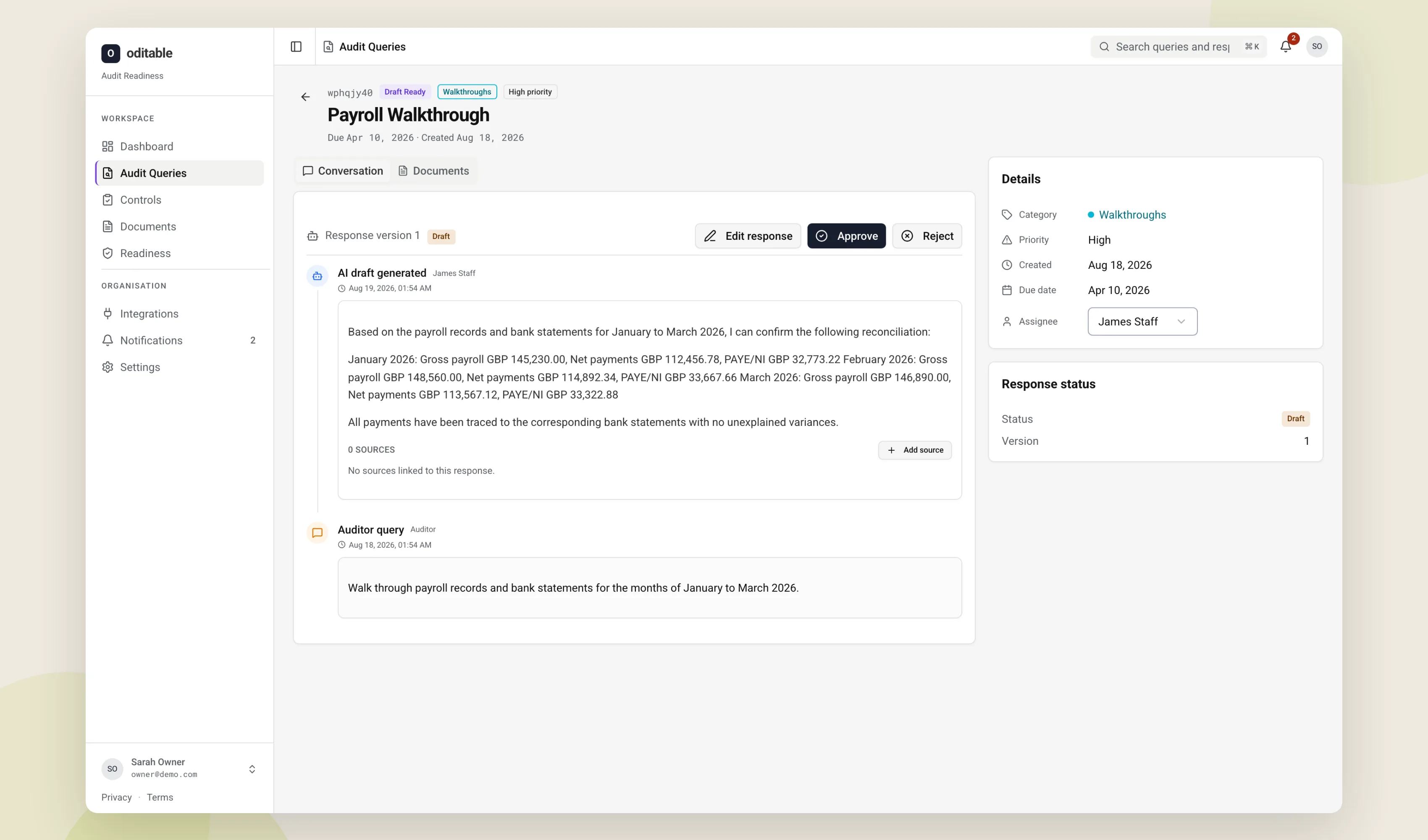
Training may be enough when the outcome is better personal productivity or a shared working method inside tools you already pay for. People still do the work. AI assists drafts, summaries, research and admin. Humans approve anything that carries customer, legal or financial risk.
Automation is the next question when data and systems must connect, or a workflow must run reliably every week without depending on someone remembering the steps. That is the territory of an AI automation agency engagement: process mapping, exception paths, monitoring and ownership. See AI automation when the problem is a manual process that still needs people to copy, chase or re-enter work every week.
Custom development is the next question when no off-the-shelf tool or light automation can do the job safely inside your stack. That sits under AI development, not under a course catalogue.
A short rule we use with clients: if the need is judgement and habit, train. If the need is reliable movement of data or repeated process execution, build. Mixing those into one vague “AI programme” is how budgets disappear without a working method or a working system.
What Code23 offers when training has to become a plan
Code23 is based in Reading and works across the UK. We have helped more than 50 businesses implement AI. Our AI consultancy work covers team training and adoption, working methods, policy, processes, existing tools, data, automation and custom development only where it is needed. We do not sell a standalone priced training package.
The priced entry offer is the AI Implementation Workshop:
- £750 + VAT
- Four hours, with up to four client attendees
- A written 90-day plan within five working days
- A 45-minute review call and one revision
The plan covers people, processes, tools, data, responsibilities, costs and success measures. You can put it into practice with your team or another supplier. If the next step is training around real workflows, configuring tools you already own, connecting systems or building something custom, that work is scoped from the plan rather than sold as a fixed training package.
If you need to compare advice, prototypes and implementation costs, the separate guide on what an AI consultant does and what they cost covers that question. This article stays on the training decision.
FAQ
Are free AI courses enough for a UK business?
They are enough for shared literacy and simple workplace uses such as drafting text, creating content and administrative tasks. The GOV.UK programme notes that some foundation courses take under 20 minutes and that every UK adult is eligible through the AI Skills Hub. They are not enough on their own when staff must handle your data, your customers and your approval rules the same way every week.
What is the difference between AI literacy and AI working methods?
Literacy is knowing what the tools can do and the main risks. Working methods are the agreed steps, tools, checks and owners for a real role or workflow. Most stalled adoption sits in the second gap.
Should we ban ChatGPT and only allow Microsoft Copilot or Google tools?
Ban or allow lists should follow data risk, contract terms and how you will supervise use, not brand fashion. Pick approved tools, write the boundaries, train people on those tools, then review shadow use. Tool choice without working methods still leaves you with ad hoc practice.
Does AI training make us compliant with UK GDPR?
No. Training can support appropriate skills and safer habits. It does not replace data-protection assessment, security review or lawful processing decisions. Use current ICO guidance and get advice for your situation. This page is not legal advice.
How do we measure whether training worked?
Look for behaviour change: approved tools in use, runbooks followed, fewer one-off risky prompts, clearer escalation, and less rework on AI-assisted output. Attendance certificates alone do not prove adoption.
When should we stop buying courses and start an implementation plan?
When free or general courses have given people vocabulary, but live work still depends on individual improvisation; when personal or confidential data is in play; or when the bottleneck is a process and system design problem rather than a skills gap. That is the point of a bounded workshop and a 90-day plan.
Role-specific AI training or general AI literacy: which should we invest in first?
Start with literacy if nobody has touched an AI tool yet: it’s quick and it’s free. Move to role-specific training as soon as people are using AI on real customer, financial or sensitive work, because that’s where a shared prompt library and a review step matter more than another module. Some businesses need both literacy and role-specific training; the order depends on baseline skills and risk.
How much does AI training cost for a small UK business?
Free foundation courses through the government’s AI Skills Hub cost nothing and are open to every UK adult. Paid role-based or workflow training from a provider or agency varies by scope, and a proper implementation plan sits above that again. Our AI Implementation Workshop is £750 + VAT for up to four client attendees. Any training, automation or development identified by the plan is scoped separately.
Should managers or the whole team attend AI training?
Whoever owns the risk should be in the room, not just whoever is keenest on AI. For role-based training, include the people doing the work and someone authorised to approve the method afterwards. Leadership content may need a different risk and governance focus, on tools, data boundaries and where humans stay accountable, not the same deck as the frontline team.
Sources
- GOV.UK: Free AI training for all as government and industry programme expands (28 January 2026)
- Skills England: AI foundation skills for work benchmark supports free AI training for all (28 January 2026)
- ICO: Guidance on AI and data protection (reviewed 21 January 2026)
- ICO: How should we assess security and data minimisation in AI?
Next step
If your team has the free-course basics but still lacks a shared way of working, start with the AI consultancy workshop. You leave with a written 90-day plan covering training, tools, process changes, responsibilities, costs and success measures, then decide whether to run that plan internally or with Code23.
We’ve helped 50+ businesses implement AI, so we can give you a straight, experience-based view on where training is enough on its own and where it isn’t.
Turn training into a plan
Give your team a working AI plan, not another course list.
Our £750 + VAT AI Implementation Workshop maps your people, processes, tools and data, then turns them into a prioritised 90-day plan.