A Complete Guide to Laravel
Laravel is an open-source PHP framework for building web applications. Learn how its routing, ORM, migrations and other tools support maintainable software.
What is Laravel? Laravel is an open-source PHP framework for building web applications, and it’s the one Code23 reaches for when a project needs proper structure, not just a template bolted together. It packages common application concerns, routing, database access, authentication, testing and background jobs, into one consistent structure, so a team spends its time on what makes the product different rather than rebuilding the same foundations again. First released in 2011, Laravel is now on version 13 and remains a widely used PHP framework. We build with Laravel and its Filament admin panel for clients with real data to manage, from bespoke business tools to large product catalogues like XP Power’s. This guide sets out what Laravel actually gives you, what it’s good at, and when it earns its place in a custom website or application. If you need help choosing or extending a framework, see our websites and applications service.
What Is Laravel?
Laravel remains a widely used PHP framework, alongside options such as Symfony, CodeIgniter and CakePHP. The chart below shows historic Google search interest in each framework up to 2020; it's not a current usage-share measure.
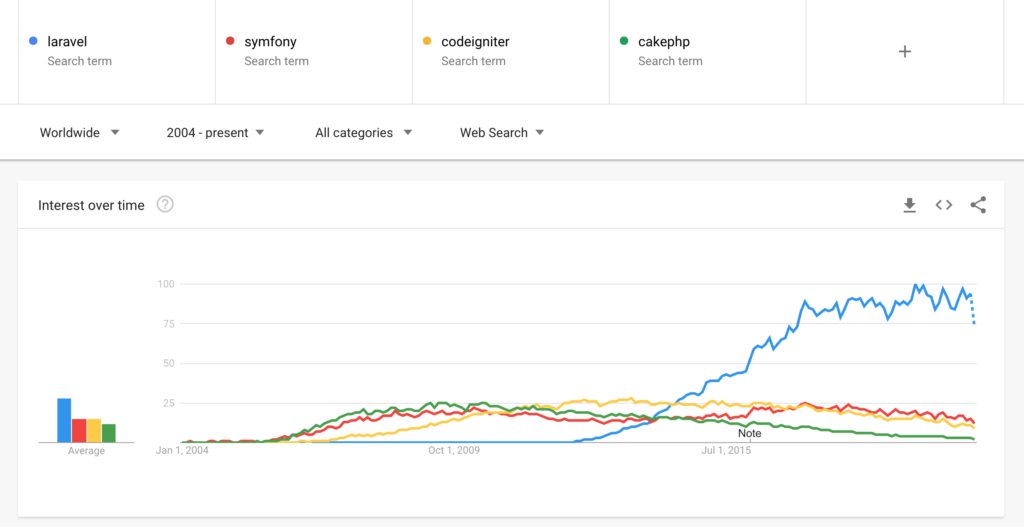
Laravel gives you that structure through a large set of built-in features and official packages, covering common web-application concerns. That means your team isn’t writing routing, sessions, validation or password resets from scratch on every project.
Laravel features a built-in authentication system, alongside authorisation tools for controlling what a signed-in user can do.
Another of Laravel’s standout features is Eloquent, its object-relational mapper (ORM). Each database table is represented by a model class, so you query and update data using plain PHP instead of writing raw SQL for every action, and Eloquent lets developers define relationships between models and provides APIs for querying and updating the related records.
Automated testing is another of Laravel’s strengths. A test suite runs directly against the application, so you can check that a change works without manually clicking through it in a browser every time. That matters more as an application grows and you can’t retest everything by hand before every release.
Laravel 13 runs on infrastructure that meets its PHP 8.3 and extension requirements, from a shared host to a container in the cloud. Laravel development requires Composer, PHP’s dependency manager, when installing or updating dependencies, but Composer need not remain on a production server once a complete build artifact is deployed.
Laravel is also beloved by developers for its thorough documentation. Laravel has extensive official documentation and examples, but coverage varies and production applications still require framework knowledge, configuration and testing.
There’s also a healthy, vibrant community of Laravel developers. Laravel has an active ecosystem of documentation, tutorials, screencasts and community support covering Laravel development; quality and relevance vary.
Laravel was first released in 2011. As of September 2026, the current major version is Laravel 13, released in March 2026, which requires PHP 8.3 or later and adds first-party AI tooling alongside its existing feature set.
When To Use Laravel
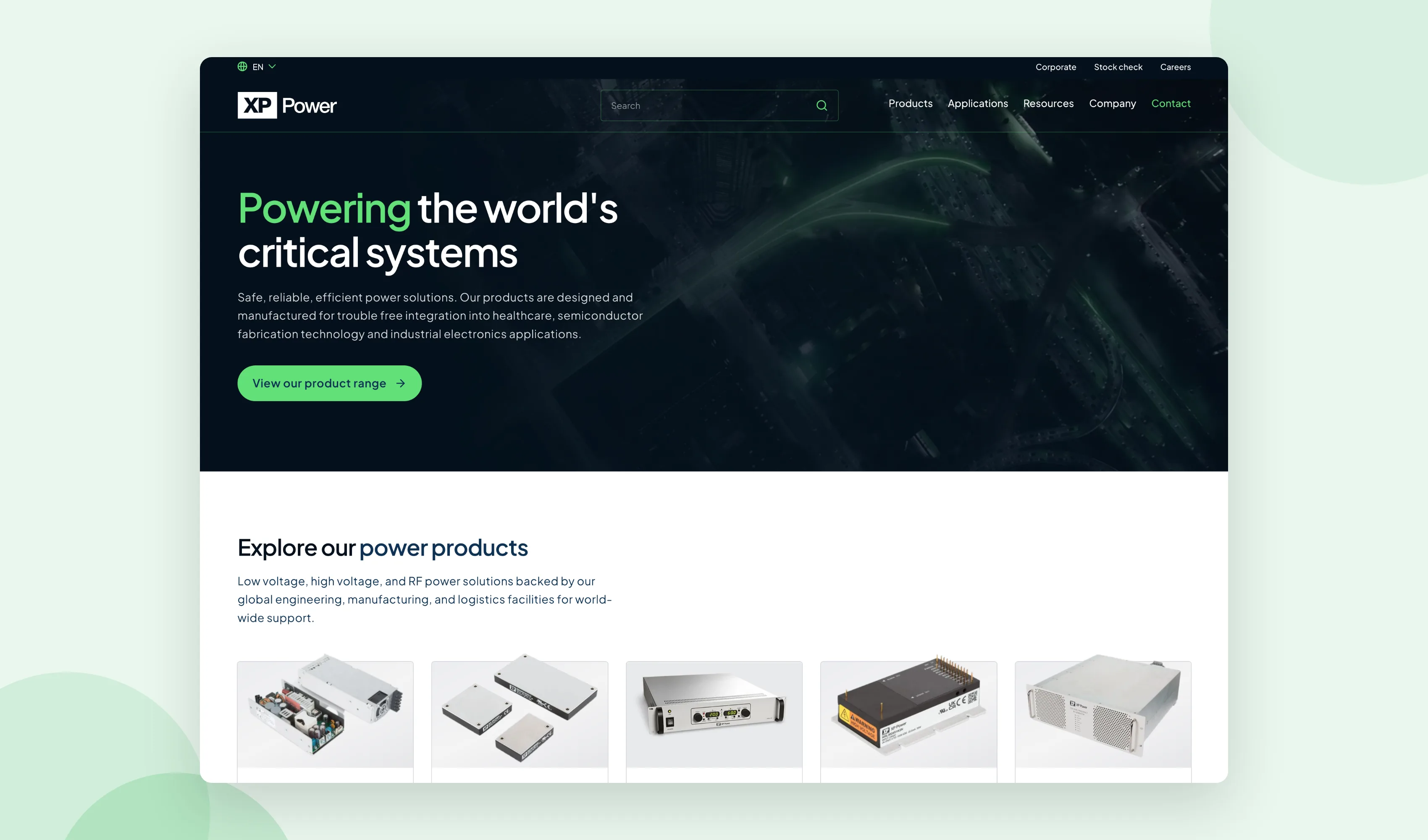
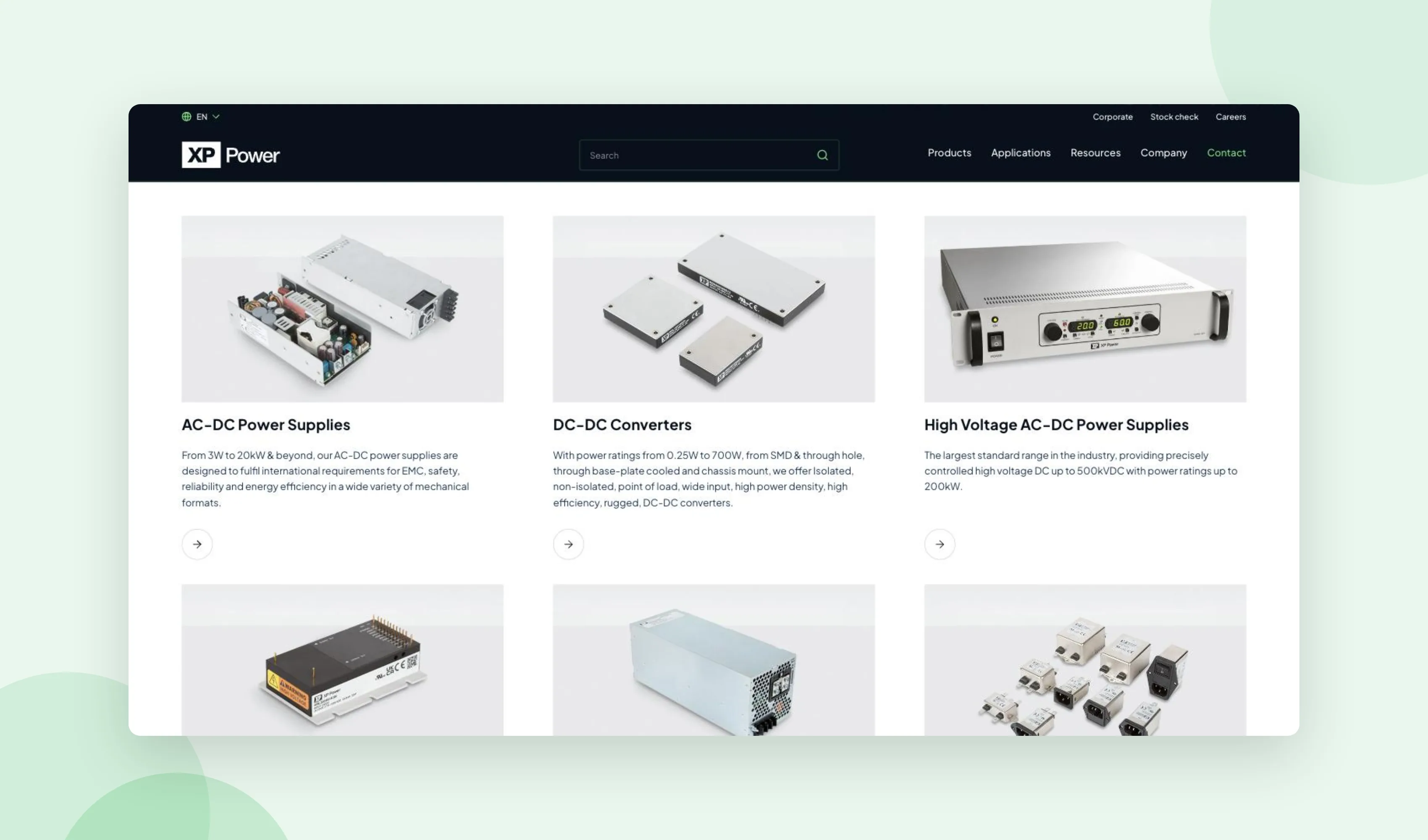
Laravel is popular partly because of its learning curve: developers who know PHP may find Laravel's conventions familiar, but productivity depends on application complexity and framework experience. We’ve used it for everything from simple content sites to data-heavy platforms like XP Power’s product catalogue.
Laravel is built on PHP, so a Laravel application is a PHP application under the hood. PHP still powers around 70% of websites where the server-side language is known, despite being created in 1994.
PHP originally stood for ‘Personal Home Page’ when Rasmus Lerdorf created it in 1994, but the name is now a recursive acronym: PHP: Hypertext Preprocessor. It’s a general-purpose scripting language built for the web, which is why most of what a website or web application needs can be built in it.
Despite its longevity, PHP has a reputation for being bulky and unwieldy. Laravel adds conventions and reusable components on top of PHP; whether it improves delivery depends on the team and use case.
In practice, Laravel is worth reaching for whenever a project needs custom logic that a template or page builder can’t give you: a client portal, a booking system, an internal tool, or a full SaaS product. It gives you the structure to build most of that yourself, without starting from a blank file.
PHP hosting is widely available, from budget shared hosting up to enterprise cloud platforms, but running cost still depends on traffic, architecture, databases, storage, queues and operational requirements.
What Is Laravel Good For?
Here are some situations where Laravel comes particularly in handy.
"He has taken the time to understand both the commercial and technical requirements, communicated clearly throughout, and delivered a well-thought-out system with a high level of flexibility. The admin dashboard, in particular, gives us full control over the scoring and valuation logic, which was a key requirement. I'm looking forward to working with James on Phase 2 and would have no hesitation in recommending him to anyone looking for bespoke software development…"
Fast Performance
Page speed affects user experience and conversion, so measure Core Web Vitals and real-user performance rather than relying on an old universal bounce-rate threshold. Measure performance by device and connection using field data; the audience mix and impact vary by site.
PHP exposes runtime and memory settings, but changing them does not by itself make an application fast; profile real bottlenecks before tuning the runtime.
PHP 8 introduced JIT compilation, but application performance depends more broadly on code, database work, caching, I/O and deployment configuration.
Laravel supports cache stores including Redis and Memcached, and queue back ends including Redis and databases, so slow work like sending emails or generating reports can run in the background instead of holding up the page.
Routing
Laravel centralises route definitions and maps requests to closures or controller methods, instead of requiring an application to design that structure from scratch. Controllers group related request-handling logic, while route groups can share middleware, prefixes or names; choose the structure that keeps the application's routes clear and maintainable.
SQL Migration
Laravel gives you several ways to work with a database: raw SQL when you need it, a fluent query builder for most day-to-day queries, and Eloquent, its ORM, for working with data as PHP objects.
Laravel provides first-party support for five databases, each with its own minimum version:
- MySQL 5.7+
- MariaDB 10.3+
- PostgreSQL 10.0+
- SQLite 3.26.0+
- SQL Server 2017+
Most day-to-day work goes through Eloquent or the query builder, so you rarely need raw SQL. When you do, Laravel lets you drop down to it for the queries where hand-tuned SQL performs better, such as complex reporting across large tables.
Laravel also has a built-in migration system for changes to your database schema. Each migration is a version-controlled PHP file describing one change, so your whole team can track how the database has evolved and apply the same schema changes across environments, provided the migrations, configuration and dependencies are complete and compatible.
For a SQLite database specifically, Laravel can use a single database file and will offer to create it when migrations run if the configured file is missing. For MySQL, MariaDB, PostgreSQL or SQL Server, you point Laravel at a database your host has already created.
Security
Laravel provides authentication, authorisation and email-verification tooling, but application security still depends on correct implementation, configuration, dependency management, infrastructure and ongoing patching.
Authentication comes in two layers in the Laravel framework. These are “guards” and “providers”.
Guards define how users are authenticated for each request, for example via the session or an API token, rather than what they're allowed to do once they're in; that's the job of gates and policies, covered below.
Providers specify how users are retrieved from the database. Laravel includes Eloquent and database user providers out of the box. It can easily be modified to amend the way it retrieves user information, as well.
Laravel supports a number of different authorization functions out of the box, as well. These come in two main categories, as well. These are gates and policies.
Gates and policies both control what a user is allowed to do, but they work at different levels. Gates are simple Closures, usually for actions that aren't tied to a particular model, such as viewing an admin dashboard, and they determine whether a user is eligible to perform a given task.
Policies, on the other hand, are generally organised around a particular model or resource. This could be a blog, for instance. Policies would determine which users are able to modify the blog and which one’s aren’t.
A policy can also express different levels of access within the same model: a regular user might be allowed to create a post, while only an admin is authorised to update or delete one, all defined within a PostPolicy class associated with that model.
These are some of the tools Laravel provides for controlling access. It also includes scaffolding for email verification, so you're not writing that from scratch every time.
Frequently asked questions
What is Laravel used for?
Laravel is used for building custom web applications where a template or page builder won’t do the job: client portals, booking systems, internal tools, SaaS products and content-heavy sites with real data behind them. It handles routing, authentication, database access and background jobs out of the box, so a development team spends its time on what makes your product different rather than rebuilding the basics. We build with it at Code23 for exactly this reason.
Is Laravel a front-end or back-end framework?
Laravel is a back-end framework: it handles routing, business logic, authentication and the database. Its own templating engine, Blade, can render the front end too, or Laravel can sit behind a separate JavaScript front end such as React or Vue and just serve data through an API. Which approach fits depends on how interactive the application needs to be.
Is Laravel still relevant in 2026?
Yes. Laravel 13 was released in March 2026 and requires PHP 8.3 or later. PHP itself still powers around 70% of websites where the server-side language is known. For a custom, data-heavy web application it is a mature option worth comparing against the application’s requirements and the team’s experience, and it’s what we reach for at Code23 when a template isn’t enough.
Are Laravel and PHP the same thing?
No. PHP is the programming language; Laravel is a framework written in PHP that gives you routing, database tools, authentication and testing already built, so you’re not writing them from scratch. Every Laravel application is a PHP application, but not every PHP application uses Laravel.
Sources
- Laravel 13 release notes
- Laravel database documentation
- Laravel cache documentation
- Laravel queue documentation
- PHP.net
- PHP: Hypertext Preprocessor FAQ
- W3Techs, PHP usage statistics
Next step
If you’re planning a custom build, whether that’s a client portal, an internal tool or a full SaaS product, Laravel is a mature, documented option for custom builds; compare it with alternatives against the requirements and delivery team’s experience. That is the approach we take on our websites and applications work.
Our Discovery Sprint scopes the build before you commit to it: what Laravel gives you out of the box, what needs custom code, and a fixed price for the finished project, credited in full if you go ahead. We’ve delivered 350+ projects since 2005, including data-heavy platforms like XP Power’s product catalogue, built on Laravel and Filament.
Plan the next release
Build the next version around the result it needs to produce.
We’ll define the scope, design the journeys and build the systems behind them with one senior UK team.


