Marketplace categories & their impact on discoverability
Marketplace categories decide what buyers actually find, and what search engines index. How Code23 builds a category structure that helps discoverability instead of quietly hiding your stock.
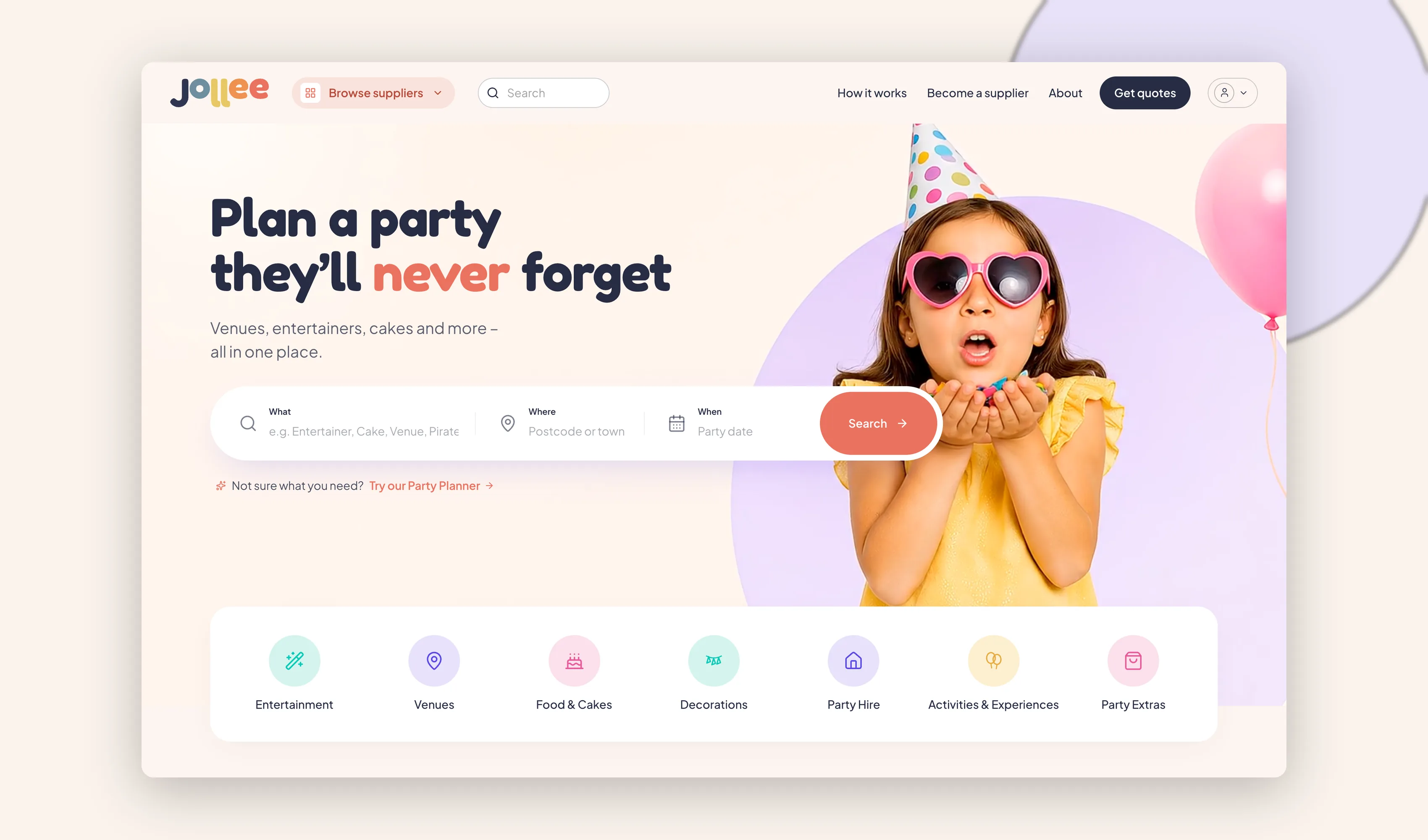
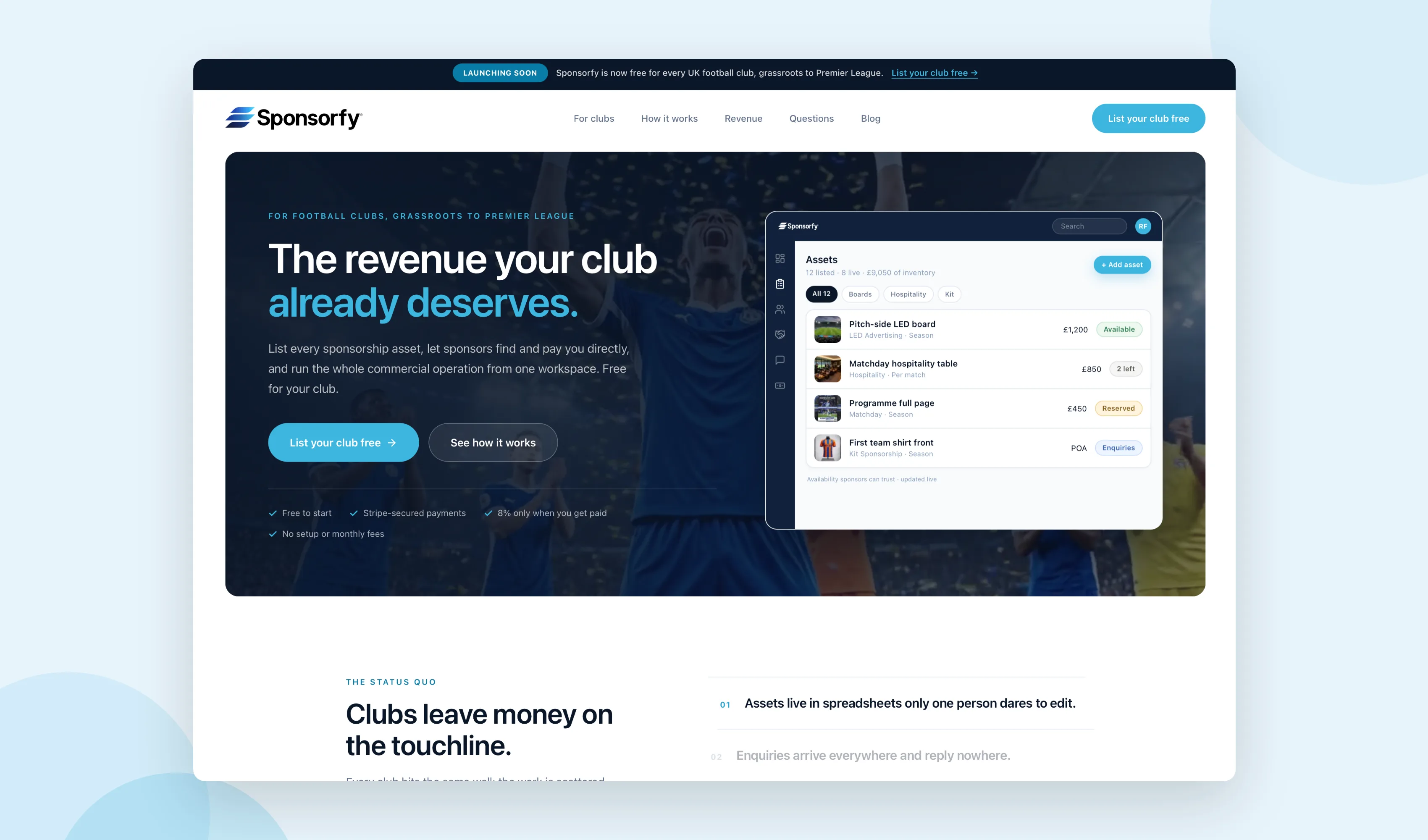
What impact do marketplace categories have on discoverability? A big one. Many buyers browse categories before or alongside search, so a category that's too broad, too narrow, or named the way your stock room is organised rather than the way buyers think, loses you sales before anyone searches for anything. We've built the category structures and search behind marketplaces for kids' parties, football sponsorship, aesthetic treatments and fine wine, and the pattern repeats every time. Get the categories right and buyers can reach relevant listings with fewer unnecessary steps. Get them wrong and they leave thinking you don't stock it, even when you do.
This matters for search engines as much as buyers: categories are part of the structure search engines use to work out what your marketplace actually sells. Here, we're covering what makes the category structure itself work for the person doing the browsing, not just the algorithm reading it.
Why are marketplace categories important?
To appreciate the significance of marketplace categories, let’s consider a brick-and-mortar shop. Upon entering a shop, you are greeted with aisles neatly categorised by different product types. These categories assist shoppers in swiftly locating their desired items. In a similar vein, marketplace categories in the online world guide users throughout their purchasing process, aiding them in sifting through the myriad of online offerings.
Properly structured categories leave an immense impact on the discoverability of products and services. They pave a logical route, guiding customers from general product types to more specific ones.
Categories do more than facilitate smooth navigation. They are instrumental in product search and marketplace SEO: useful, crawlable category pages can attract organic traffic when they match search intent and contain worthwhile inventory.
How to enhance discoverability with marketplace categories?
Clean and simple categories
A cardinal rule in discoverability is maintaining simplicity and clarity in your marketplace categories. Overcomplicated or ambiguous categories can annoy users, causing them to abandon their visit.
Consider the user’s viewpoint when establishing your categories. They should be logical: give each product a clear primary category, and allow additional relevant placements only where they help buyers without creating duplicate-page problems. Keep in mind that the primary aim is to aid the user in locating their desired item in the most efficient way.
Uniform hierarchical order
A crucial ingredient in augmenting discoverability is adhering to a uniform hierarchical order. A list of marketplace categories should follow a logical progression and relevancy. Generally, it begins with broad categories and narrows down as the user navigates deeper into the category structure.
Take, for instance, a main category titled ‘Electronics’, comprising subcategories like ‘Laptops’, ‘Smartphones’, and ‘Headphones’. Each of these may then be further divided into more specific categories. A uniform hierarchy not only improves user navigation but also enhances your SEO by offering a clear path for search engine crawlers.
"After wanting to up my game with my marketplace website I found Code23. They made switching web agencies really easy and have consistently provided great support, thoughtful suggestions and advice to improve the website thats has helped me focus on growing the business. The team are super responsive which is very reassuring for a non-techie!"
Utilising data to fine-tune categories
Data analytics can offer invaluable insights into your category structure. User behaviour analysis can reveal which categories gain frequent visits, which ones are seldom clicked on, and where users typically exit.
Understanding these patterns allows you to tweak your categories to improve discoverability. For instance, if a category receives little traffic, it could be beneficial to combine it with another related category. Alternatively, a category that is popular might need further subdivision into more specific subcategories.
How do you build a robust marketplace categories list?
Building an efficient marketplace categories list is a fine art. It requires a thorough comprehension of your stock, your target audience, and their browsing habits on your marketplace. Here are a few suggestions to help you develop a categories list that optimises discoverability:
Align with customer expectations
Your marketplace categories list should match how your customers think and search for products and services. This could involve undertaking market research or scrutinising user data to understand customer behaviours, needs, and expectations.
Strike a balance between wide and narrow categories
Finding a middle ground between wide and narrow categories is crucial. If categories are too broad, customers may have trouble finding specific products. If too narrow, your categories may seem overwhelming. The key is to offer sufficient breadth for easy navigation and adequate depth to cater to their specific requirements.
Optimise for SEO
Remember the crucial role of SEO in your marketplace categories list. Incorporate relevant keywords in your category names and descriptions. Relevant names and useful, indexable category pages can improve search understanding and eligibility for organic traffic.
Be dynamic
Lastly, a categories list isn’t a static entity. It is a dynamic component of your marketplace that should adapt to your product updates, market changes, and user behaviour. Consistently reviewing and updating your categories list can significantly help in preserving optimal product discoverability.
Conclusion
Marketplace categories are integral to augmenting discoverability on any marketplace platform. By crafting a straightforward, logical, and SEO-friendly categories list, you can navigate your customers through their buying journey, assisting them in finding precisely what they’re after with minimum effort.
Keep in mind that the simpler it is for customers to discover and view your products and services, the more inclined they are to complete a purchase.
Frequently asked questions
How do you handle different category taxonomies across marketplaces?
Every seller describes stock differently, so if you copy their categories straight into your marketplace you end up with a dozen ways of saying the same thing. Map seller and product data to one buyer-facing taxonomy behind the scenes, so sellers can keep their own naming internally while buyers always see one consistent set of categories to browse and filter by.
What actually improves product discoverability on a marketplace?
Mostly unglamorous work: a category structure that matches how buyers search rather than how your stock is organised, clean and consistent listing data inside each category, and filters that reflect real buying decisions like price, location or availability. Categories also feed search engines the same structure, so getting them right helps buyers find you on Google, not just on your own site.
How many categories should a marketplace have?
There’s no fixed number. Too few and buyers wade through irrelevant listings to find what they want; too many and browsing feels like guesswork. Let your data decide: a category getting little traffic is a candidate to merge, one buyers keep drilling into probably needs splitting into subcategories. Review it regularly, because the right structure at launch rarely stays right as stock grows.
Should marketplace categories match how sellers list products or how buyers search?
Buyers, every time. Sellers will describe the same product a dozen different ways, but your category structure exists to help the person searching, not the person listing. Map whatever language sellers use back to a single buyer-facing structure, and pair it with filters that mirror the real questions buyers ask, which our guide to faceted search in marketplaces covers in more detail.
Next step
Good categories don’t happen by accident. They come from watching how buyers actually search, then building a structure to match it, rather than one that matches how your stock room happens to be organised.
If your marketplace has categories that overlap, categories nobody clicks, or a taxonomy that made sense with fifty listings and doesn’t with five thousand, that’s worth fixing before it costs you sales you’ll never see in your analytics.
We’ve built 50+ marketplaces over 15+ years, including marketplaces for kids’ parties, football sponsorship, aesthetic treatments and fine wine. Our free Marketplace Growth Review is a 30-minute call that looks at yours and tells you what’s actually holding buyers back.
Build the marketplace
Start with the workflows that make the model work.
We’ll map buyers, sellers, payments and operations before the build, backed by experience from more than 50 marketplace projects.


