The role of faceted search in marketplaces
What is faceted search and why does it matter for marketplaces? How filters affect SEO, where index bloat comes from, and how to get faceted navigation right without losing your rankings.
Faceted search is the filter system that lets buyers narrow a big marketplace platform down to price, size, location, category or whatever matters most in your niche, and it’s one of the few features that can improve conversion and hurt your SEO in the same afternoon. Done well, it turns a wall of listings into the exact few someone’s looking for. Done carelessly, it multiplies your site into thousands of near-identical URLs that dilute your marketplace SEO.
At Code23 we build faceted search into most of the marketplace platforms we work on, because buyers expect it and poorly controlled faceted navigation can waste crawl resources and slow discovery of your important pages. This guide covers what faceted search actually does for a marketplace, where it goes wrong for SEO, and how to strike the right balance.

What exactly is faceted search?
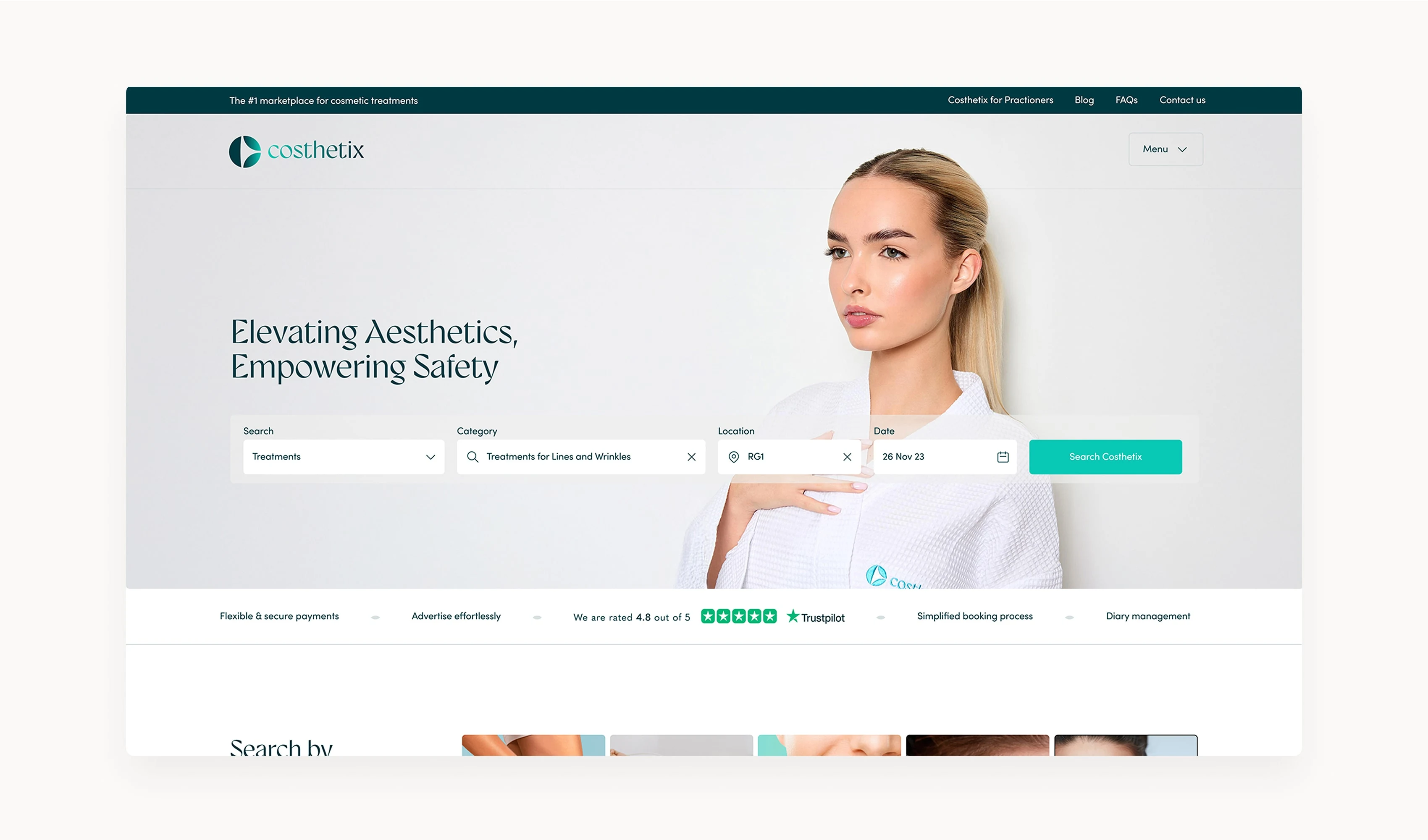
Simply put, faceted search denotes a search methodology that empowers users to apply filters to their search results. This approach to browsing enables users to whittle down the items they’re examining based on several dimensions or facets.
Picture a clothing marketplace filled with thousands of products. Without faceted search, a user in pursuit of a “medium-sized red t-shirt” would have to search through countless irrelevant items. But with the power of faceted search, they can comfortably filter the products by colour, size, and type, finding the desired item without delay.
However, there is more to faceted search than the evident improved user experience, particularly when you take into account the SEO implications.
Faceted navigation SEO
In a parameterised faceted-search implementation, each filter selection can create a unique URL that records the specific choices made. While this helps in precise product filtering, it also triggers the generation of a considerable number of unique URLs, contributing to a phenomenon known as ‘index bloat’.
Search engines like Google, while scanning a website, might have to crawl through these numerous faceted navigation pages rather than concentrating on the primary pages that enhance ranking potential. Large uncontrolled facet spaces can consume crawl resources and slow discovery of useful URLs; that’s a crawl-management problem, not a site-wide ranking penalty.
That’s why Google recommends using robots.txt to control crawling of the facet URLs you don't want crawled. To remove URLs that are already indexed, allow crawling and use an appropriate noindex, removal or HTTP-status strategy instead, since robots.txt alone doesn't guarantee de-indexing. If some filtered pages are worth indexing, keep the URL parameters consistent and return a proper 404 for any filter combination with no results, rather than letting it dilute your site with duplicate content and wasted crawl budget.
Achieving the perfect balance
The challenge, therefore, is: how do we strike a balance between the user experience benefits offered by faceted search and its SEO challenges? The answer lies in clever application and vigilant management. Here are a few strategies and best practices for faceted navigation:
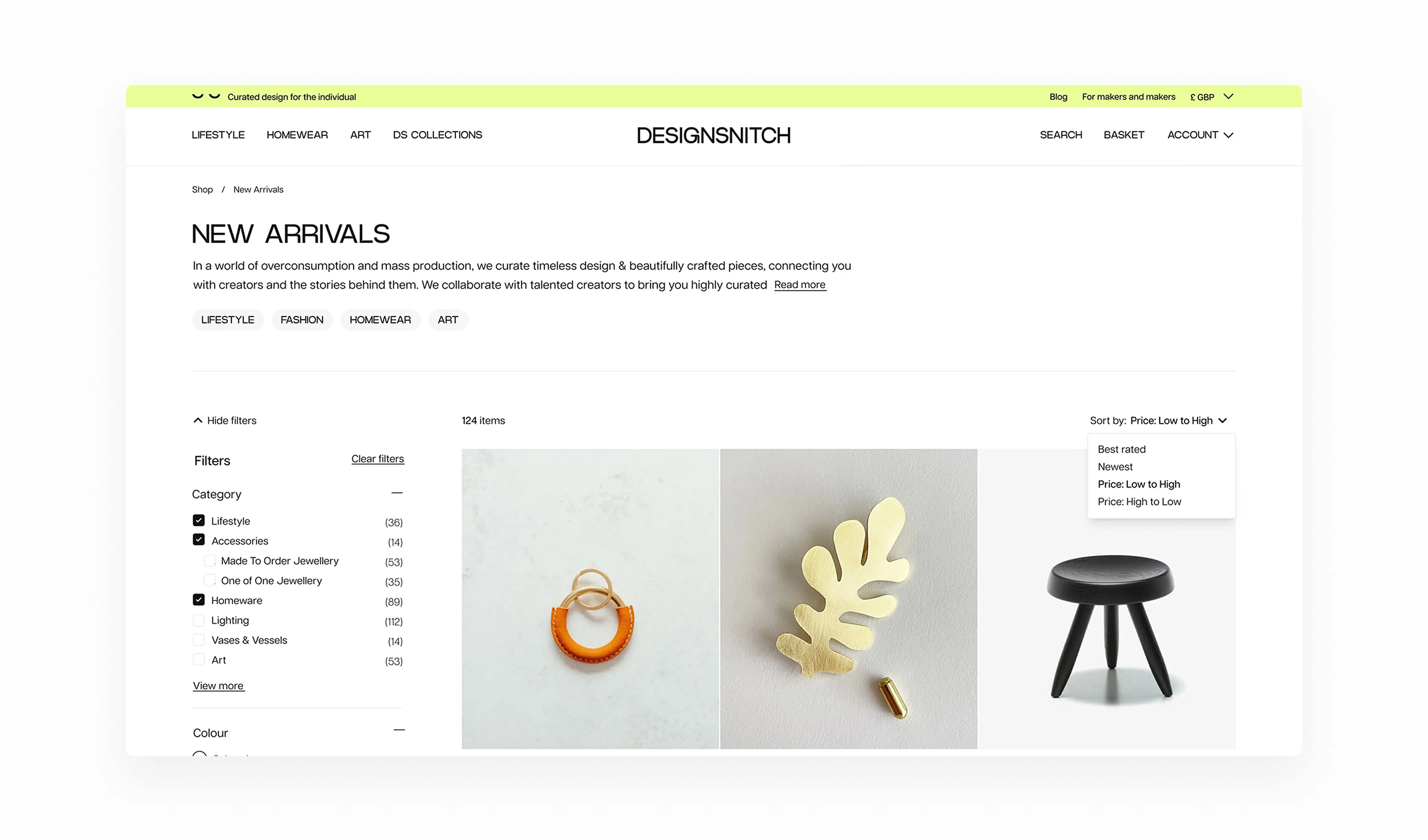
Avoid overlapping categories and filters
One golden rule in implementing faceted search is to avoid overlap between categories and filters. That means if you have a “For Her” category, you should refrain from having a “Gender” filter with a “For Her” choice, unless they direct to the same URL. Overlapping categories and filters could lead to duplicate content issues, which can adversely affect SEO.
Strategically index
It’s crucial to index your faceted search tactically. This can be achieved through keyword research. If your analysis reveals a high demand for specific keywords, like ’50th birthday cards’ or ‘a5 notebooks’, you might decide to index these specific filters or URLs. This approach can help ensure your indexed pages align with your SEO strategy and keyword opportunities.
Adopt SEO-friendly URL structures
Your URLs can profoundly impact your SEO results. When it comes to faceted navigation, here are some suggestions:
- Use readable, consistent parameter names. Google's hyphen guidance primarily concerns words in URL paths, not a guaranteed ranking benefit for query parameters.
- Choose either parameters or subfolders and apply it consistently.
- Prefer stable, readable values when they help users and diagnostics; numerical IDs are not inherently harmful to SEO, even though readable ones may take more development work.
Faceted navigation best practices
Keep user experience front and centre
While addressing the SEO implications of faceted search, don’t lose focus on the primary goal: enhancing user experience. The faceted search should be instinctive and easy to use, with unambiguous labels and a neat interface. Also, account for the mobile experience, ensuring your facets are user-friendly on smaller screens.
Prominently display the most frequently used facets
This can be determined through user testing or by analysing user behaviour data. Positioning these facets at the top can enrich the user experience by providing quick access to the most relevant filters.
Hide non-available options
If a facet has no available options within the current search context, consider making it fainter or removing it. This can help avert user frustration when a chosen facet yields no results.
Continually monitor, evaluate, and enhance
Finally, like all aspects of your marketplace, continuous monitoring, evaluation, and improvement should be part of your game plan. Regularly scrutinise your website’s performance, carry out SEO audits, and keep pace with the latest trends. Seek user feedback and make modifications based on user behaviour and feedback.
"Code23 totally redesigned and rebuilt my online marketplace (WowThankYou)… When we have questions, they go out of their way to answer us, and when better technology comes along that we ought to consider they tell us about it. Without James and his team I couldn't guarantee we'd still be trading!"
Conclusion
Faceted search, despite being immensely advantageous for user experience, does present certain hurdles for SEO. However, with careful foresight and strategic deployment, it is feasible to reap the rewards of faceted search while also maintaining robust SEO performance.
The trick lies in comprehending the complexities of faceted search, averting common pitfalls like overlapping categories and filters, and employing strategic indexing based on keyword research. When coupled with SEO-friendly URL structures and a user-centred design approach, faceted search can evolve into a potent tool in your marketplace toolkit.
By continuously monitoring, auditing, and improving, your faceted search can continue to add value to your users, enhancing their journey, and ultimately growth for your marketplace.
Frequently asked questions
What is faceted search?
Faceted search lets a shopper filter results by more than one attribute at once, price, brand, size, colour, whatever your category needs, and combine them freely. It’s different from a single category menu because facets stack: someone can pick a colour, a size and a price range together and see only what matches all three. Most large marketplaces use it, because a search box or category tree on its own can’t narrow things down fast enough.
How does faceted search affect SEO?
Every filter combination can generate its own URL, and left unmanaged that multiplies into thousands of near-duplicate pages that consume crawl resources and slow discovery of the pages that matter. Google’s own guidance recommends using robots.txt to control crawling of filter URLs you don’t need crawled, though removing URLs that are already indexed needs noindex, removal or an HTTP-status strategy rather than robots.txt alone. We build faceted search with that in mind from the start, so the marketplaces we work on retain the UX benefit while reducing SEO risk.
What is faceted search and why does it matter for ecommerce?
A marketplace or online shop usually has more products, more sellers and more inconsistent data than a single-brand site, so buyers rely on filters even more to find something trustworthy fast. Get it wrong and people leave for a competitor with a cleaner search. Get it right and faceted search becomes one of the main ways buyers actually convert, which is why it’s one of the first things we get right when we build a marketplace.
Sources
- https://developers.google.com/search/docs/crawling-indexing/crawling-managing-faceted-navigation
- https://developers.google.com/search/docs/crawling-indexing/robots/intro
Next step
Faceted search is worth getting right. Done well, it’s one of the best conversion tools a marketplace has. Done carelessly, it can bury your listings in search results nobody ever sees.
If you’re not sure which one your marketplace is doing, our free Marketplace Growth Review is a 30-minute call that looks at your search and filters alongside everything else that affects growth. We’ve built 50+ marketplaces over 15+ years, so we’ve seen both sides of this.
Build the marketplace
Start with the workflows that make the model work.
We’ll map buyers, sellers, payments and operations before the build, backed by experience from more than 50 marketplace projects.


