Marketplace Business Models: Compare 7 Ways to Earn
Compare marketplace models: commission, subscription, listing, lead, ads, freemium and hybrids. Who pays, when you earn, and how to shortlist before you build.
A marketplace business model is how your platform creates value by matching buyers and sellers (or providers). A marketplace revenue model is how that platform captures money from that matching: who pays you, when, and on what event. Founders mix the two labels. Keep them separate when you choose fees, or you will design a take rate for a loop that never closes on-platform.
This guide helps you shortlist a defensible way to earn before you hard-code fees into product. It compares commission, subscription, listing fees, lead fees, advertising, freemium and hybrids, then shows how marketplace mechanics change the choice. For fundamentals of the multi-vendor operating model, start with the guide to multi-vendor marketplaces. If demand is still unproven, pair this with how to validate a marketplace idea before you fund fee engines.
Short summary
- The business model is the matching loop. The revenue model is how you get paid for that loop.
- Commission only works when enough trade completes on rails you can measure. Off-platform closes need another shape.
- Subscriptions, listing fees, lead fees, ads and paid features fit different value events. None is universally “best”.
- Liquidity, repeat rate, leakage and variable operating costs change which model survives, not just headline GMV.
- Shortlist one primary model, prove the loop, then consider hybrids once value and volume are real.
Business model vs revenue model
Your business model answers: who are the sides, what job completes, and why they use your platform instead of going direct.
Your revenue model answers: which event triggers a fee, which side pays, and whether contribution margin survives payment costs, support, refunds and incentives.
Sharetribe’s academy frames common monetisation shapes as commission, subscription, listing fee and lead fee (alongside freemium and promoted placement). Use that as a catalogue of options, not as a ranking of winners: how to choose a marketplace business model. Setting the actual rate is a separate problem; see where to set marketplace pricing.
The seven monetisation approaches
Commission or transaction fee
Who pays. Seller, buyer, or a split between both.
When you earn. When a tracked transaction completes (or reaches a defined payable state) on your platform.
Where it fits. Product, service and rental marketplaces where checkout, booking or escrow lives on your rails, and where participants accept a fee because matching, trust or payment protection is worth it.
Main trade-off. Revenue scales with successful trade, but only if trade stays on-platform. Weak value or clumsy checkout pushes people off-platform and your take rate collapses to zero on those deals. Commission also needs payment design that can collect an application fee; Stripe documents how marketplace application fees can sit on Connect charges, and that the platform may bear payment fees depending on charge setup. See Stripe Connect for marketplaces and which online marketplace payment solution is best.
Subscription or membership
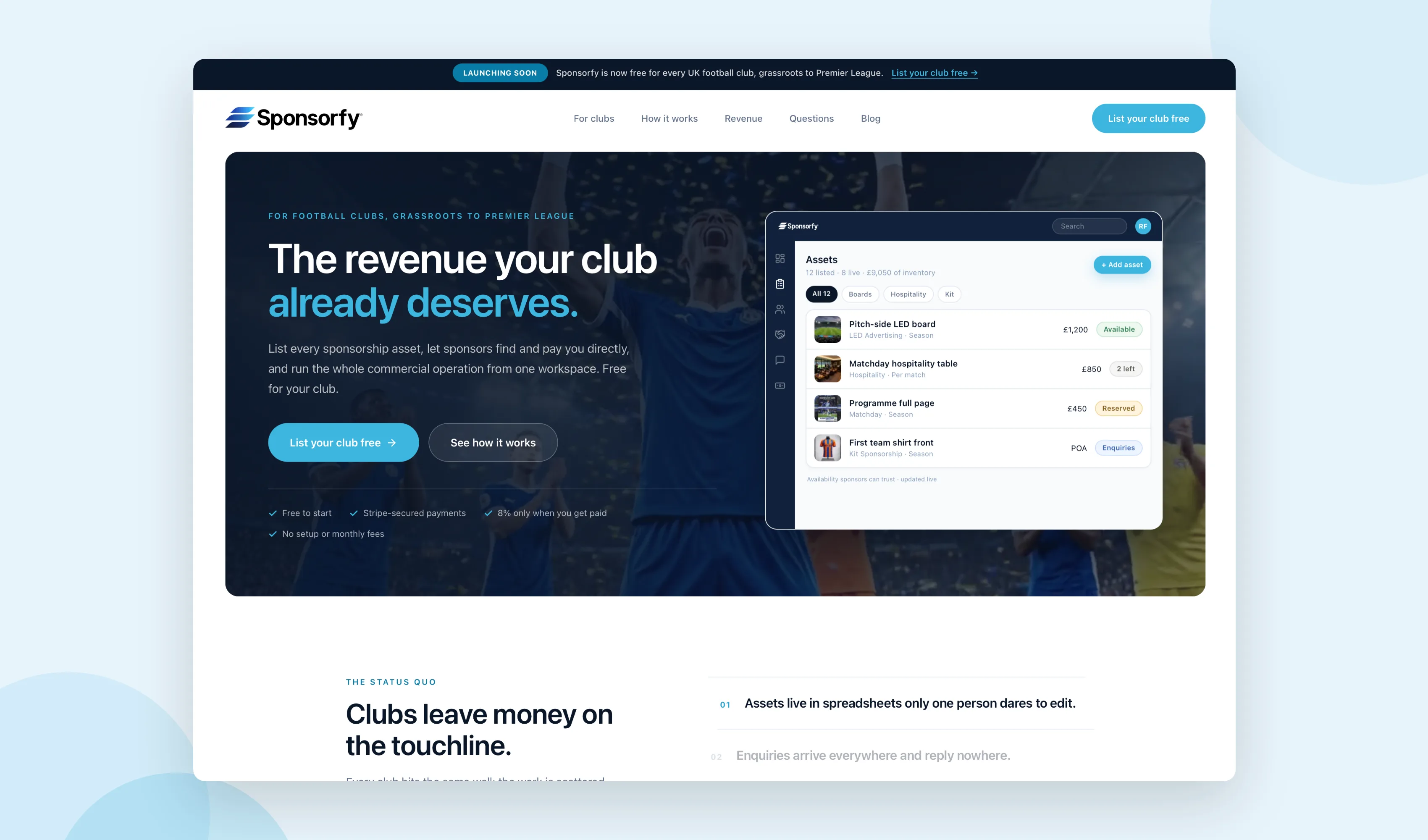
Who pays. Usually sellers or providers; sometimes buyers on exclusive or high-intent networks.
When you earn. On a recurring billing cycle, whether or not a given period includes a transaction.
Where it fits. High perceived access value, repeated use, or cases where you cannot reliably track the money event (complex B2B invoicing, introductions that close offline, non-monetary matching).
Main trade-off. Predictable revenue if retention holds, but cold start gets harder: people resist paying before the other side feels liquid. Early discounts or free periods are common; they delay revenue and must still convert later.
Listing fee
Who pays. The seller or provider when they publish or renew a listing.
When you earn. At listing time, independent of sale.
Where it fits. Classified-style inventory, high ticket items where volume of listings is itself the product, or catalogues where many listings never convert.
Main trade-off. You get paid even when items do not sell, which helps when conversion is low. Sellers feel that risk, so fees must stay modest relative to expected demand. Proving value is harder than with commission on a completed sale.
Lead fee
Who pays. Usually the seller or provider.
When you earn. When you deliver a contact, quote request or qualified opportunity.
Where it fits. B2B and higher-value local services where the introduction itself is valuable and the final contract often completes offline.
Main trade-off. Clearer value than a blank listing fee, but leakage after the intro is structural: once parties have contact details, repeat work can leave your platform. Lead quality disputes also create support load.
Advertising and promoted placement
Who pays. Sellers, providers or third-party advertisers who want visibility.
When you earn. When someone buys a featured slot, sponsored result or ad placement.
Where it fits. Platforms with enough traffic that visibility is scarce and measurable. Niche audiences can make relevant ads feel useful rather than noisy.
Main trade-off. Needs meaningful demand density before it pays. Push ads too early and you tax a thin marketplace without improving matches. Buyer experience can degrade if promotion crowds out relevance.
Freemium or paid features
Who pays. The subset of users who buy tools, insurance, logistics, analytics, verified badges or workflow add-ons.
When you earn. When someone upgrades from the free core loop to a paid capability.
Where it fits. Low ticket or free-sharing loops where commission is tiny or absent, and where a minority of power users will pay for operational tools.
Main trade-off. The free tier must still create liquidity. If almost nobody upgrades, you are funding a utility. If the free tier is too weak, you never reach the density paid features need.
Hybrid models
Who pays. Different sides or events under more than one fee type (for example commission plus promoted listings, or subscription plus lead packs).
When you earn. Across several events in the same operating system.
Where it fits. After the primary loop works and you can see distinct value moments that one fee cannot cover fairly.
Main trade-off. Hybrids can capture more of the value created. They also raise comprehension cost, implementation complexity and the chance you charge before you have earned the fee. Layering early often slows both sides.
How marketplace mechanics change the choice
Can you track the transaction, or does it close off-platform?
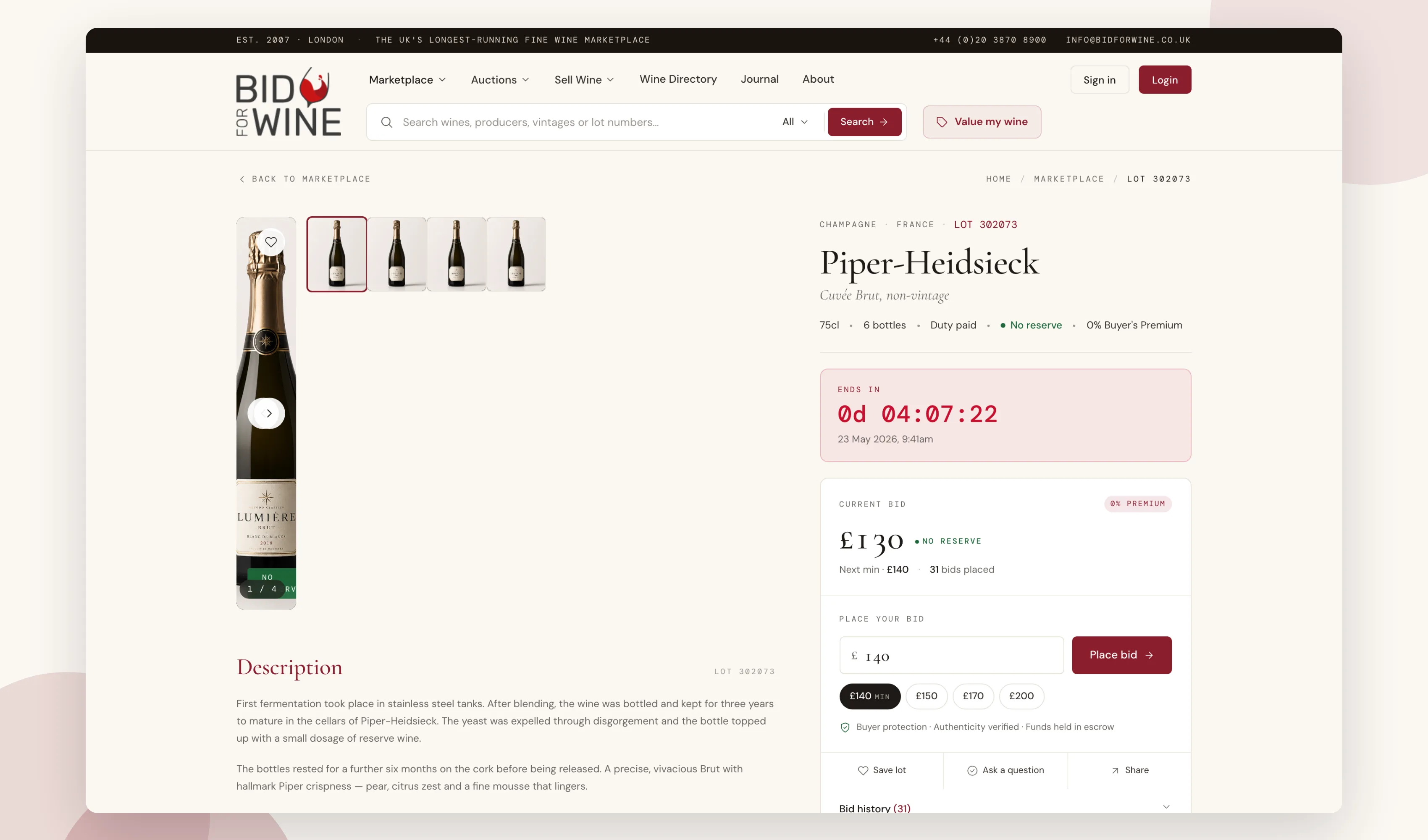
If payment, booking confirmation or fulfilment evidence lives on your platform, commission or application fees are workable. If the commercial close is an offline contract, invoice or handshake, lean toward subscription, listing or lead fees tied to the event you can prove.
Transaction value and frequency
High value, low frequency deals make percentage commission politically hard and operationally heavy (more disputes per pound of GMV). Low value, high frequency deals can make pure listing fees feel expensive relative to basket size, and favour commission or subscriptions amortised across many trades.
Repeat rate
High repeat usage supports subscriptions and freemium upgrades. One-off trades favour fees tied to the single event: commission, listing or lead.
Liquidity and the cold start
Empty marketplaces cannot defend access fees. Sharetribe’s metrics guidance treats liquidity, repeat usage, unit economics and revenue as distinct measures; do not use signup counts as a proxy for a working fee model: key marketplace metrics. Seed supply and demand before you charge for access. For growth tactics once matching works, see how to grow a marketplace.
Operating costs
Payment fees, refunds, chargebacks, dispute handling, support minutes and incentives sit under contribution margin. A tidy headline take rate still loses money if every order creates manual work. Payment setup also decides who bears card fees; again see Stripe’s application fee guidance and your Connect charge type.
Leakage and disintermediation
If parties can meet on your site then pay elsewhere, commission revenue leaks first. Subscriptions and lead fees leak differently: people stay until the relationship is established, then leave. Reduce leakage by making on-platform payment, trust, discovery or workflow useful enough to keep both sides on-platform; practical patterns sit in ways to add value to your marketplace and avoid leakage.
Which side receives measurable value
Charge the side that can point to a clear outcome: demand delivered, time saved, risk reduced, or tools that replace other spend. If neither side can name the outcome, no fee shape will feel fair.
Revenue predictability and implementation complexity
Subscriptions forecast more cleanly than pure commission, but need billing, dunning and access control. Commission needs marketplace payments, refunds and reconciliation. Lead and listing fees need metering and anti-abuse rules. Ads need inventory, relevance and reporting. Pick the complexity you can operate, not only the slide that looks largest.
Decision framework: shortlist a model
Use this table to shortlist one primary model from your conditions. Treat it as decision guidance, not a guarantee.
| Condition | Lean toward | Be careful with |
|---|---|---|
| Transactions tracked on-platform; moderate value; regular volume | Commission / transaction fee | Access fees that block cold start |
| Closes mostly offline; high intro value | Lead fee or seller subscription | Commission you cannot observe |
| Many listings, uneven conversion, classified behaviour | Listing fee (often with optional promotion) | High commission on rarely tracked closes |
| Strong repeat use; exclusive or tooling-led value | Subscription or freemium upgrades | Charging both sides before liquidity |
| High traffic; visibility is scarce | Advertising / promoted placement as secondary | Ads as the only early revenue plan |
| Several clear value events after the loop works | Hybrid with one primary fee | Stacking fees before value exists |
If two columns both fit, pick the simpler primary model and write down what evidence would justify adding a second.
Unit economics you can actually calculate
Keep four ideas separate:
- GMV - gross merchandise value: the total value of goods or services traded through the marketplace in a period.
- Platform transaction revenue - fees you collect that are tied to those trades (commission, buyer fees, and similar).
- Take rate - platform transaction revenue divided by GMV.
- Contribution per transaction - platform fees collected minus payment costs, refunds and disputes, variable support, incentives and other variable costs for that transaction.
Formulae:
take rate = platform transaction revenue / GMV

contribution per transaction =
  platform fees collected
  - payment costs
  - refunds and disputes
  - variable support
  - incentives
- other variable costsHypothetical arithmetic example (not a recommended fee)
Imagine a £100 order and a hypothetical 10% commission.
- Platform fees collected on the order: £10
- If GMV for that single order is £100, take rate on the order is 10%
That £10 is gross platform revenue on the trade before variable costs. It is arithmetic to show the formulae, not a recommended fee, and not a Code23 client result.
Now subtract illustrative variable costs on the same order (still hypothetical):
| Line | Amount |
|---|---|
| Platform fees collected | £10.00 |
| Payment costs | £1.80 |
| Refund / dispute allowance | £0.70 |
| Variable support | £1.20 |
| Incentives | £0.50 |
| Contribution per transaction | £5.80 |
Change any cost line and contribution moves. A higher headline commission can still lose if disputes and support spike. For rate-setting method, continue with where to set marketplace pricing.
When a hybrid is justified
A hybrid is justified when:
- The primary loop already creates measurable value and some liquidity.
- A second fee maps to a different value event (for example promotion inventory, premium tooling, or high-touch lead packs).
- You can explain both fees in one plain sentence to each paying side.
- Contribution margin still holds after the extra support and engineering cost.
Warn against layering fees before the marketplace creates enough value or liquidity. Early stacks feel like rent extraction, slow onboarding, and hide which fee actually funds the business. Prefer one clear primary model, instrument it, then add a secondary stream with a written hypothesis.
"After wanting to up my game with my marketplace website I found Code23. They made switching web agencies really easy and have consistently provided great support, thoughtful suggestions and advice to improve the website thats has helped me focus on growing the business."
Pre-build checklist
Work through this before you commission fee logic or pick payment plumbing.
| Check | Question | If you cannot answer yet |
|---|---|---|
| Loop | What job completes, and on which rails? | Map the happy path and three failure paths |
| Trackability | Can you observe the money or lead event? | Choose a fee tied to what you can prove |
| Paying side | Who gets measurable value first? | Interview both sides; do not guess |
| Cold start | Will the fee block seeding supply or demand? | Plan free or discounted early cohorts deliberately |
| Leakage | Where can parties go around you? | Design value that keeps the critical step on-platform |
| Costs | What are payment, refund, support and incentive costs per trade? | Build a simple contribution sheet before locking rates |
| Complexity | Can your MVP operate the billing rules? | Defer hybrids; see marketplace build cost |
| Payments | Which Connect (or equivalent) charge type fits? | Read Stripe Connect for marketplaces |
FAQ
Is a marketplace business model the same as a revenue model?
No. The business model is how matching creates value. The revenue model is how you charge for that value. You need both, but they are not the same decision.
Is commission always the right choice?
No. Commission fits when you can track and host enough of the transaction. If closes happen offline, tickets are huge, or money never moves on-platform, another model usually fits better.
Can I start with one model and change later?
Yes. Many platforms start simple, then add a secondary stream once liquidity and value are visible. Changing the primary fee is harder than adding an optional upgrade, so document the review trigger before launch.
What should I decide before build?
Who pays, on what event, whether you can observe that event, and whether contribution per transaction stays positive after variable costs. Those answers shape product and payments more than a brand colour palette.
When should I talk to a development partner?
When you can describe the niche, the primary transaction, the intended fee event and the day-one leakage risks. Bring that to marketplace development or contact and we will help you scope validation, MVP fees or a fuller build path.
What’s the difference between a classified site and a marketplace business model?
A classified site primarily publishes listings and lets parties complete the deal elsewhere. A marketplace usually supports more of the match or transaction, but either can charge listing, lead, subscription or transaction fees. Choose the fee from the value created and the event you can reliably observe.
What are some real marketplace business model examples?
Auction and classifieds sites often charge listing or final-value fees. Job boards and directories often charge per lead or per listing. Subscription models suit high-intent networks where access itself is valuable. Commission can suit a marketplace when the transaction closes on-platform, can be measured and the unit economics support it. Rather than copying a named competitor, work backward from which event you can actually observe and charge that.
How do I set a marketplace pricing model without guessing?
Start with what you can observe: a completed payment, a confirmed booking, or a qualified lead. Map that against who receives clear value first, whether trade completes on-platform, and how often each side transacts. The pre-build checklist above works through this in order. Guessing a percentage before you’ve answered those questions usually means rebuilding your fee logic once real data arrives.
Can I run more than one marketplace business model at once?
Yes, once the primary loop already creates value and some liquidity. A hybrid works best when the second fee maps to a distinct value event, such as promoted listings alongside commission, and when you can explain both fees to each paying side in one plain sentence. Stacking fees before the marketplace has proven value usually slows both sides down. Our free Marketplace Growth Review can pressure-test whether you’re ready for one.
From here:
- Fundamentals: multi-vendor marketplace guide
- Demand proof: validate a marketplace idea
- Rate setting: marketplace pricing strategy
- Payments: Stripe Connect for marketplaces and marketplace payment options
- Budget: marketplace build cost
- Growth and retention: how to grow a marketplace and avoid marketplace leakage
- Build path: marketplace development
Next step
Write down your primary transaction, whether it completes on-platform, which side sees clear value first, and a one-line fee hypothesis. That’s the shortlist exercise this guide walks through, and it’s worth doing before any fee logic goes into code.
If you want a second pair of eyes on that shortlist, or you’re choosing a platform to build it on, our free Marketplace Growth Review is a 30-minute call. We’ve built 50+ marketplaces over 15+ years, which gives us practical context for pressure-testing the model you choose.
Build the marketplace
Start with the workflows that make the model work.
We’ll map buyers, sellers, payments and operations before the build, backed by experience from more than 50 marketplace projects.