How do I come up with a great marketplace idea?
How to find and validate a marketplace idea by testing a real problem, fragmented supply and trust on both sides before investing in a build.
How do I come up with a great marketplace idea? Start with a problem two different groups feel: buyers who can’t easily find what they need, and sellers who can’t easily reach them. Promising marketplace opportunities can emerge where buyers and sellers struggle to find or trust each other, but fragmentation is not sufficient evidence on its own. Define the problem, current alternatives and the evidence that would show each side is willing to participate.
At Code23 we’ve spent years building marketplace development projects across dozens of different niches, and the marketplaces that succeed tend to solve a real problem for both sides, not just one. An idea you’re excited about isn’t enough on its own. It has to be narrow enough to prove quickly, and useful enough that people come back once they’ve tried it. That’s what turns an idea into a business, rather than a nice thought you never acted on.

All good businesses start with the idea
And a good idea should be able to solve a tangible problem and improve people’s lives. Start with a simple idea, which you will undoubtedly be excited about. Then define the problem it solves, work out what the actual value is for your potential users and how you are going to implement it.
Not all marketplace business ideas have legs. A marketplace cannot work without sufficient demand and supply, so test both before investing heavily. If there aren’t enough people interested, or there’s no need for the service you’re proposing, your marketplace won’t work.
It’s important to bear in mind that the key is solving a problem not just for customers, but for suppliers too. This is what makes a marketplace idea so important to nail at the outset. Use interviews, a concierge test or a prototype to test early assumptions; build an MVP when live behaviour is the evidence you need.
If you can tap into what is known as ‘idle assets’ you’re onto a good strategy. Digital marketplace examples like Vinted show how far that can go: one of the largest online C2C marketplaces in Europe. Vinted shows how a marketplace can make underused items easier to resell by connecting buyers and sellers of second-hand goods.
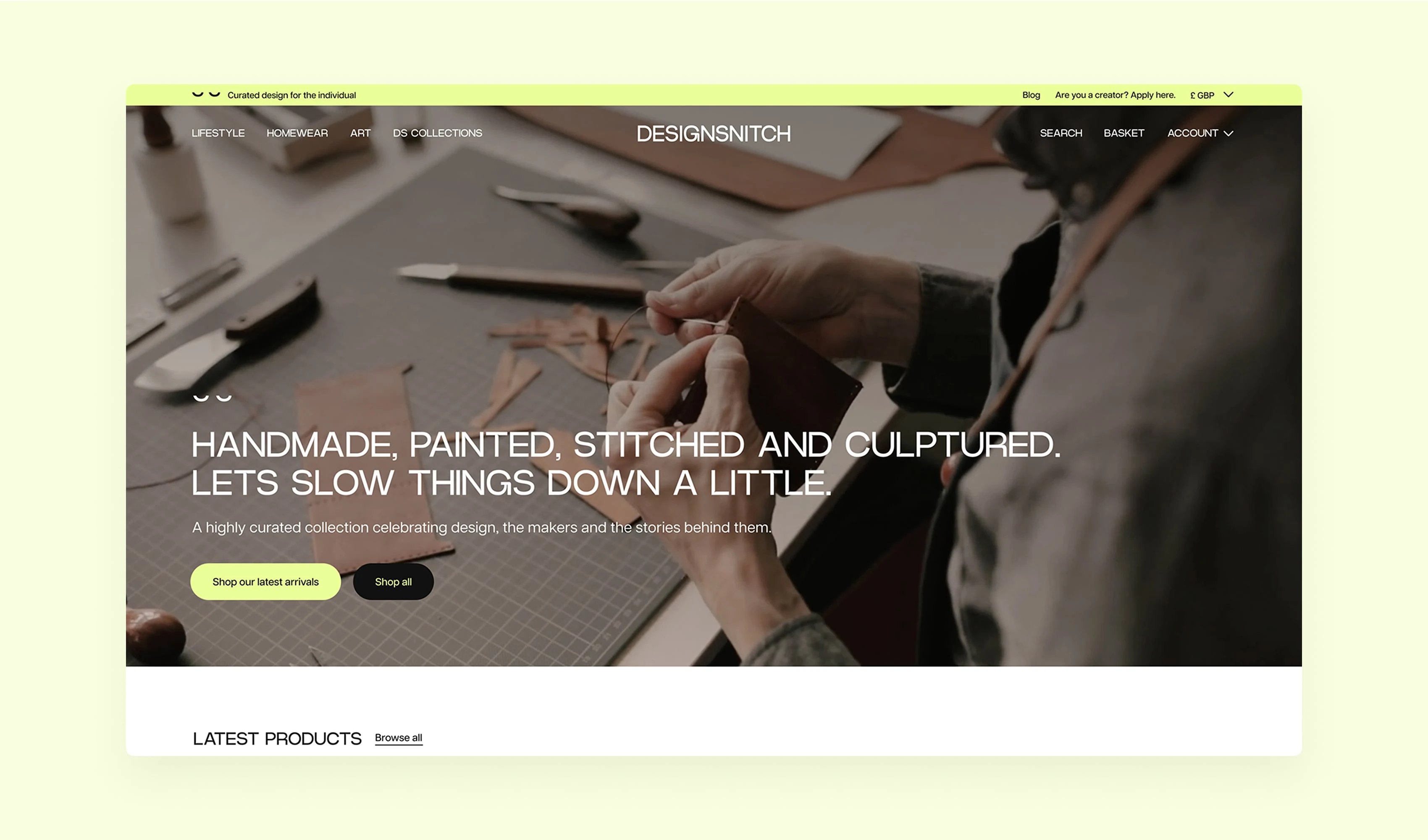
In that vein, can you think of any areas in life where there are underutilised resources that could be put to good use? Or resources that could be used more efficiently by sharing them? This can be applied to all areas such as gardening (sharing seeds and plants), sports (selling used equipment), art (selling originals from individual artists).
Some of the markets that have proved most ripe for disruption have been in transportation and goods, but there are opportunities for finding solutions in all sorts of industries. Opportunities exist in many industries, but each still needs evidence of demand, supply and a workable transaction model.

How do I know where to look for a fragmented market?
In situations where there are multiple small players offering services rather than one major vendor, marketplaces can thrive. Fragmented supply can suit a marketplace because it gives buyers one place to compare options, provided enough suppliers participate and transactions can be made trustworthy.
Peer to peer marketplace ideas like Etsy are a great example: there are many individuals who want to sell their crafts but previously didn’t have a far-reaching outlet. Etsy aggregates many independent sellers and supplies discovery and transaction tools, but sellers still compete for visibility, market their products and pay fees. For customers, the marketplace provides a convenient one-stop-shop.
It’s also possible to improve upon an existing service by adding a trust element that wasn’t previously there. A good example here is Airbnb. Airbnb uses identity checks, profiles and post-stay reviews as trust signals, but they do not eliminate fraud, safety or suitability risk; users still need to assess each listing and host. Airbnb’s own guidance says verification has safeguards but is not a guarantee (Airbnb Help).
When thinking of your own marketplace idea, take a look at old-fashioned classified ads. That way you can see the type of things that people are selling and looking for, then have a think if there’s an opportunity to improve the buying and selling of those items if you add the trust element that is currently missing. Later on we’ll talk in more depth about how to build that all important trust and gain a good reputation.
Think about platforms as either being horizontal or vertical
Going back to the classified ads example, these are horizontal platforms which are a combination of completely different and random categories. There are also vertical platforms; Airbnb is an example of this. Airbnb is a vertical marketplace focused on travel, although its offering now includes homes, experiences and services (Airbnb’s 2026 release). The benefit of vertical platforms is that, with a focused starting market, supply, demand and trust are easier to test.
Marketplaces need to solve a problem that actually needs solving. A focused starting market can make messaging and early supply-demand tests more manageable, especially on a limited budget. The right breadth depends on the category, geography and liquidity model. Narrowing can help define an audience and run a clearer test, but it does not guarantee success.
Amazon began as an online bookseller, not as the third-party marketplace it later became, before expanding into other categories (Amazon history). Just because your marketplace is niche, doesn’t mean it has to be small. The aim is to build a community around that niche marketplace.
You might have an idea that you feel others are already trying to make a success. In that case, again, think about narrowing it down. That can be done either with the product or service you’re offering, or the size of the geographical area you’re offering it to.

How do you research a marketplace idea?
You’ll need to put in the research hours in these early stages. It may well be that someone else is already successfully operating a marketplace that looks remarkably similar to your idea, or thinking of launching one. That’s not a reason not to do it. Compare competitors’ audience, proposition, supply, trust model and transaction flow, then identify a testable difference.
There’s a few steps in these early days that are advised when doing your research into online marketplace trends, competitors and potential competitors.
Google is a really useful tool. It’s the fast and simple way to see if there is anything glaringly obvious already offered along the same lines as your idea. Make sure you keep a list of all that look comparable in any way – and then look at each of them in turn. That includes finding out as much about their history as you can – if you can see that they refined their offering at some point it’s worth considering the reasons behind this, their experience will be useful to you.
If listed on Companies House, filings can show accounts and filing history, but they may be abbreviated and lag current performance (Companies House guidance).
We would also suggest that you tell people about your online marketplace ideas. Share enough to test the problem while protecting genuinely confidential details. Not everyone who has a good idea has the commitment and drive to move it forward and turn it into a successful marketplace. Interviews provide evidence of attitudes, while commitments and observed behaviour provide stronger evidence of demand. The same people you are telling are your potential customers, so pay attention to how they respond to your offering.
"It was great to be part of the re-design process and working with James and his team has been a truly positive experience… Definitely recommended to anyone who is thinking of having their website designed by professional team - you'll be in a good hands!"
A promising marketplace idea addresses a defined problem and has evidence that both sides may participate under a workable transaction model. Trust features can make participation easier, but adoption still needs to be tested. Even if you’re taking an idea that already exists in the wider sense, research that area, talk about it, test the water. Use research to refine the hypothesis, then validate behaviour through commitments, listings, transactions or another appropriate experiment, such as the steps in how to validate a marketplace.
Frequently asked questions
How do I know if my marketplace idea is any good?
Ask whether the problem matters to both sides and what evidence supports demand, supply, trust and a workable transaction model. If one area is weak, test it before deciding whether the answer is narrower scope, a different model or stopping. A free Marketplace Growth Review can help you work out which assumptions need testing first.
What makes a marketplace idea fail?
Common failure modes include weak demand, insufficient supply, poor trust, broad scope and an unworkable transaction model; we wouldn’t rank them without evidence for a specific idea. It could be that the idea doesn’t solve a problem that’s painful enough for people to change their habits, that there’s already one obvious, trusted leader in the market, or that the market is so broad you can’t picture who your first hundred users actually are. Narrow the idea, not the ambition.
How do I validate a marketplace idea before building it?
Talk to people on both sides before you write any code. Use interviews to refine the hypothesis, then test behaviour through listings, commitments, transactions or another appropriate experiment, rather than relying only on what people say they’d do. Our guide on how to validate a marketplace idea goes through the steps in more detail, and it’s the natural next read once your idea has narrowed down.
Should my marketplace be niche or broad?
A focused starting market is often easier to test, but the right breadth depends on the category and liquidity model. A tightly focused vertical marketplace can let you build trust and supply in one specific area before anyone notices you exist. Amazon began as an online bookseller before expanding into other categories. Expansion may follow once the core model has evidence behind it, but a new category can require additional supply, operations, trust controls and product work.
Next step
A promising marketplace idea addresses a defined problem and has evidence that both sides will participate under a workable transaction model.
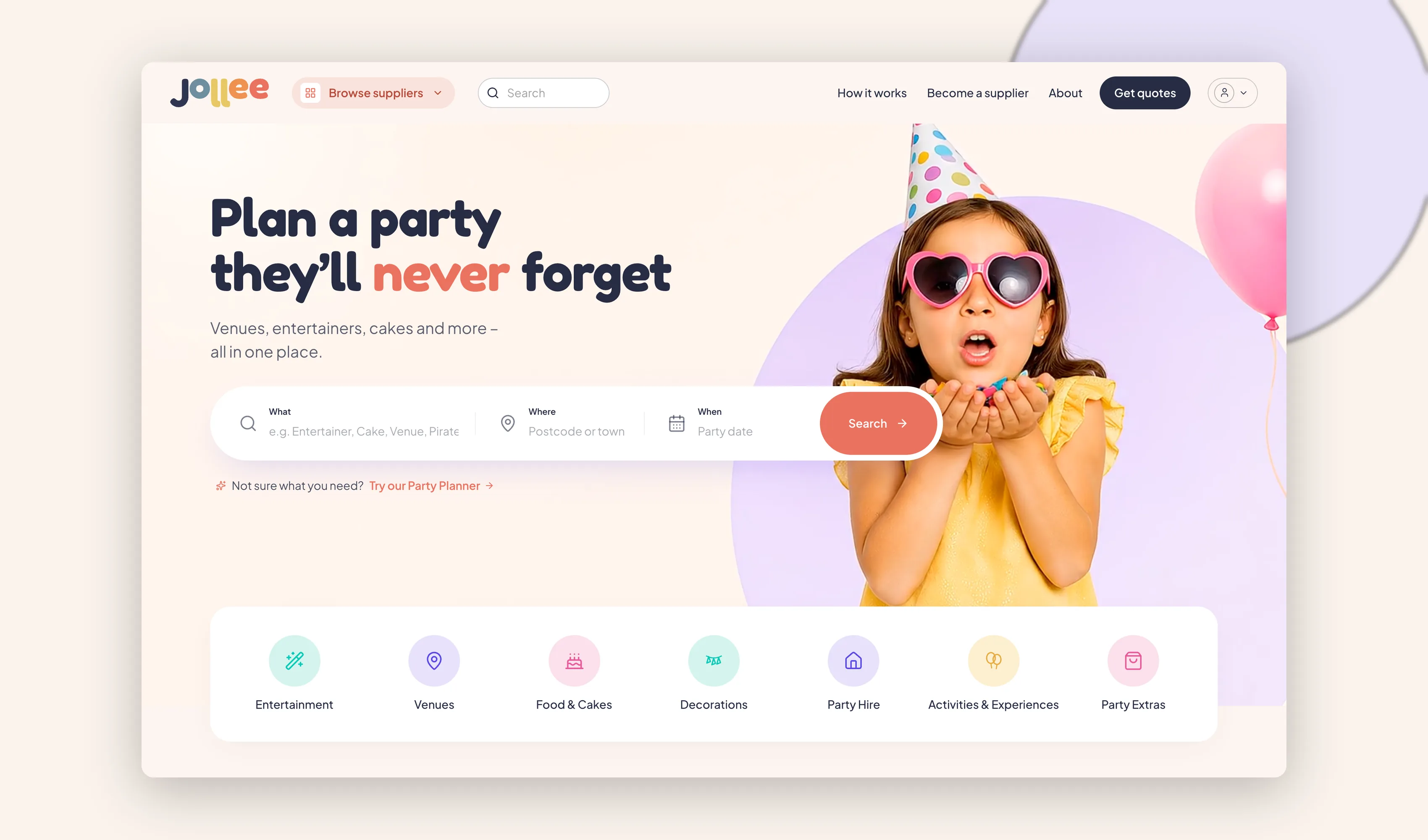
Once you’ve got that far, the work is proving it fast rather than planning it forever. We’ve built 50+ marketplaces over 15+ years, across everything from kids’ parties to fine wine auctions. We can help identify which assumptions have evidence and which still need to be tested before development.
Build the marketplace
Start with the workflows that make the model work.
We’ll map buyers, sellers, payments and operations before the build, backed by experience from more than 50 marketplace projects.