SaaS-Enabled Marketplaces: 6 Examples & Models
How SaaS-enabled marketplaces make money twice, six examples including Treatwell, and what to build first if you are starting one.
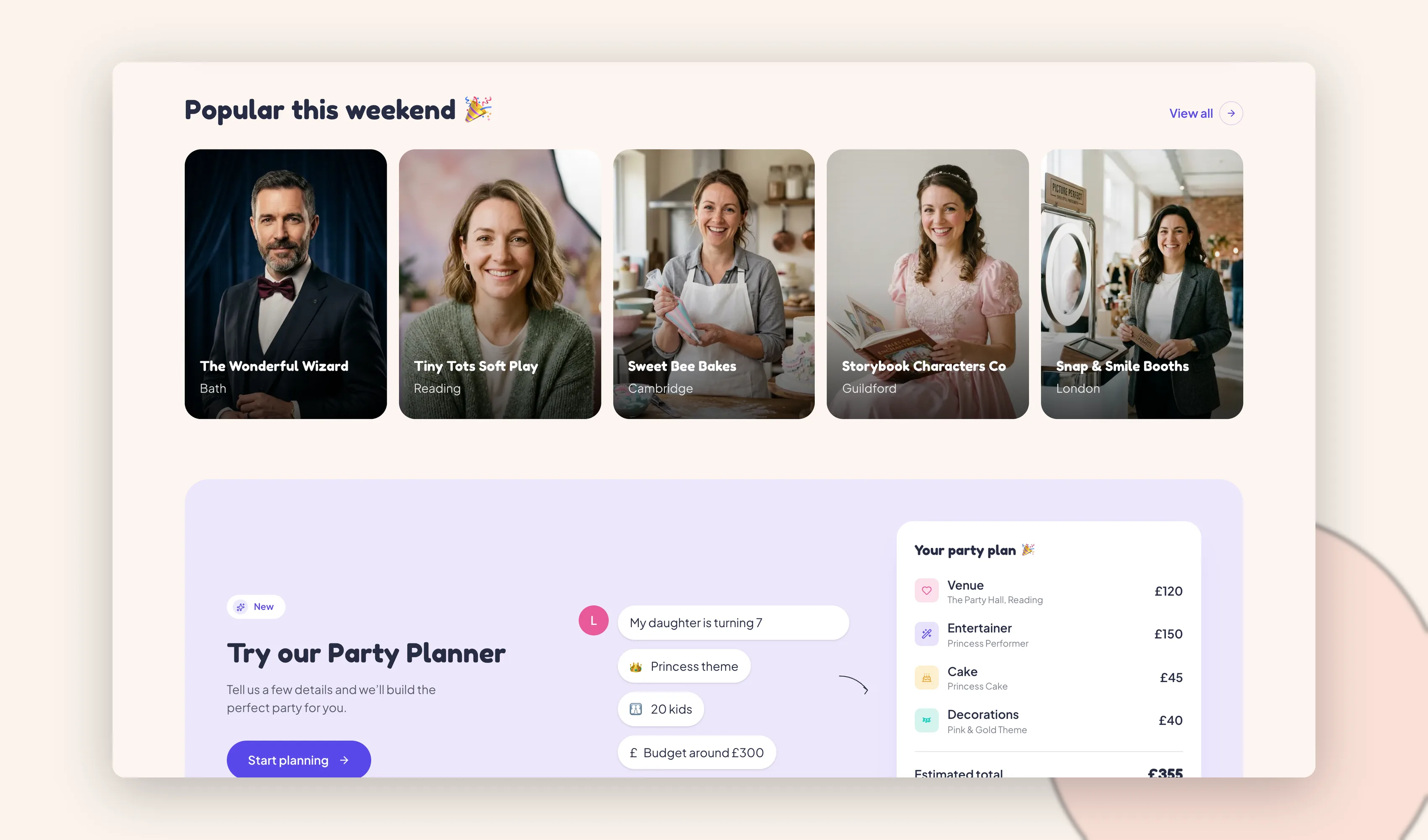
What is a SaaS-enabled marketplace? It’s a marketplace where the vendors don’t just get a listing, they get the software they use to run that side of their business too: bookings, invoicing, payouts, messaging, sometimes a whole dashboard. Treatwell does it for salons, OpenTable does it for restaurants, and it’s the model behind marketplaces we’ve built, like Jollee, where party suppliers get availability calendars, quote management and payouts in their own portal. A plain marketplace connects buyers and sellers and takes a cut. A SaaS-enabled marketplace does that, and it gives the seller a reason to stay logged in every day, because their diary, their payments and their customer messages live there too.
What actually makes a marketplace SaaS-enabled?
Three things, and you need all three before the label fits.
First, it’s properly two-sided: independent vendors list against a marketplace of buyers, not one company selling through a fancy website.
Second, the vendors get real software, not a form. A dashboard for managing bookings, a way to see what they’re owed, tools to reply to enquiries, sometimes invoicing or stock control. Take that software away and the vendor’s day gets measurably harder.
Third, the marketplace keeps working for the vendor between transactions. A directory listing sits there until someone clicks it. A SaaS-enabled marketplace is where a hair salon checks tomorrow’s bookings, or a party entertainer sends a quote, whether or not a new customer showed up that day.
Miss any one of those and you’ve got something else: a directory, a lead-gen site, or a piece of software with a customer list bolted on.
SaaS marketplace vs SaaS-enabled marketplace: what’s the difference?
People use the two terms almost interchangeably, and that causes real confusion.
A SaaS marketplace usually means a marketplace of SaaS products: an app store where you browse and buy software, like AWS Marketplace or Salesforce AppExchange. The thing being traded is software itself.
A SaaS-enabled marketplace is different. The thing being traded might be a haircut, a kids’ party entertainer or a freelancer’s time. The software is how it gets delivered, not what’s for sale. Upwork is a marketplace for freelance work, but the invoicing, time tracking and payment protection are what make freelancers trust it enough to stay.
If your business connects buyers with independent vendors and you’re wondering whether to add software for those vendors, you’re asking about a SaaS-enabled marketplace, not a SaaS marketplace.
Real examples of SaaS-enabled marketplaces
Most SaaS-enabled marketplaces make money twice: a subscription or fee for the software, and a commission when the marketplace brings in a new customer. Here’s how six of them charge, from each company’s own UK pricing page, checked on 27 September 2026.
| Marketplace | Who the vendor is | Software charge | Marketplace charge |
|---|---|---|---|
| Treatwell | Salons and beauty professionals | Paid plans (prices not published) | 35% on a new client’s first booking, 0% on repeat bookings |
| Fresha | Salons, spas and clinics | £14.95 a month for one person, or £9.95 per team member a month | 20% one-off fee on a new client, minimum £4 |
| Booksy | Barbers and beauty professionals | £40 a month plus VAT, £5 per extra team member | 30% one-off fee on a new client’s first visit when Boost is on, minimum £5 |
| Mindbody | Gyms, studios and wellness businesses | From £89 a month per location | 20% on a new client’s first purchase, capped at 30 in local currency |
| Airbnb | Holiday rental hosts | No separate charge, the tools come with the listing | 3% from most hosts when guests also pay a fee, or 15.5% for most hosts on the host-only fee |
| Uber Eats | Restaurants | £650 (excl. VAT) activation fee, which includes a tablet and the Uber Eats Manager software | 30% per order with Uber delivery, 13% for self-delivery or pick-up |
The pattern is clear. The software keeps the vendor logged in every day, and the commission is charged only when the marketplace brings them someone new. That’s why vendors accept it.
A few marketplaces show the model clearly in how their software works.
Treatwell lets people book hair and beauty appointments, and gives every salon a booking calendar, client list and marketing tools to fill quiet slots.
OpenTable started as restaurant reservation software in San Francisco, then grew into a marketplace where diners book and restaurants get a reservations system, waitlist and guest data as standard.
Upwork connects businesses with freelancers, and gives freelancers time tracking, invoicing and payment protection so they don’t have to chase money separately.
Airbnb connects travellers with hosts, and every host gets a calendar, messaging, pricing tools and payouts built in, not a separate booking system to maintain.
Xeneta connects businesses with freight and shipping data, with rate tracking and market analysis built into the same platform buyers use to compare carriers.
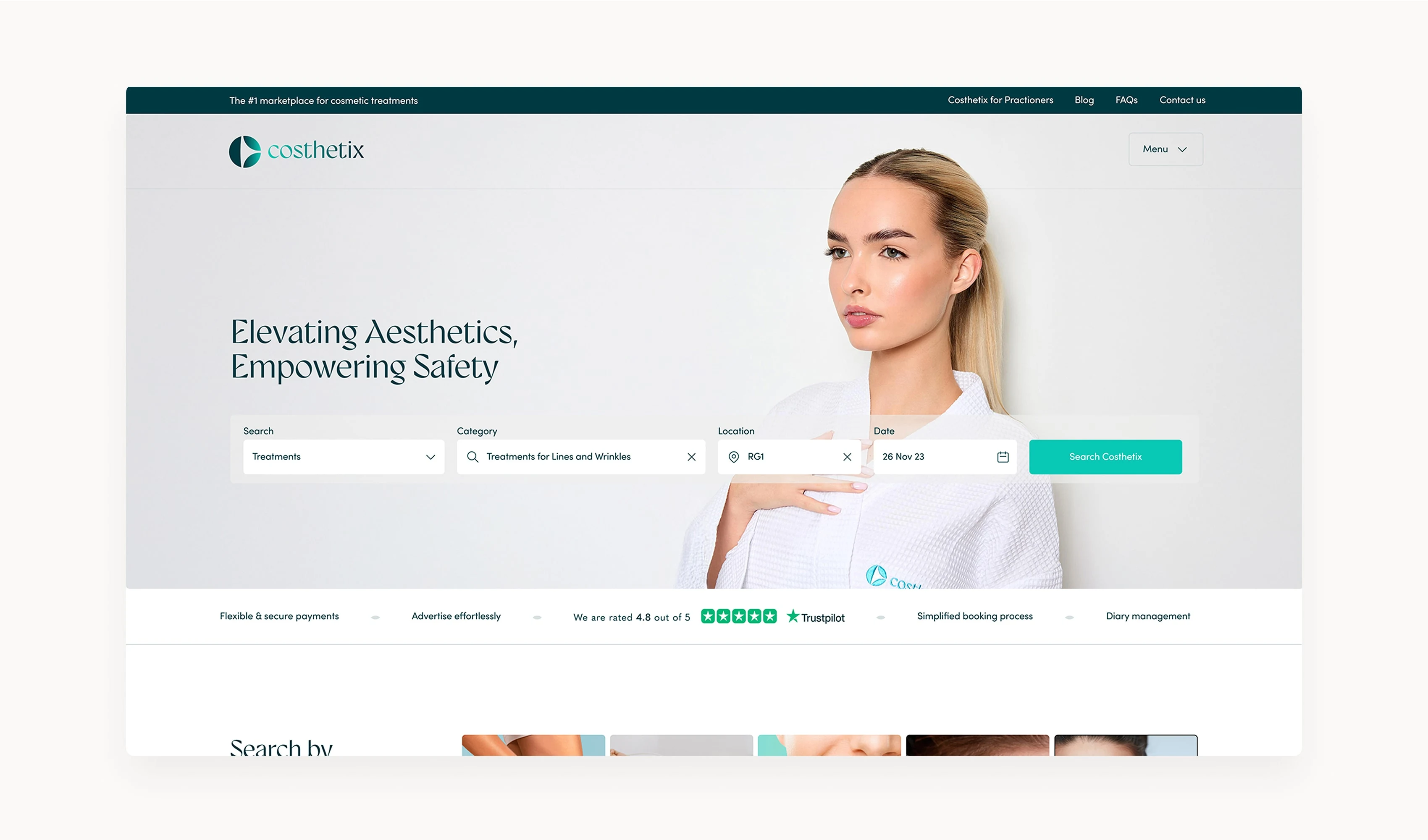
We’ve built them too. Jollee gives kids’ party suppliers a quote tool and availability calendar behind every listing. Costhetix gives aesthetic practitioners a vendor dashboard and integrated messaging behind theirs. Both run on the same kind of marketplace development we do for every vertical marketplace we build.
What to build first if you’re starting one
- The marketplace side first. Listings, search and booking or checkout, because without buyers the software has no reason to exist.
- One tool vendors use every day. Usually the calendar or the order list. Pick the one that replaces a spreadsheet they already hate.
- Payouts. Get vendors paid automatically, usually through Stripe Connect, before you add anything clever.
- Then charge for the software. Add a subscription once vendors rely on the tool, not on day one.
What software do vendors actually get?
The toolkit varies by vertical, but a few pieces show up again and again.
A booking or availability calendar that buyers can see live, so nobody’s chasing double-bookings by phone. Invoicing and payouts, usually through something like Stripe Connect, so the vendor gets paid without setting up their own merchant account. Messaging that keeps the whole conversation, and the marketplace’s oversight, in one place. And a dashboard that answers the question every vendor actually asks: what have I sold, and when do I get paid?
None of that needs to be complicated to be valuable. A vendor running their business from a spreadsheet and three different apps will notice the difference on day one.
"After wanting to up my game with my marketplace website I found Code23... The team are super responsive which is very reassuring for a non-techie!"
Is your idea a marketplace, a SaaS product or both?
Most founders land on this question the hard way, after building the wrong thing first.
If you’re selling one thing to many customers at one price, that’s SaaS. If you’re connecting many buyers with many independent sellers and taking a cut, that’s a marketplace. If your sellers need proper software to do their side of the job, and that’s part of what makes people choose your platform over a spreadsheet, you’re looking at a SaaS-enabled marketplace, and it’s usually the more expensive, more valuable thing to build.
The bot below sorts the three the way we do on a first call.
Should you build the software yourself or buy a marketplace engine?
Once you know you need vendor software as well as a marketplace, the next decision is whether to build every piece from nothing.
Logins, payments, messaging, notifications and a seller dashboard are the same hard problems on every SaaS-enabled marketplace, whatever the vendors are selling. Building them from a blank page is possible, and it’s also where most of the budget and the delay go before you’ve built anything that makes your marketplace different. Our Sharetribe vs custom marketplace guide covers the trade-offs if you’re weighing a hosted option against building your own.
That’s why we don’t start these builds from scratch any more. Our own marketplace engine, MarketStarter, already has the vendor tooling, payments and admin solved, so the work goes into what makes your vendors’ software actually useful for their category, not into rebuilding a login screen for the tenth time. If WordPress is part of that conversation, our WordPress marketplace guide is worth reading too.
Frequently asked questions
What is an example of a SaaS-enabled marketplace?
Treatwell for salons, OpenTable for restaurants and Upwork for freelancers all fit the model: buyers and sellers meet on the marketplace, and every seller gets real software behind their listing. We’ve built them too: Jollee gives kids’ party suppliers availability calendars, quote management and Stripe Connect payouts, and Costhetix gives aesthetic practitioners a vendor dashboard and integrated messaging.
Is a SaaS marketplace the same as a SaaS-enabled marketplace?
Not quite. A SaaS marketplace usually means an app store for software, like AWS Marketplace, where the product being sold is the software itself. A SaaS-enabled marketplace sells something else, a service, a booking, a freelancer’s time, and uses software to help vendors deliver it. The two terms get used interchangeably online, but they describe different businesses.
What software do vendors need in a SaaS-enabled marketplace?
It depends on the category, but most need a booking or availability calendar, a way to get paid without setting up their own merchant account, usually through Stripe Connect, messaging with the buyer, and a dashboard showing what they’ve sold and what’s owed. Build those four properly and most verticals are covered.
How much does it cost to build a SaaS-enabled marketplace?
It depends entirely on how much vendor software your marketplace needs, so we agree a fixed price upfront once we understand your model rather than quote a number that means nothing for your category. The free Marketplace Growth Review is the quickest way to find out what your version would actually involve.
Next step
If you’re weighing up a marketplace, a SaaS product or something that needs both, the shape of the business model matters more than the tech stack. Get that wrong early and you end up rebuilding it later, usually after you’ve already got paying vendors relying on it.
The Marketplace Growth Review is a free 30-minute call where we look at what your vendors actually need to run their side of the business, and tell you straight whether that’s a marketplace, a SaaS product or a SaaS-enabled marketplace. We’ve built 50+ marketplaces over 15+ years, including SaaS-enabled ones like Jollee, so we’ve seen where each model works and where it doesn’t.
Build the marketplace
Start with the workflows that make the model work.
We’ll map buyers, sellers, payments and operations before the build, backed by experience from more than 50 marketplace projects.


