The rise of the sharing economy: Impacts on online marketplaces
How sharing-economy marketplaces handle peer-to-peer supply, trust, payments and reviews, with examples and practical questions for founders.
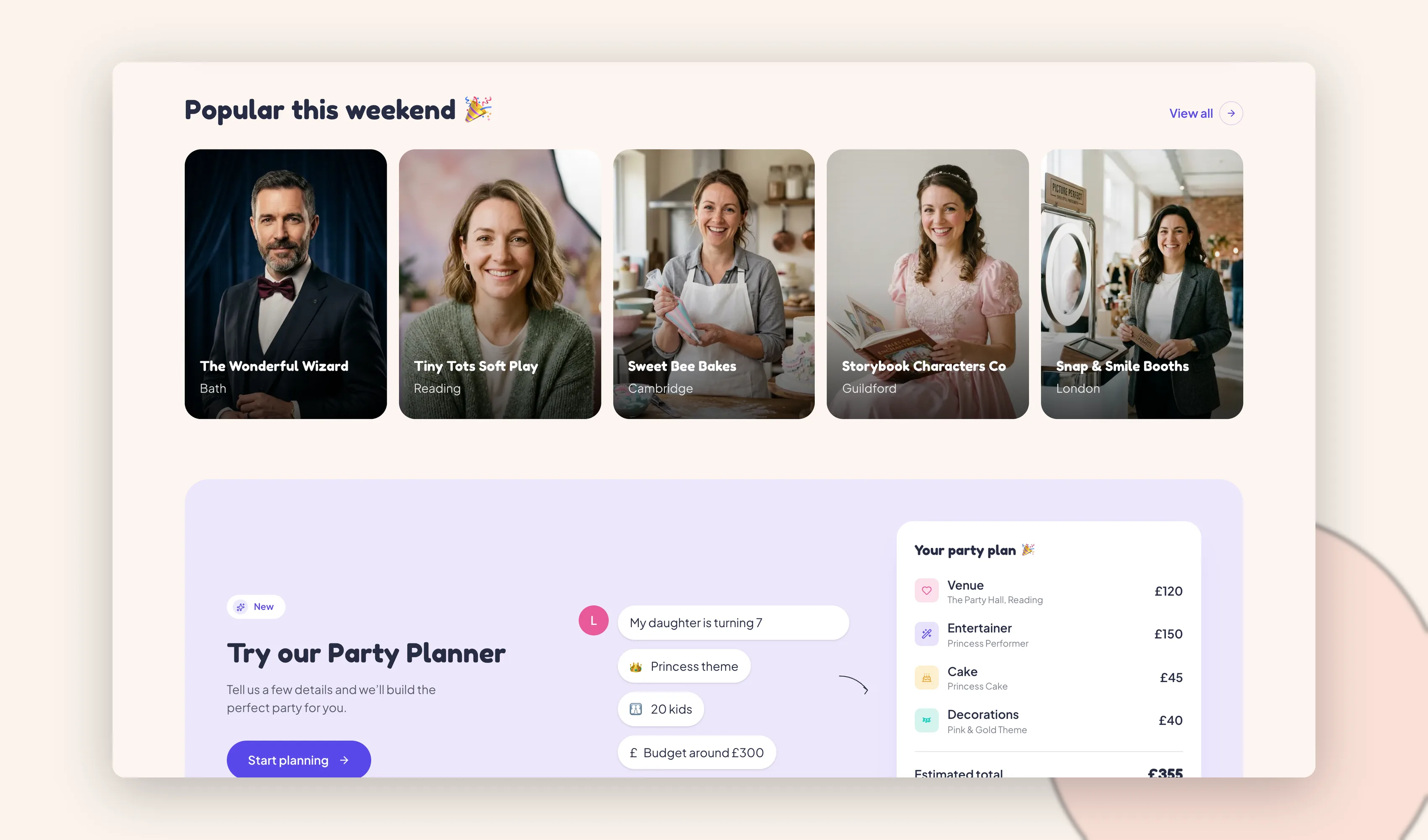
The sharing economy didn't get rid of ownership. It got more of us used to trading directly with strangers, and it pushed online marketplaces to get much better at trust, payments and search along the way. Airbnb, Uber and TaskRabbit proved people would book a room, a ride or a job from someone they'd never met, when the platform supplied identity, payment and review controls that reduced risk. That's the real shift: less about listing a product, more about identity checks, secure payments collected from buyers and routed between sellers and the platform, and reviews that reduce, though never fully remove, the risk of trusting someone you've never met. At Code23 we've built marketplaces on exactly that model, including a marketplace for party suppliers and one for club sponsorship deals, so if you're weighing up a peer-to-peer idea, the mechanics matter more than the market you're in.
Understanding the sharing economy
Often dubbed the “collaborative economy”, the sharing economy pivots on the principle of communal resource utilisation. At its core, it champions the peer-to-peer exchange of goods and services, typically streamlined by digital platforms. This model is upending traditional economic norms by empowering individuals to lend or lease assets they own to others.
In a world where we’d conventionally book a hotel room for travel, the sharing economy now allows travellers to lease individual rooms or entire homes from locals. Similarly, rather than buying a vehicle, one might choose shared transportation solutions. This paradigm has extended its reach, affecting industries from transport to finance, and naturally, online marketplaces.
The link between P2P marketplaces and the sharing economy
At the forefront of the sharing economy ethos is the Peer-to-Peer (P2P) marketplace model. These platforms champion direct engagements and trade between users, reducing reliance on some traditional intermediaries, while the platform itself remains an intermediary.
P2P marketplace platforms operate much like a digital market; a space where eligible individuals or small operators can present their offerings directly to prospective customers.
Advantages of embracing P2P marketplaces
Marketplace democratisation
A standout merit of P2P platforms is their inclusive nature. Many individuals and small businesses can sell, subject to platform eligibility and applicable rules, providing a springboard for budding entrepreneurs and small ventures.
Unfiltered communication
Bypassing intermediaries can enable direct dialogue, although outcomes depend on platform rules and participant behaviour, with clearer expectations and more bespoke engagements possible as a result.
Budget-friendly
Conventional online marketplaces can sometimes be taxing for sellers with hefty listing fees or sales commissions. P2P platforms use varied commission, listing, subscription and mixed-fee structures, which can improve profit retention for sellers depending on the model.
Building trust through community
A hallmark of many P2P platforms is the emphasis on user feedback. Reliable vendors are often celebrated with positive reviews, providing useful trust signals that complement verification and moderation.
"After wanting to up my game with my marketplace website I found Code23. They made switching web agencies really easy and have consistently provided great support, thoughtful suggestions and advice to improve the website thats has helped me focus on growing the business. The team are super responsive which is very reassuring for a non-techie!"
Spotlight on sharing economy pioneers
To gauge the sharing economy’s real-world implications, consider these pioneers:
Airbnb
Moving beyond hotel bookings, Airbnb offers travellers the chance to immerse in local culture by staying in personal residences. This disruptor provides homeowners with new income avenues while simultaneously challenging established hospitality sectors.
Uber
Uber has redefined commuting by connecting eligible drivers using qualifying vehicles with riders; pricing varies by place and time.
TaskRabbit
TaskRabbit serves as a bridge between individuals skilled in particular tasks (from assembling furniture to gardening) and those seeking such services.
The future of sharing economy platforms
While the collaborative economy champions community bonds, sustainability, and inclusivity, it is pivotal for the next generation of online marketplaces. Though the focus remains on renting and sharing, many platforms are diversifying into direct sales of related products.
This transformative journey also carries inherent responsibilities. Platforms need to uphold the tenets of transparency, safety, and impartiality. The sharing economy's trajectory is likely to bring new obstacles, but the advantages, better use of existing resources, more individual opportunity and stronger community links, still matter for the future of online marketplaces.
Conclusion
Online marketplaces are undergoing a seismic shift due to the sharing economy. The narrative now extends beyond mere transactions; it encapsulates community building, resource sharing, and harnessing dormant assets.
For those at the helm of online marketplaces, it’s imperative to grasp the subtleties of this dynamic, remain agile in its ever-changing landscape, and perpetually innovate to maintain relevance.
Frequently asked questions
What is the sharing economy?
It’s the market built around trading access to something rather than owning it outright: cars, rooms, tools or time, matched between individuals through a digital platform. Airbnb, Uber and TaskRabbit are the well-known examples. For an online marketplace it means the platform’s job shifts from listing products to handling trust, payments and reviews between people who’ve never met.
What’s the difference between a P2P marketplace and a normal marketplace?
A marketplace connects buyers with independent suppliers and may support discovery, payment or fulfilment. A P2P marketplace specifically has individuals or small operators trading assets, time or goods directly; business marketplaces can also sell used goods and services.
Is a peer-to-peer marketplace cheaper to run for sellers?
Some P2P platforms use commission; others charge listing, subscription, service or mixed fees. Whether a seller pays only after earning depends on the platform.
Do peer-to-peer marketplace platforms need to hold customers’ payments?
Many transaction-enabled P2P marketplaces use a marketplace payment provider to route funds, deduct platform fees and schedule seller payouts. Some use direct charges, while regulated escrow is a separate model. Getting payment holding, payouts and refunds right is one of the harder technical decisions in building one, and it’s worth getting expert input on which model you actually need.
Next step
The sharing economy showed that strangers are willing to trade directly once a platform makes it feel safe enough to try. If you’re building a peer-to-peer or two-sided marketplace, the hard part isn’t the idea, it’s the plumbing underneath it: verified profiles, payments collected from buyers and routed between sellers and the platform according to the agreed model, and reviews that reduce, though never fully remove, the risk of trusting someone you’ve never met.
The Marketplace Growth Review is a free 30-minute call that helps you work out what your model needs to get right before you build it. The Marketplace Growth Plan is the written version, covering trust, payments and search decisions before you spend on development. We’ve built 50+ marketplaces over 15+ years, peer-to-peer and otherwise, so we can bring practical context from similar trust, payment and search decisions.
Build the marketplace
Start with the workflows that make the model work.
We’ll map buyers, sellers, payments and operations before the build, backed by experience from more than 50 marketplace projects.


