How do I find & onboard vendors to my marketplace?
Practical ways to find your first marketplace vendors, convince them to join before you have customers, and onboard their listings properly.
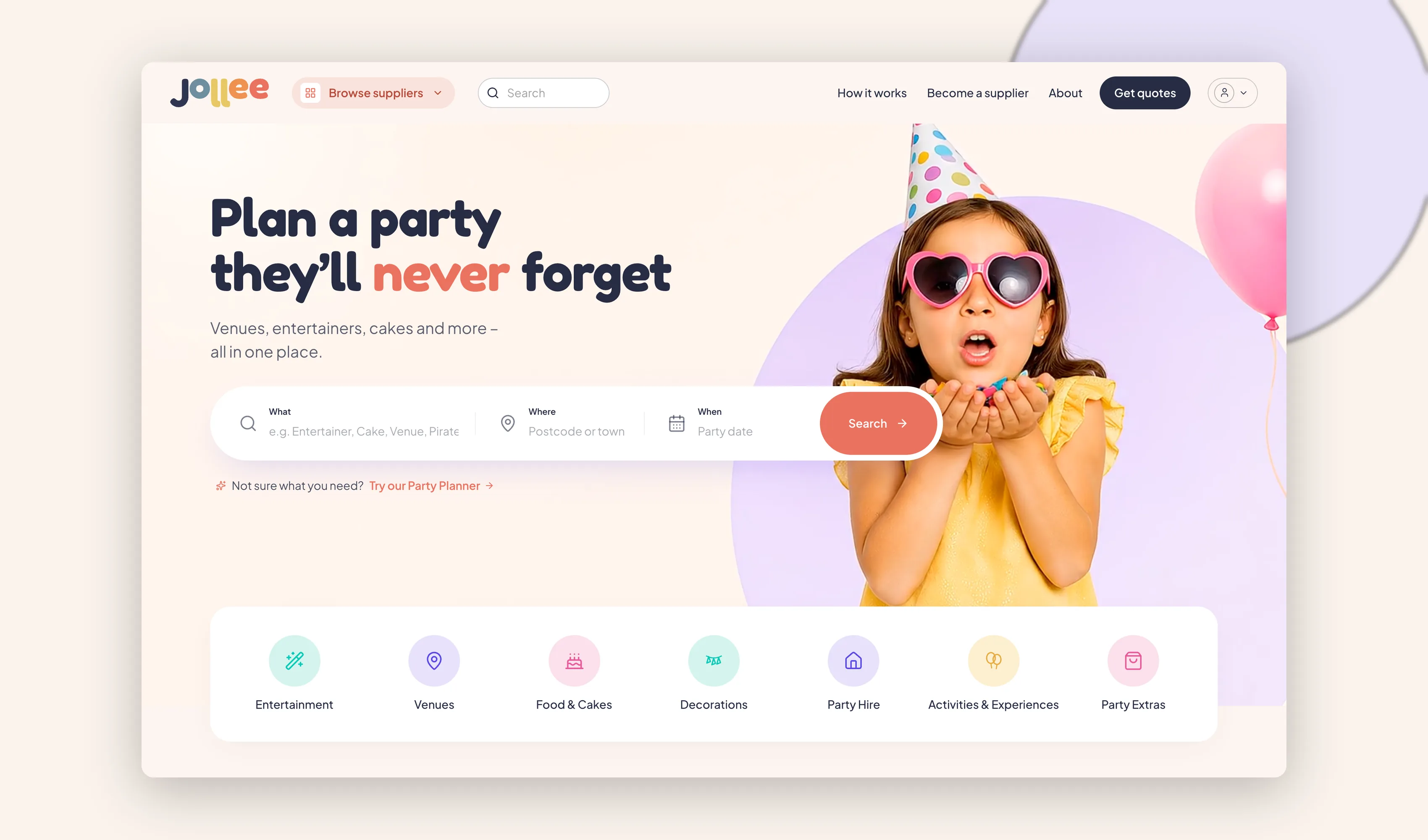
How do I find and onboard vendors to my marketplace? Start with people already selling elsewhere and make joining simple enough to justify trying another channel. At Code23 we’ve built marketplaces including Jollee, Sponsorfy and Costhetix, and we see the same pattern each time: early vendors often need value before buyer demand exists, such as a credible profile, a useful workflow or direct founder support.
Finding the first handful is a sales job. Onboarding them properly, so their listings are good enough to convert your first buyers, is a product job. Get both right and the rest of the marketplace has somewhere to start.

Let’s start by looking at the tactics you can employ to find your initial vendors.
Business directories, Google and online directories
If your marketplace is unique to your area you are going to have to target your ideal vendors. For example, if you are wanting professional services on your marketplace, that is relatively straight-forward, most of them will have their own website or be listed in a business directory. Build a focused list of suitable vendors, prioritise fit, use a relevant and permission-aware outreach approach, and test the pitch before expanding the list. Similarly, depending on your market, you can approach people in their shops, markets or at specialist events.
Vendors who are already active
Chances are the vendors you want to onboard to your marketplace are already active elsewhere. Prioritise suitable vendors and explain the specific value working with you would give them.
Online forums and groups
If your marketplace is a bit of a niche market, the people you want to attract as vendors may already be active in a Facebook group or other online forum. Relevant groups may help with discovery, but follow their rules and approach people appropriately.
Contacting potential vendors is one thing, convincing them to list on your marketplace is quite another. At this point you won't have any customers, so it could be a hard sell. For relationship-led niches, direct conversations with a realistic sample of potential vendors can test the pitch and expose objections; do not assume 100 in-person meetings are required. Even a smaller round of conversations is time well spent, since you'll get feedback, build business relationships, and be able to keep a check on quality. All invaluable when in these stages of validating your marketplace concept.
Given that there won’t be customers to entice the vendors (not yet anyway) there are other things you can use to entice vendors.
Make sure your marketplace is the best
Make the specific reason to join clear; it must be valuable enough to justify another channel. If you want a reminder of the sort of value you can add, take another look at ways to add value to your marketplace and avoid leakage.
Make exclusivity work in your favour
A curated launch can make a small supply base feel intentional, but only if the selection criteria are real and transparent. Explain who the marketplace is for and what vendors gain; do not imply scarcity or quality checks you cannot substantiate. Once you set the bar for the customer experience, keep it there no matter how many vendors you end up with.
Sell your potential customers
At this stage you won't have any customers yet, so be clear with vendors about what you're working towards. A partner could introduce you to an established audience, subject to consent and partnership terms. Test interest with prospective buyers and vendors rather than claiming demand you have not established.

Provide value, even with no customers
Useful vendor tools can create value before buyer demand exists, such as a booking, invoicing or accounting system, but adoption still has to be tested. Validate buyer demand alongside supply rather than waiting for an arbitrary vendor count.
Be your own vendor
If possible, it makes sense in this early stage to be your own vendor. It will allow you to get some feedback before having to make a large investment. You may be able to persuade friends and family to list as vendors too if appropriate.
"…They were a pleasure to work with, always at the end of the phone and took my lack of technical knowledge in their stride, guiding me through processes as necessary."
Buy your initial supply
This can be an expensive route, but it means you're far less likely to run into supply problems while you gather feedback and sign up customers. Once you have a good customer base you can switch to approaching individual vendors.
Utilise supplies that already exist
Consider whether there’s a network you could affiliate with to fill your site. An affiliate or inventory feed may help seed listings without buying stock, but integration, commercial terms and data quality still take work. The inventory won't be exclusive, so be clear about the extra value your marketplace provides. In addition, you are in danger of becoming a cross-platform utility, rather than a unique marketplace. So don’t consider this unless you can still offer added value.
Now you’ve worked out how to go about getting vendors on your site, it’s time to turn your attention to customers.
Frequently asked questions
How do you onboard supply onto a new marketplace quickly?
Start with suitable vendors who already sell elsewhere, whether you find them through a directory, a market or a relevant online group. Make a trial easy with a clear application, only the information you need and responsive support. Speed comes from removing friction, not from finding more vendors at once.
How many vendors do I need before I launch a marketplace?
There’s no fixed number. What matters is whether a buyer searching your category finds a real choice, not a single listing. For a tight local niche that might be a dozen good vendors. For something broader, it’s more. Start with enough that your first customers see genuine options, then grow supply and demand together rather than waiting for either to be perfect.
How do I convince vendors to join a marketplace that has no customers yet?
Sell them something other than customers, because you won’t have any yet. That might be a better-looking profile than they have anywhere else, tools that replace a diary or a spreadsheet, or simply you asking in person and making it easy to say yes. Early vendors who receive clear value can become useful advocates once buyers arrive.
Next step
You don’t need every vendor before you launch. You need enough of the right ones, onboarded properly, so your first buyers find something worth coming back for.
If you’re not sure how many is enough, or whether to chase vendors directly, borrow supply from somewhere else, or build your own tools to make joining easy, that’s exactly what our free Marketplace Growth Review is for. It’s a 30-minute call, not a sales pitch.
We’ve built 50+ marketplaces over 15+ years, including Jollee, Sponsorfy and Costhetix.
Build the marketplace
Start with the workflows that make the model work.
We’ll map buyers, sellers, payments and operations before the build, backed by experience from more than 50 marketplace projects.


