Funding a Tech Startup (in the UK)
Although not a prerequisite, fast growth is one of the defining traits of many successful tech or SaaS startups. At least those well-known tech startup success stories, companies like Uber, Snapchat and Facebook for example. With startup costs ranging anywhere from tens to hundreds of thousands, and
Although not a prerequisite, fast growth is one of the defining traits of many successful tech or SaaS startups. At least those well-known tech startup success stories, companies like Uber, Snapchat and Facebook for example.
With startup costs ranging anywhere from tens to hundreds of thousands, and beyond. There’s a multitude of ways businesses are funded. Each with their own pros and cons.
We’ve listed some of the main options for funding a Tech startup in the UK.
There are different types of funding for businesses depending on their growth stage. Making startup funding a bit of a minefield.
The growth stages are broadly categorised as seed, early-stage and growth stage. Each with different rounds of funding. Known as seed funding and Series A, B and C funding, but that’s a whole other topic. For now, though we’ll give a brief overview of the main types of startup funding available in the UK.
So, depending on how much control you want, your plan to monetise the product and the risks you’re prepared to take, we’ve summarised a few of the options available.

Private Equity
There are two main types of private equity funding. Venture Capital and Angel Investment.
Venture Capital
Venture capital firms invest in businesses with growth potential in exchange for a share in the business.
These venture capital funds are made up of investment from a range of different sources. Including large corporations and wealthy individuals.
It goes without saying that venture capitalists expect to generate a profit for their investors. So, they only invest in low-risk businesses with the highest growth potential.
In fact, 80% of venture capital investment goes to enterprise-level businesses These businesses typically have over 1000 employees. Making venture capital funding an unlikely option for most startups.
Venture capitalists generally invest in later stages of funding. Series A, B and C rather than seed stage.
Angel Investment
As with venture capitalists, angel investors offer funding in exchange for equity in the business and are usually looking to make a profit in a short period of time too. So most investors expect to exit their investment within 5-7 years. Either by selling their shares or an Initial Public Offering (IPO).
Angel investors can be individuals or businesses that invest in early or seed-stage products or startups. Angel investors typically offer between £10K-£50 in funding. With an average of £25K investment (according to the UK Business Angel Association ( UKBAA) depending on your app idea and stage of development.

It tends to be much easier to secure angel investment than venture capital at the seed stage, but will still require a solid business plan and a pitch.
Seed funding is a very early-stage investment in companies that are not yet generating revenue. This investment is typically used for market research and product development.
But how do you find an angel investor?
Organisations like Seedrs help find investment for Startups as part of their business accelerator programs. There are websites like Angel List, Angel Investment Network and SeedInvest that list investors and investment opportunities. As well as pitch event organisers Firestartr who help match business owners with investors and give guidance on pitching as part of their events.
Pitching
With any type of venture capital investment or business accelerator program you will need to pitch your idea to the investors.
This requires a pitch deck which should include information on the problem, solution, people in the team, competition and your go-to-market strategy. You will also need to provide financial information. They will want to see a predicted return on investment (ROI) and know what the investment will be used for.
Business accelerator programs usually offer guidance on the pitching process, so are worth considering for this reason as well as the investment opportunities.
Crowd Funding
An alternative with a lower barrier to entry is Crowd Funding. You’ve no doubt heard of sites like Kickstarter, IndieGoGo and Fundly, but there are also more niche crowdfunding organisations, who specialise in tech and app development. These types of organisations are usually only an option for smaller projects.
CrowdCube and Seedrs offer crowdfunding platforms for the bigger players. Seedrs also provides access to an Angel-funding network, so is both a crowd funder and a business accelerator.
There are a few negatives with crowdfunding however to keep in mind. They are hugely competitive and have fees associated with them.
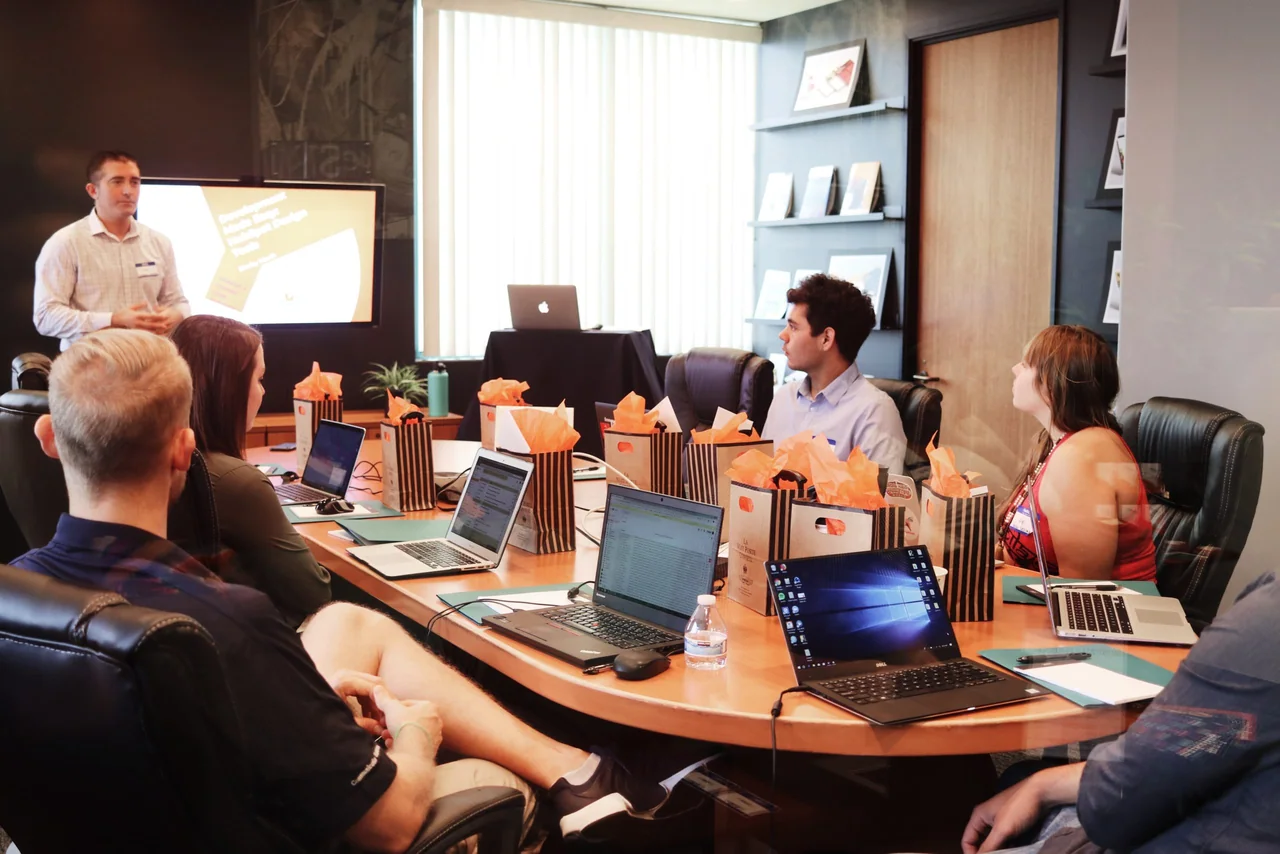
Business Accelerator
Business accelerators are support programs which usually offer investment, though not always. Accelerator programs usually last between a few months and a year and take around 5-10% equity in the business in return for seed funding which tends to be in the region of £10-£30K.
Funding is only one reason for joining a business accelerator program though. They usually provide access to a network of angel investors as well as legal and financial support. Some also provide office space and mentorship
There are many business accelerator programs specialising in tech startups. TechNation, TechStars, Y Combinator and Seed Camp are some well-known examples. With some even more niche organisations like Geovation specialising in Property Tech and others specialising in Fintech, InsureTech and BioStars investing in Health and Life Science tech.
"…Code 23 created my website, branding and helped me through the start up of my new business. James at Code 23 was not only my web designer but also my mentor as I was new to business…"
Government Schemes
Business grants are an attractive form of funding as you don’t need to pay them back or give up shares in the company,
Government grants range from a few hundred pounds up to £500K. They’re usually intended to encourage entrepreneurial activity, create jobs and stimulate the UK economy.
Applying for a government grant is usually a time-consuming process, with no guarantee of anything at the end.
There is now more opportunity for government funding in the tech sector than ever. Particularly after the Covid-19 pandemic.
Find a Business Partner
A sleeping partner is one option if you are able to find someone willing to provide capital, who doesn’t want an active role in the business.
Or you could team up with a co-founder looking to invest in an app development project, who offers complementary skills or access to a network you don’t have.
You might find there are potential business partners lacking the idea or app development know-how required to launch a successful startup, who has the legal or financial experience that you lack. So there are many reasons aside from funding to get together with a co-founder for your project.

Bootstrapping
If you’re considering raising external funding, you will need to jump through a few hoops and accept that you will not have full ownership of the end result. This is why so many founders opt to bootstrap. You will need a clear plan for monetising your product as there will be considerable work involved and financial risk.
Conclusion
There is a wide range of ways to fund your tech or SaaS startup, including venture capital, angel investment, crowdfunding, government grants and Business Accelerator programs. Many of which are interconnected.
Unless your project is self-funded you will need to convince your investors that your project is scalable and will generate significant profit within a limited timeframe.
Despite some of the disadvantages of accepting external funding though, there is no doubt extra capital will give you an advantage over the competition, and enable much faster growth. For most this outweighs the equity you will give up to your investors.
Frequently asked questions
How much money do you need to start a UK tech startup?
It depends entirely on what you're building and how fast you want to grow. The amount depends on scope, regulatory and integration needs, and the evidence required before raising. The healthiest approach is deciding what you need to prove first, then pricing that piece of work properly rather than raising for a guess.
Do investors expect a working product before they'll fund you?
Not always, but a working prototype often makes conversations with investors easier. It gives investors something concrete to assess. A prototype can make product and delivery risk easier to assess, but valuation depends on traction, team, market and terms. If you haven't built anything yet, a focused, fixed-price MVP can be a practical first step alongside a fundraising process.
Is bootstrapping better than raising investment?
Neither is automatically better, it depends on how fast you need to grow and how much control you want to keep. Bootstrapping avoids new external dilution but limits spending to the cash or revenue available. Outside investment can buy speed and support, at the cost of equity and a say in decisions. Some founders combine revenue and external capital over time.
What's the fastest way to get funding for a tech startup?
There's no shortcut that skips the work. Timelines vary by investor and programme, so compare application, diligence and decision stages before choosing a route. Each of these routes still needs a clear pitch, a credible team and evidence the idea works. A proper Discovery Sprint before you pitch, credited against the build if you go ahead, often makes that evidence easier to show.
Next step
Funding is the easy part to talk about. Building something worth funding is the harder part. We're not financial advisers, so talk to an accountant or the scheme itself about grants, equity or tax questions.
What we can help with is the product itself. Whatever route you take, you'll want a fixed price agreed up front, not an open-ended estimate that grows as you go. Our Discovery Sprint scopes the build properly and is credited in full against it if you go ahead.
We've delivered 350+ projects since 2005. Get in touch when you're ready to build.
Plan the next release
Build the next version around the result it needs to produce.
We’ll define the scope, design the journeys and build the systems behind them with one senior UK team.


